Starflight & Propulsion
How you actually cross the distance, from engines burning today to the spacetime shortcuts still only on paper.
LIVE 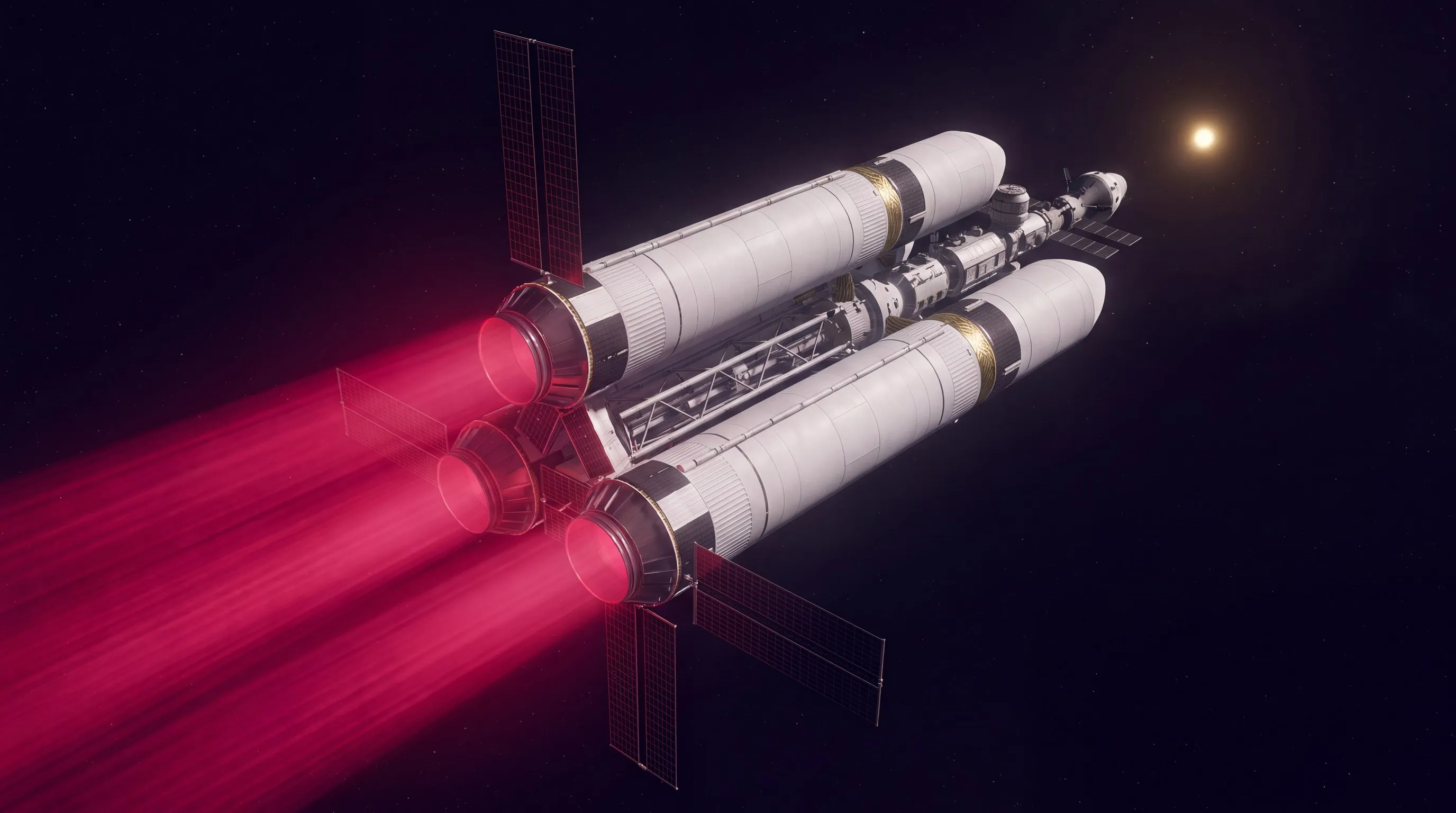 The Spin Drive Ledger WEIR 2021 · THE ENGINE, PRICED · INST-80 Project Hail Mary's engine, priced. The Hail Mary is a perfect photon rocket exhausting at exactly c: 6.045 g/s makes 540 trillion watts and just 1.81 MN of thrust. Next on the fiction-pricing line after INST-79, the Astrophage Budget, with INST-59, the Mothership Ledger, and INST-74, the Corso Ledger, earlier on the same line: the fuel's miracle was granted by the sibling bench, so this one charges only the engine. One way, every clock in the novel is the exact relativistic answer: 13 years and 3¾ at 1.5 g, five and a half at 0.9 g on the return, Rocky's 6.64 years over ten light-years decoding to 0.833 c, and even the fuel surplus that saves the book equals 1 − 1/γ on the nose, exactly the full tank he hands over. The other way, the burn integral the book never does: the printed schedule spends rapidity 6.03, which a perfect photon rocket prices at mass ratio 415 against a tank of 21; the fuel dies seven days past the mid-flip, and squaring the three claims takes an exhaust at 1.98 c. The Ladder runs the same mission on real engines: chemical at 10^93,000, even Daedalus's fusion at e^90; only exhaust at c lands on a number a budget can hold. Three lamps (tank, Earth clock, ship clock): any two light, all three only past lightspeed. Two verdicts at equal size. LIVE
 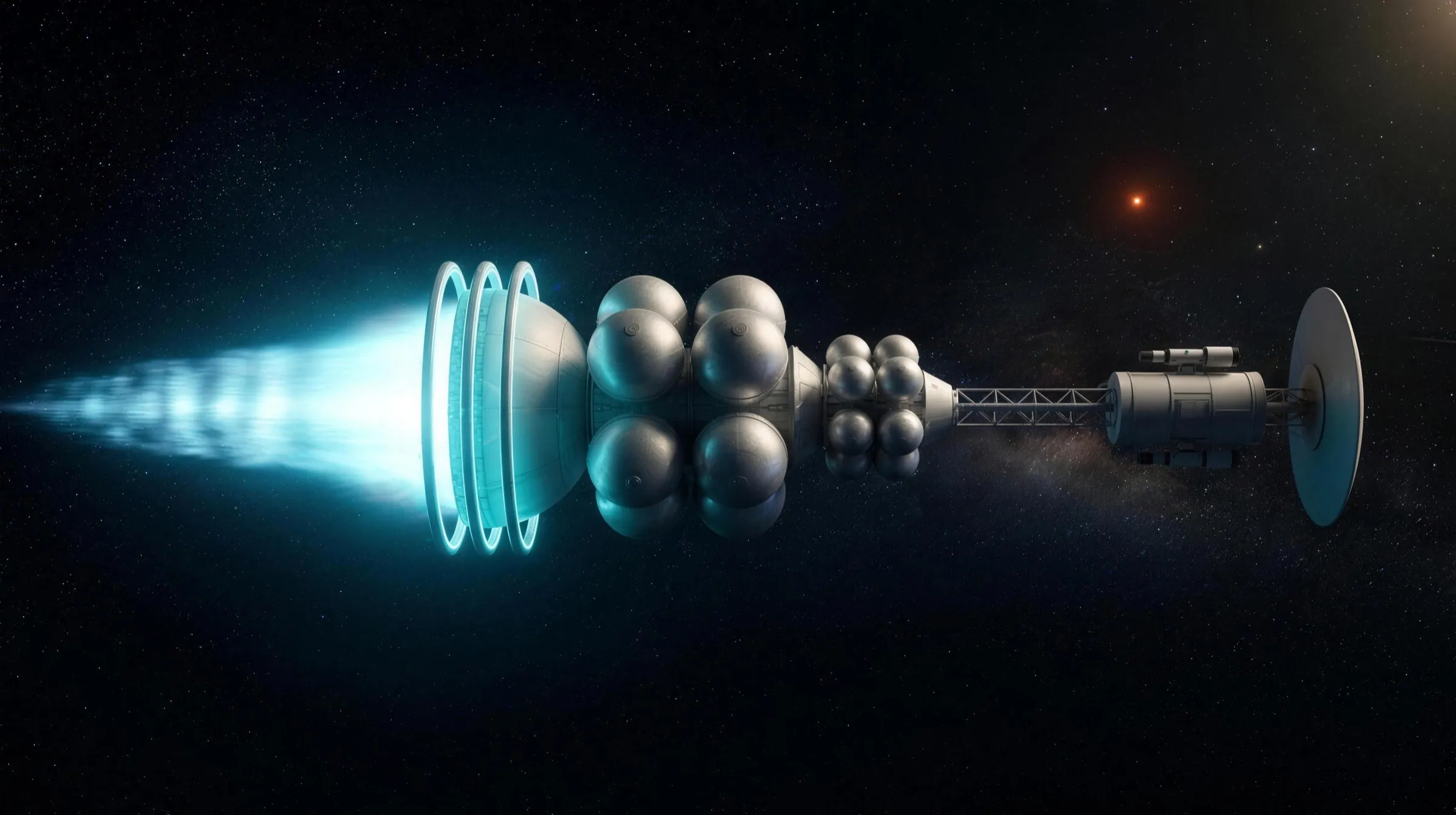 Project Daedalus DAEDALUS · BIS 1978 · INST-40 From 1973 to 1978 thirteen volunteers of the British Interplanetary Society computed the first complete engineering study of a starship: 190 metres, 54,000 tonnes, 250 D/He-3 pellets a second imploded by electron beams and exhausted through a magnetic nozzle at 10,600 km/s, 3.81 years of thrust for 12.2% of light speed, then a 46-year coast to a flyby of Barnard's Star at 5.9 light-years. The Ship view draws the two-stage stack to the report's dimensions with every part clickable; the Pulse view goes inside the chamber with three clock speeds to watch one pellet die; the Voyage view draws fifty years as a draggable rocket-equation curve pinned to the study's milestones, with a braking ledger alongside: 54,000 tonnes to fly past, about 1.7 million to stop, Freitas's REPRO over 10 million; the File view runs from the thirteen volunteers to NIF's one-shot-a-day ignition and Barnard b's 2024 return, closing on two verdict cards at equal size. The numbers are sourced, the curve is arithmetic, and the reading is yours. LIVE
 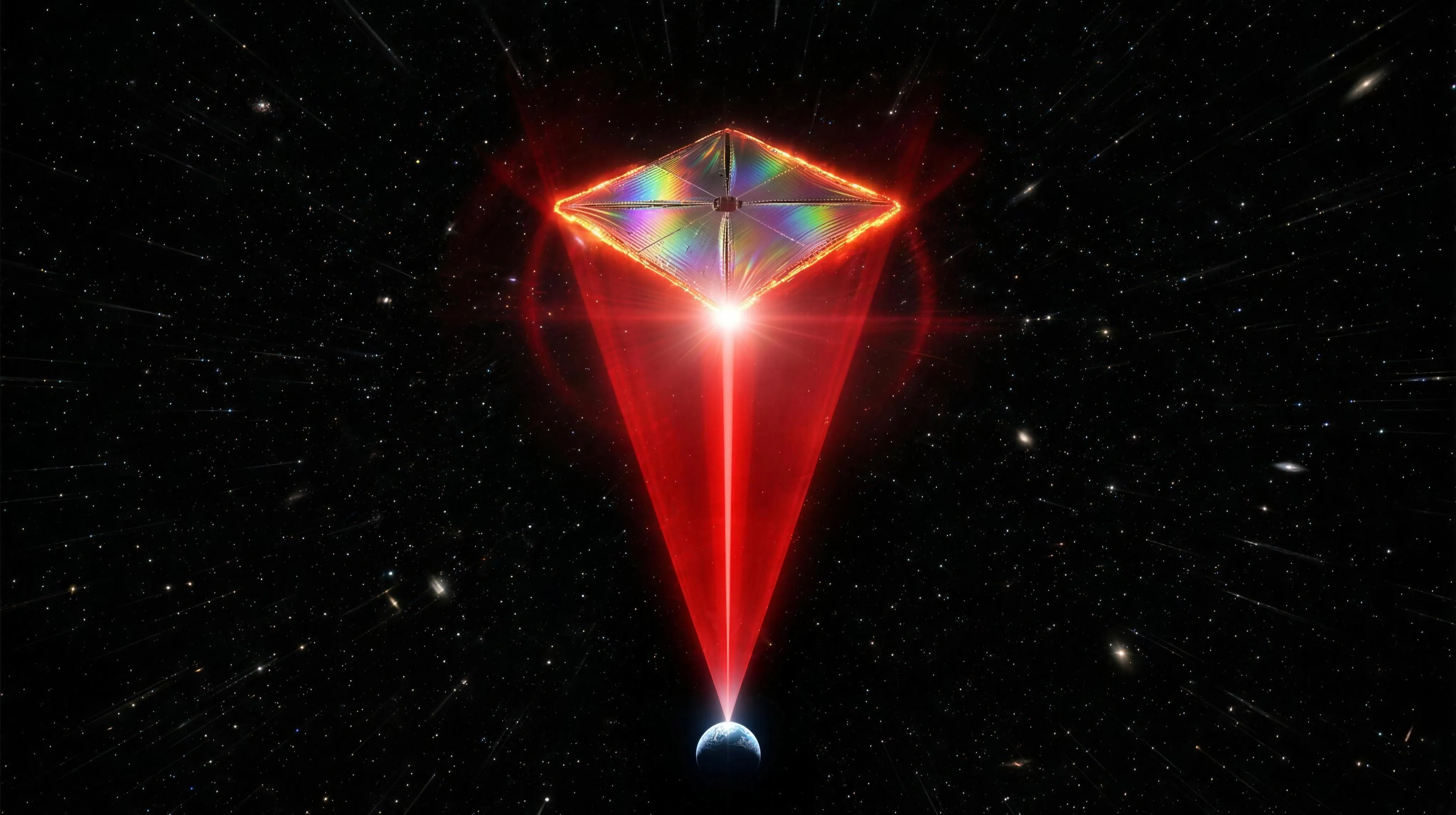 The Laser Sail STARSHOT · INST-20 Breakthrough Starshot, on the pad: press LAUNCH and a 100 GW phased array throws a four-metre sail and a 3.6-gram starship to 0.2c in five minutes at 17,000 g. The beam is drawn at the true spot-to-sail ratio, so you watch diffraction widen it until it lets go 7 million kilometres out; then a twenty-year coast under exactly aberrated stars and hours at Proxima b. The Doppler tax (1−β)/(1+β) is integrated exactly, and an Engineering Board tags every subsystem FLOWN, PHYSICS, DESIGN or OPEN. LIVE
 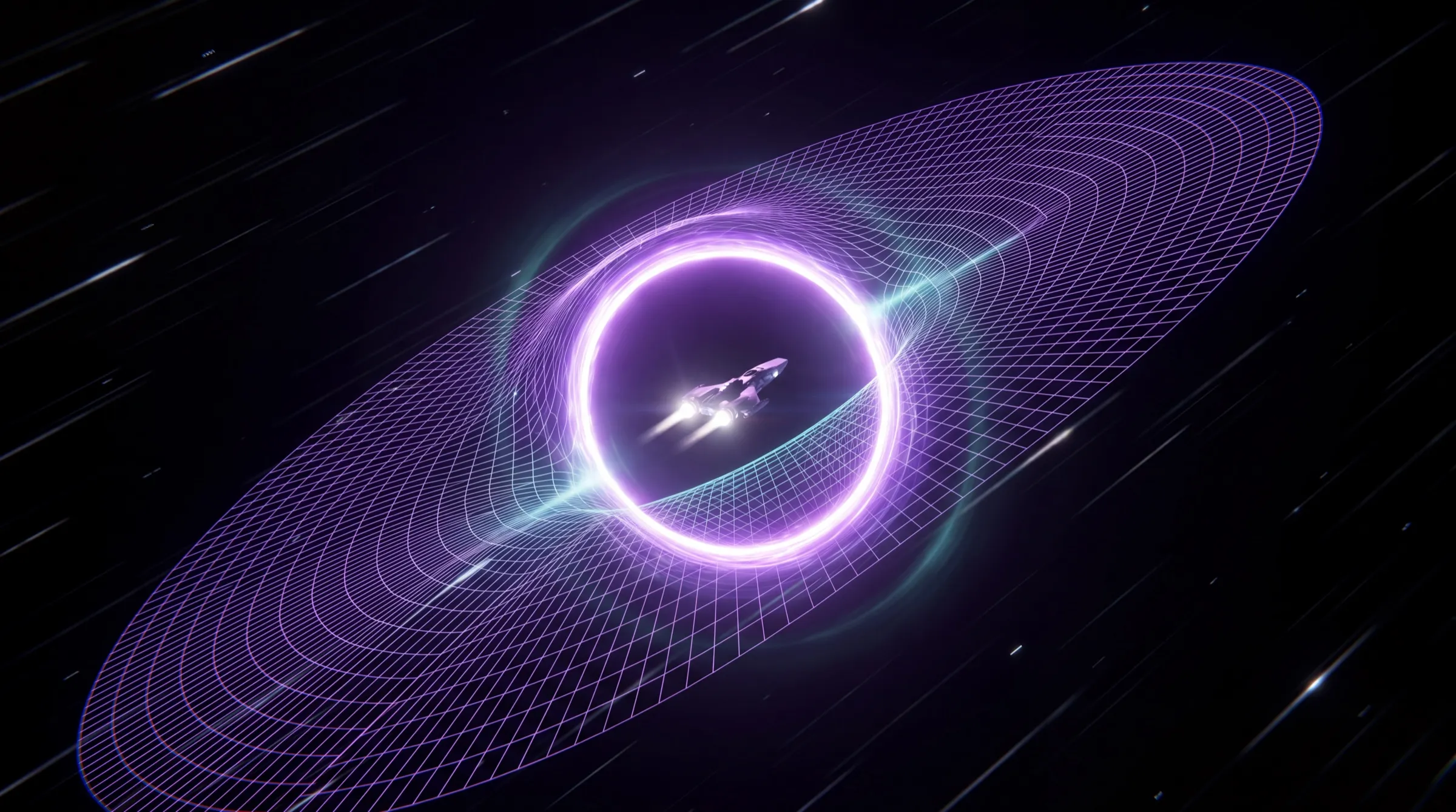 The Warp Energy Problem NEC · INST-12 The warp bubble slips past the c-wall by moving space instead of the ship, and pays with a ring of negative-energy exotic matter in its wall. Walk the real thirty-year reduction, from more than the universe to a 2024 positive-energy but subluminal shell, and see the bill towering past the observable universe on a logarithmic ladder. LIVE
 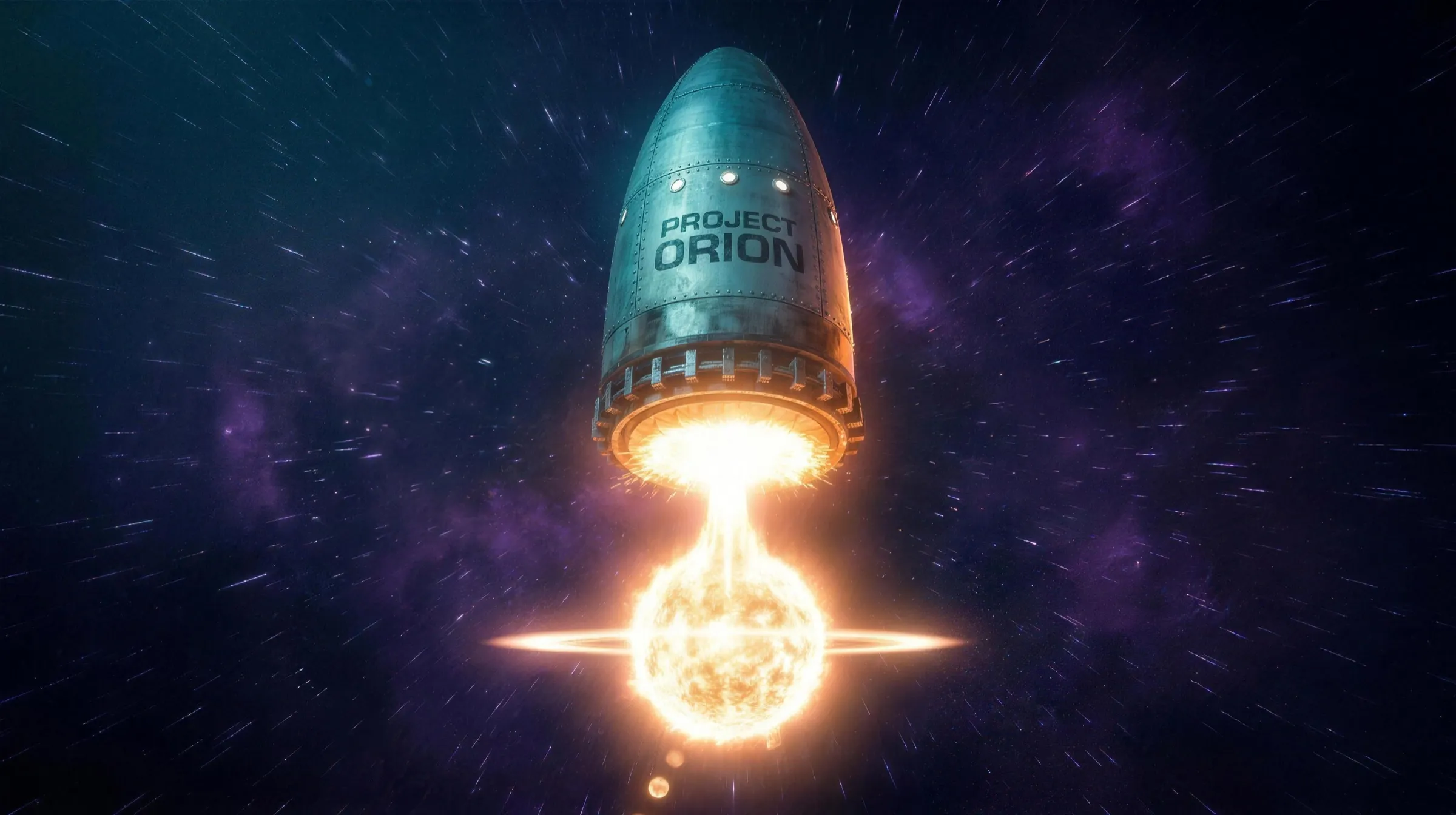 Project Orion GENERAL ATOMICS · INST-11 A real 1958 design: a 4,000-ton ship that flies by throwing atomic bombs out the back, one per second, riding the blasts on a steel pusher plate. Cut open and firing: yield slider, 50× slow-mo plasma strikes, and a true-scale compare with Saturn V. Real history, teaching-model numbers, the line drawn in plain sight. LIVE
 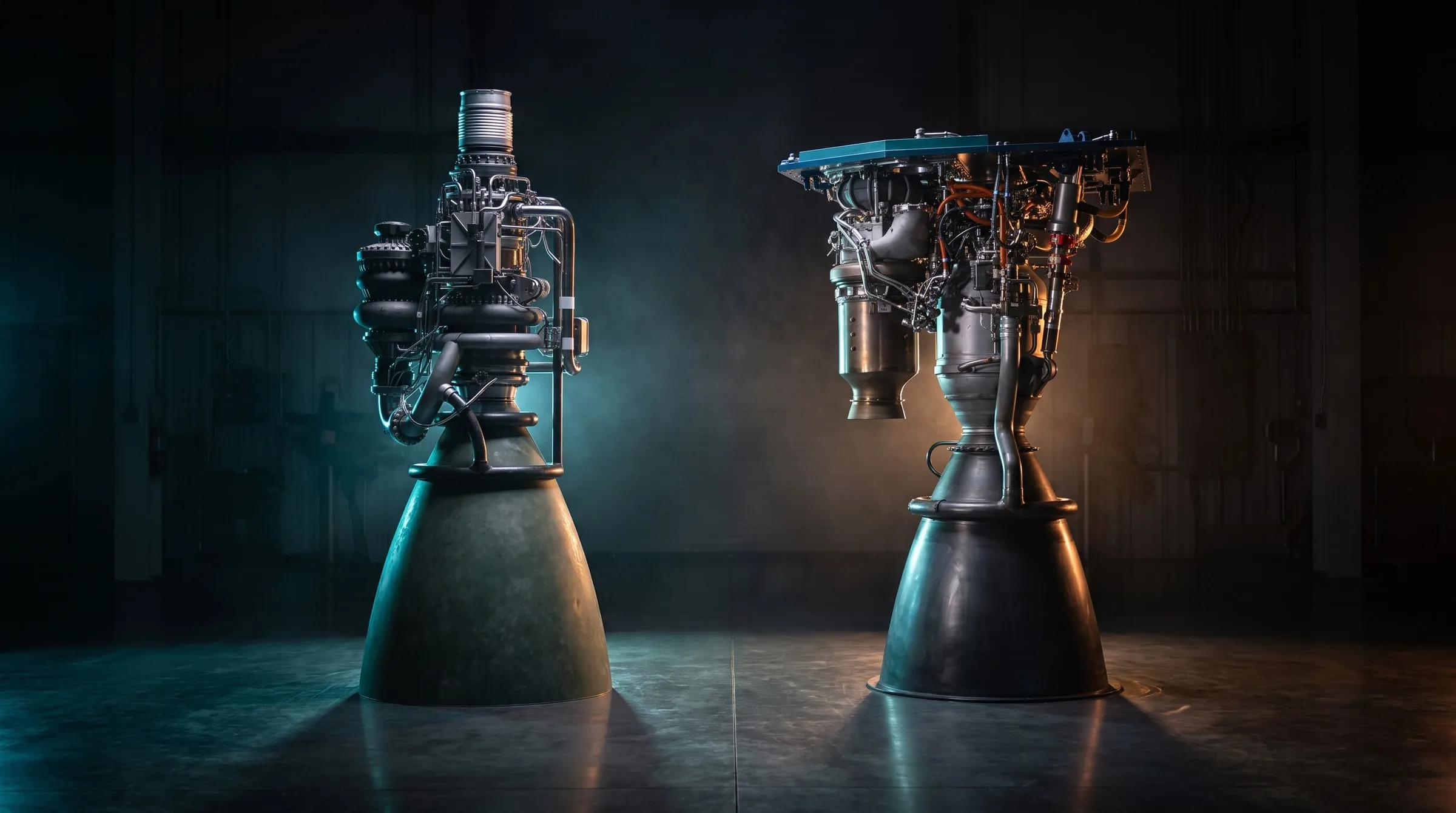 Raptor & Merlin SPACEX · INST-10 Two SpaceX engines cut in half and lit from inside: Merlin's open-cycle kerosene workhorse and Raptor's full-flow methane monster running near 300 bar. Switch, throttle, toggle sea level vs vacuum, and watch the same fire get two answers. Live telemetry, real numbers. LIVE
 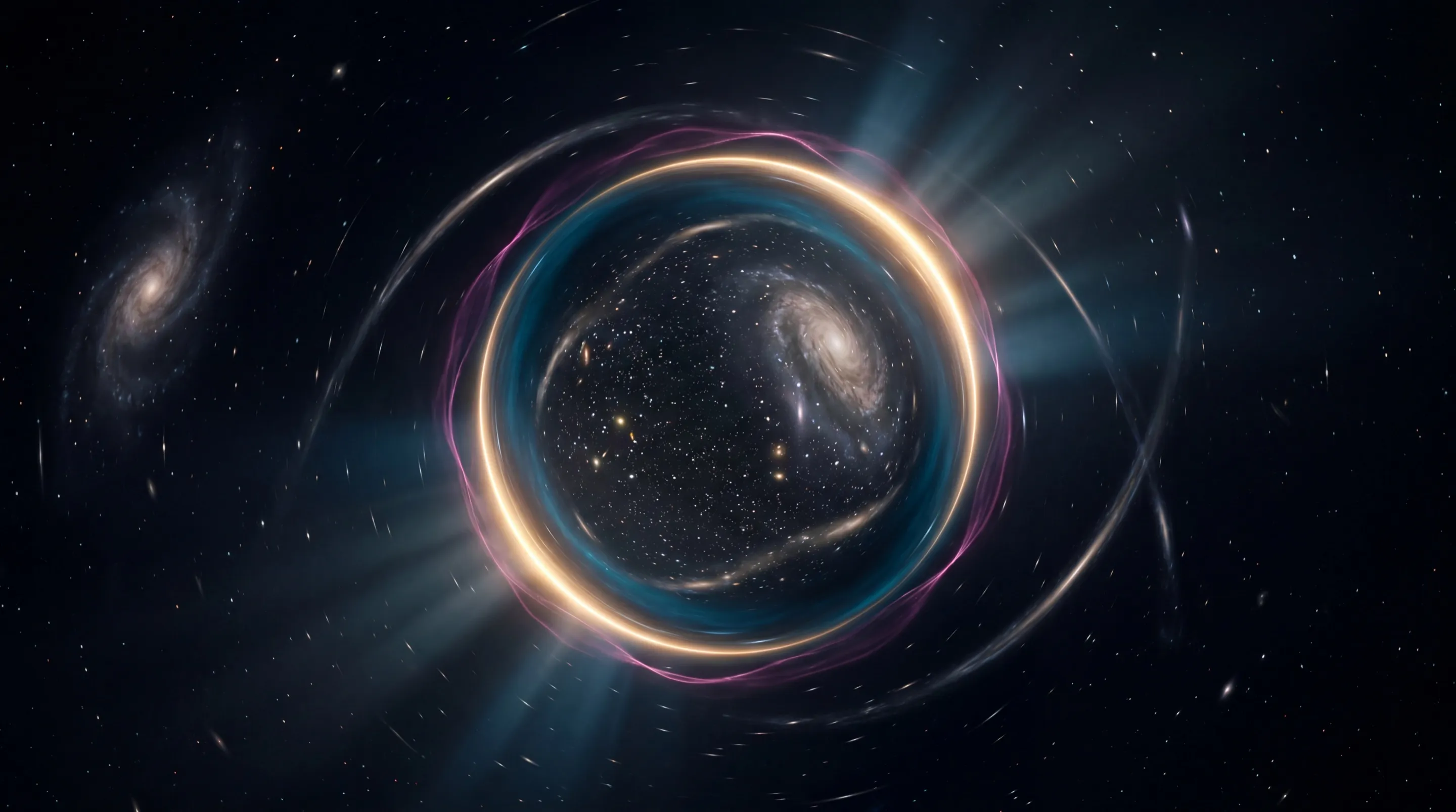 Wormhole ER–MT · INST-05 Two wormholes both solve Einstein's equations: one pinches shut before light can cross, the other stays open only on negative energy no one can make. LIVE
 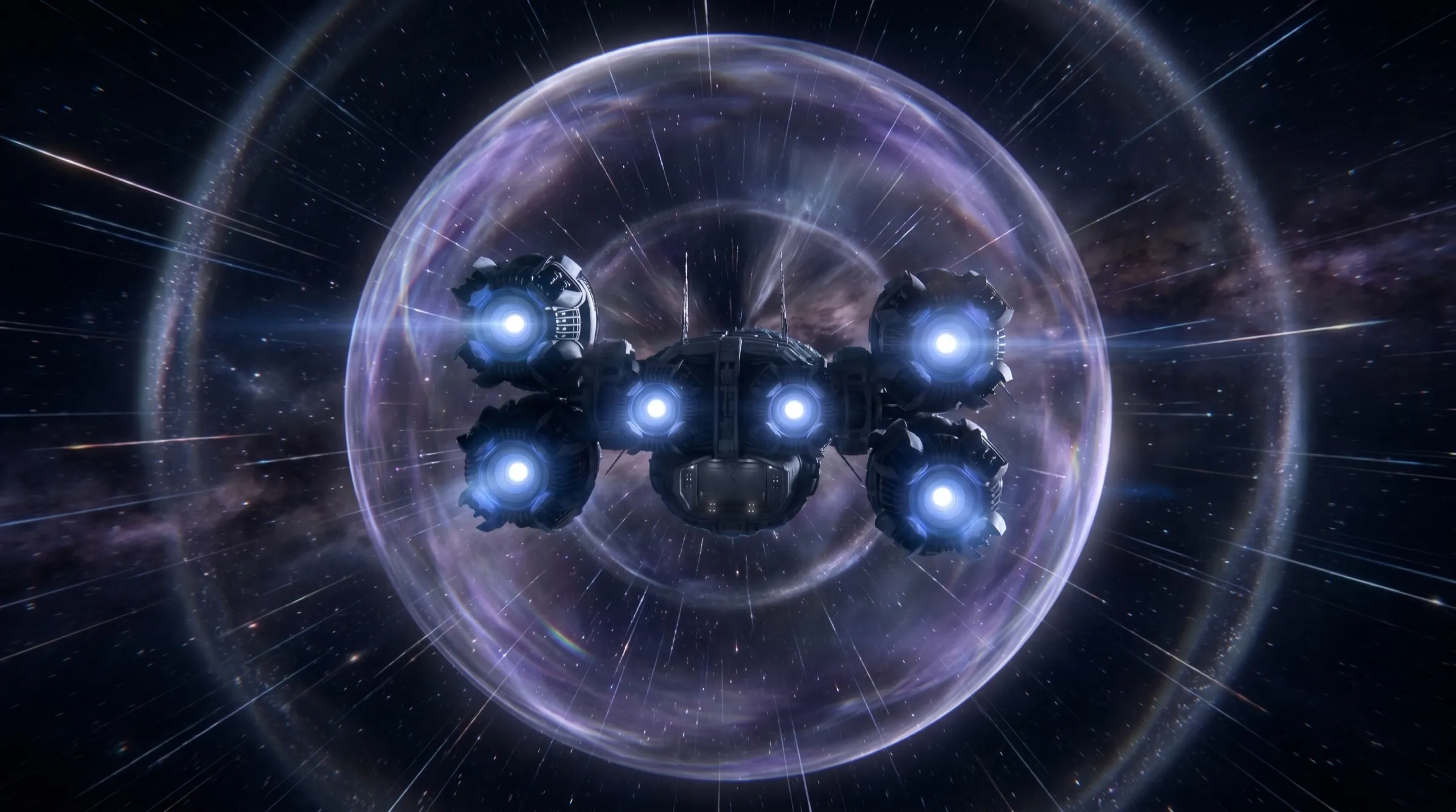 Warp Drive ALCUBIERRE · INST-03 Space, bent to carry a ship. The speculative route: extreme energy, drawn as an honest schematic.
The Spin Drive Ledger WEIR 2021 · THE ENGINE, PRICED · INST-80 Project Hail Mary's engine, priced. The Hail Mary is a perfect photon rocket exhausting at exactly c: 6.045 g/s makes 540 trillion watts and just 1.81 MN of thrust. Next on the fiction-pricing line after INST-79, the Astrophage Budget, with INST-59, the Mothership Ledger, and INST-74, the Corso Ledger, earlier on the same line: the fuel's miracle was granted by the sibling bench, so this one charges only the engine. One way, every clock in the novel is the exact relativistic answer: 13 years and 3¾ at 1.5 g, five and a half at 0.9 g on the return, Rocky's 6.64 years over ten light-years decoding to 0.833 c, and even the fuel surplus that saves the book equals 1 − 1/γ on the nose, exactly the full tank he hands over. The other way, the burn integral the book never does: the printed schedule spends rapidity 6.03, which a perfect photon rocket prices at mass ratio 415 against a tank of 21; the fuel dies seven days past the mid-flip, and squaring the three claims takes an exhaust at 1.98 c. The Ladder runs the same mission on real engines: chemical at 10^93,000, even Daedalus's fusion at e^90; only exhaust at c lands on a number a budget can hold. Three lamps (tank, Earth clock, ship clock): any two light, all three only past lightspeed. Two verdicts at equal size. LIVE Project Daedalus DAEDALUS · BIS 1978 · INST-40 From 1973 to 1978 thirteen volunteers of the British Interplanetary Society computed the first complete engineering study of a starship: 190 metres, 54,000 tonnes, 250 D/He-3 pellets a second imploded by electron beams and exhausted through a magnetic nozzle at 10,600 km/s, 3.81 years of thrust for 12.2% of light speed, then a 46-year coast to a flyby of Barnard's Star at 5.9 light-years. The Ship view draws the two-stage stack to the report's dimensions with every part clickable; the Pulse view goes inside the chamber with three clock speeds to watch one pellet die; the Voyage view draws fifty years as a draggable rocket-equation curve pinned to the study's milestones, with a braking ledger alongside: 54,000 tonnes to fly past, about 1.7 million to stop, Freitas's REPRO over 10 million; the File view runs from the thirteen volunteers to NIF's one-shot-a-day ignition and Barnard b's 2024 return, closing on two verdict cards at equal size. The numbers are sourced, the curve is arithmetic, and the reading is yours. LIVE The Laser Sail STARSHOT · INST-20 Breakthrough Starshot, on the pad: press LAUNCH and a 100 GW phased array throws a four-metre sail and a 3.6-gram starship to 0.2c in five minutes at 17,000 g. The beam is drawn at the true spot-to-sail ratio, so you watch diffraction widen it until it lets go 7 million kilometres out; then a twenty-year coast under exactly aberrated stars and hours at Proxima b. The Doppler tax (1−β)/(1+β) is integrated exactly, and an Engineering Board tags every subsystem FLOWN, PHYSICS, DESIGN or OPEN. LIVE The Warp Energy Problem NEC · INST-12 The warp bubble slips past the c-wall by moving space instead of the ship, and pays with a ring of negative-energy exotic matter in its wall. Walk the real thirty-year reduction, from more than the universe to a 2024 positive-energy but subluminal shell, and see the bill towering past the observable universe on a logarithmic ladder. LIVE Project Orion GENERAL ATOMICS · INST-11 A real 1958 design: a 4,000-ton ship that flies by throwing atomic bombs out the back, one per second, riding the blasts on a steel pusher plate. Cut open and firing: yield slider, 50× slow-mo plasma strikes, and a true-scale compare with Saturn V. Real history, teaching-model numbers, the line drawn in plain sight. LIVE Raptor & Merlin SPACEX · INST-10 Two SpaceX engines cut in half and lit from inside: Merlin's open-cycle kerosene workhorse and Raptor's full-flow methane monster running near 300 bar. Switch, throttle, toggle sea level vs vacuum, and watch the same fire get two answers. Live telemetry, real numbers. LIVE Wormhole ER–MT · INST-05 Two wormholes both solve Einstein's equations: one pinches shut before light can cross, the other stays open only on negative energy no one can make. LIVE Warp Drive ALCUBIERRE · INST-03 Space, bent to carry a ship. The speculative route: extreme energy, drawn as an honest schematic.