The Claims Bench
Standing claims wired up and tested: the pattern is real, the mechanism is the question.
LIVE 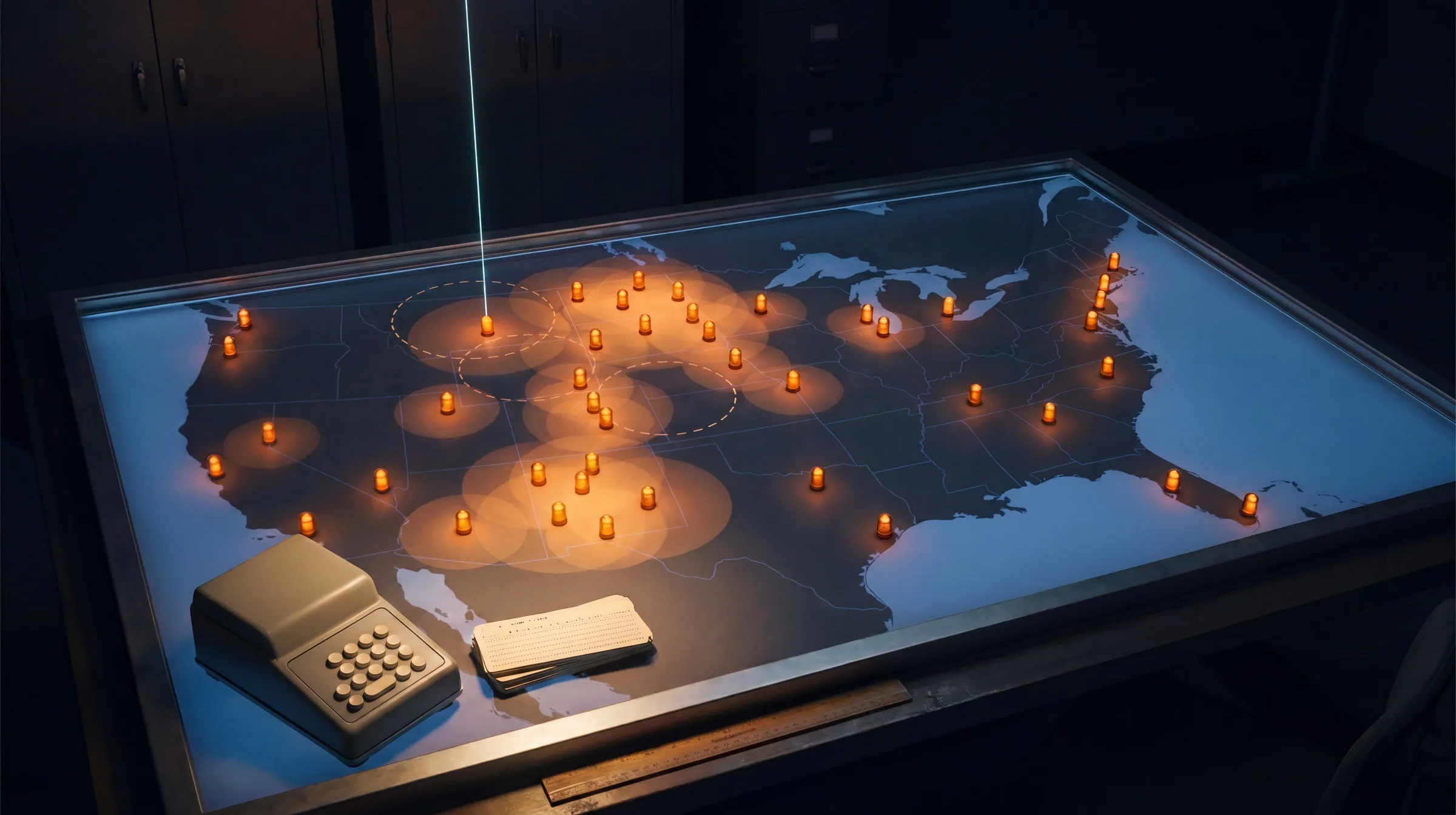 The Nuclear Lure THE NUCLEAR CORRELATION · 1945-2026 · INST-60 'UAP prefer nuclear sites' is the oldest pattern claim in the subject, and in 2026 Farah pushed it to deliberate nuclear bait. This bench prices the checkable part. The Map lays the mid-60s nuclear complex over the lower 48 in six layers, missile fields at documented areas, with the 1960 census underneath: a fifth of the population within 50 miles, half within 100, so 'near a nuclear site' starts a fifth true by accident. The Clock pairs Blue Book's 12,618 yearly reports with the NV-209 test counts: reports fall through 1958's 77 tests, bottom out in 1962's 96, and rise through the zero-test moratorium; r = 0.19 at permutation p = 0.39, and the only one of fourteen dial settings to clear 5% is the acausal one where reports lead. The Mill computes 1,469 'near a nuke, during nuclear activity' double coincidences from chance alone. The File prices Echo Flight's ten missiles, the 1975 NORAD logs and the Farah claim card by card. Two verdicts at equal size: the correlation is cheap; the residue is not statistical. LIVE
  The Mothership Ledger DEDEDEDE · INST-59 Fiction's favourite picture, priced: a kilometre-scale ship parked quietly over a city, for years. The mass is the dial nobody measured, and three independent ledgers re-price it live: the Gravimeter runs the uniform-disk formula against published instrument floors; the Lift bill prices the hover three ways, 71 m/s and 700 GW to pay in air, buoyancy free but capped at about one aircraft carrier, the field clause handing the bill to bedrock; and the Shadow ledger prices the one thing no clause can waive, a nine-metre fringe and 785 MW of deleted noon sunlight. The Overhead view stages it all under a Preetham sky driven by the same spherical trig as the shadow. Two verdicts at equal size: nothing kilometre-sized hovers for free, and fiction pays no bills, which was always its licence. LIVE
 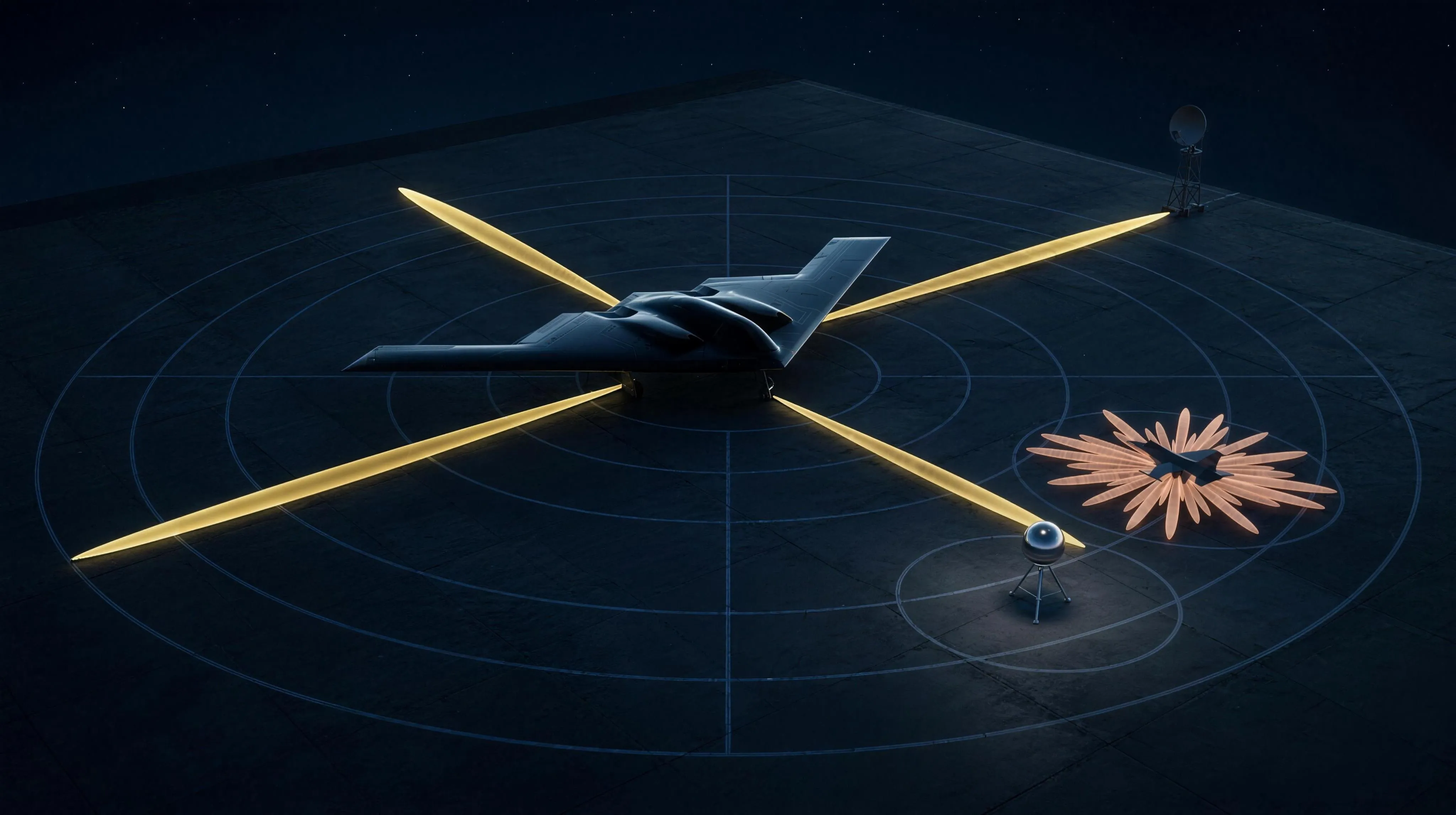 The Stealth Bench UFIMTSEV 1962 · INST-52 The B-2 exists because of three pieces of computable physics, and the same three pieces write its limits; this bench computes both sides. The Range view is 3D: a flying wing, a baseline fighter and a calibration sphere at true metre scale on a radar range, with the beam drawn at the selected band's true wavelength, so VHF arrives as two-metre swells and X band as a fine ripple; walk the radar around the ring and catch the four spikes that planform alignment allows. The Rose view draws the whole rotation at once: four narrow petals on a circle of silence, about 0.5% of azimuths above the 1 m² line at X band, against roughly 10% for the fighter under the same solver, with a median return 25 dB louder. The Bands view is two exact curves: the full Mie series for the conducting sphere, lifting to 3.65 times the optical value near ka = 1, which is the entire case for VHF counter-stealth radar, and a Salisbury screen tuned at 10 GHz that hands back 91% of the power one decade below. The Ladder view prices the radar equation's fourth-root law: the radar that sees 100 m² at 400 km sees 0.0001 m² only at 13 km, so ten thousand times quieter buys ten times closer. The File runs from a paper published openly in Moscow in 1962 to an F-117 in a Serbian field in 1999 with a VHF radar in the kill chain, by way of the black triangles, the Belgian wave, and the 1992 charged-edge report some read as antigravity. Two verdicts close at equal size: the geometry delivers, and the limits hold. LIVE
 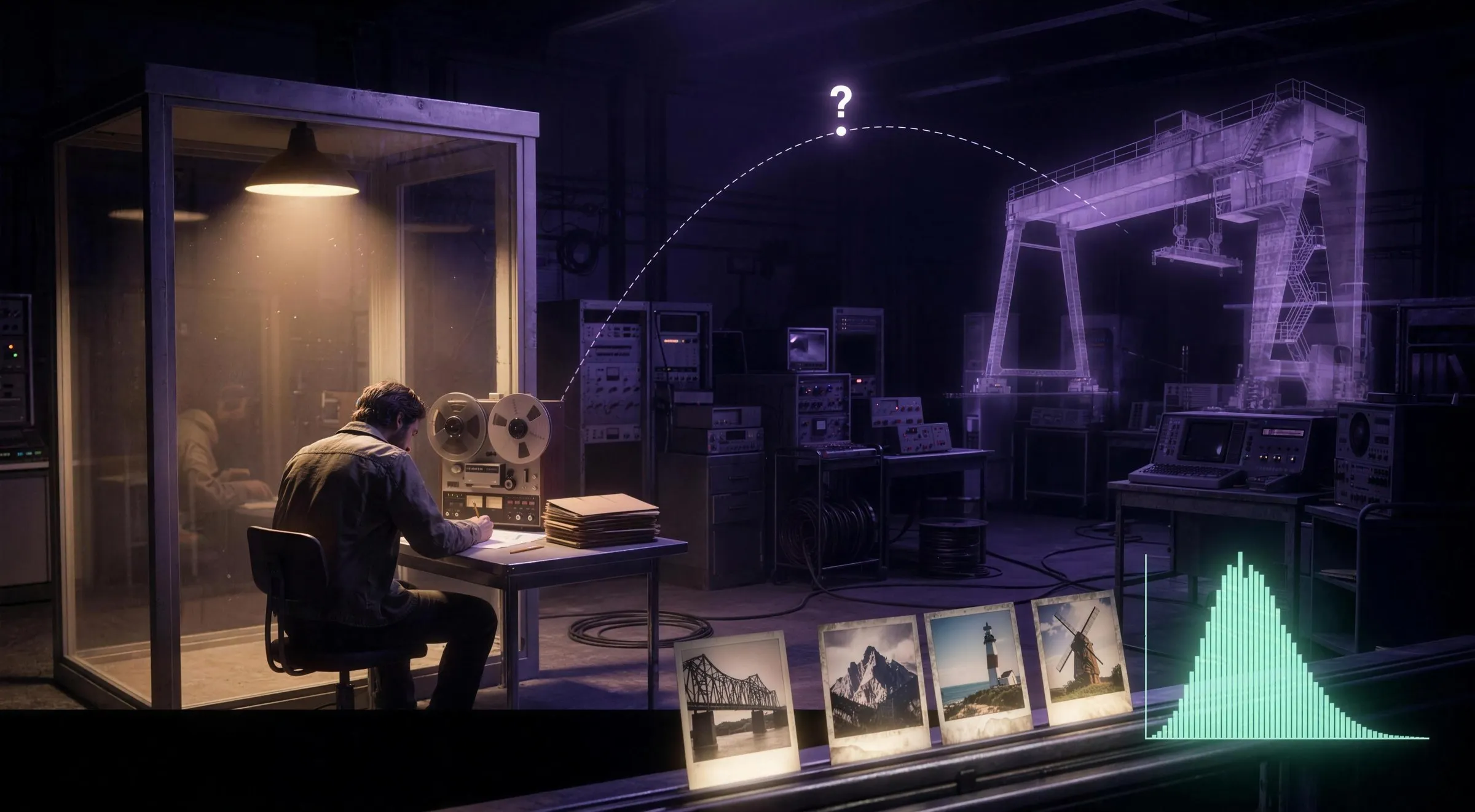 Project Stargate STARGATE · 1972-95 · INST-37 The U.S. government's 1972-1995 remote-viewing program, rebuilt as a statistics bench. Twenty-three years, about $20 million, six code names, and the entire empirical residue is one sliver: a claimed hit rate near 32% where chance earns exactly 25. The Protocol view takes one trial apart as a machine: the sealed booth, the four-candidate pool, the randomizer, the blind judge, and the claim under test drawn as a dashed question mark. The Chance Machine drops series into a live histogram: watch pure luck build its bell, then lay the autoganzfeld's 32.2% and Utts' effect size 0.2 over it and watch z grow with the square root of N. The Leaky Lab runs a clean and a leaky zero-psi laboratory side by side, with five switches from the published critiques that can drift the coral pile onto the claimed line. The File sets out the 1995 AIR review, where Utts and Hyman read one dataset and signed opposite verdicts. The baseline is arithmetic, the claims are sourced, and the reading is yours. LIVE
 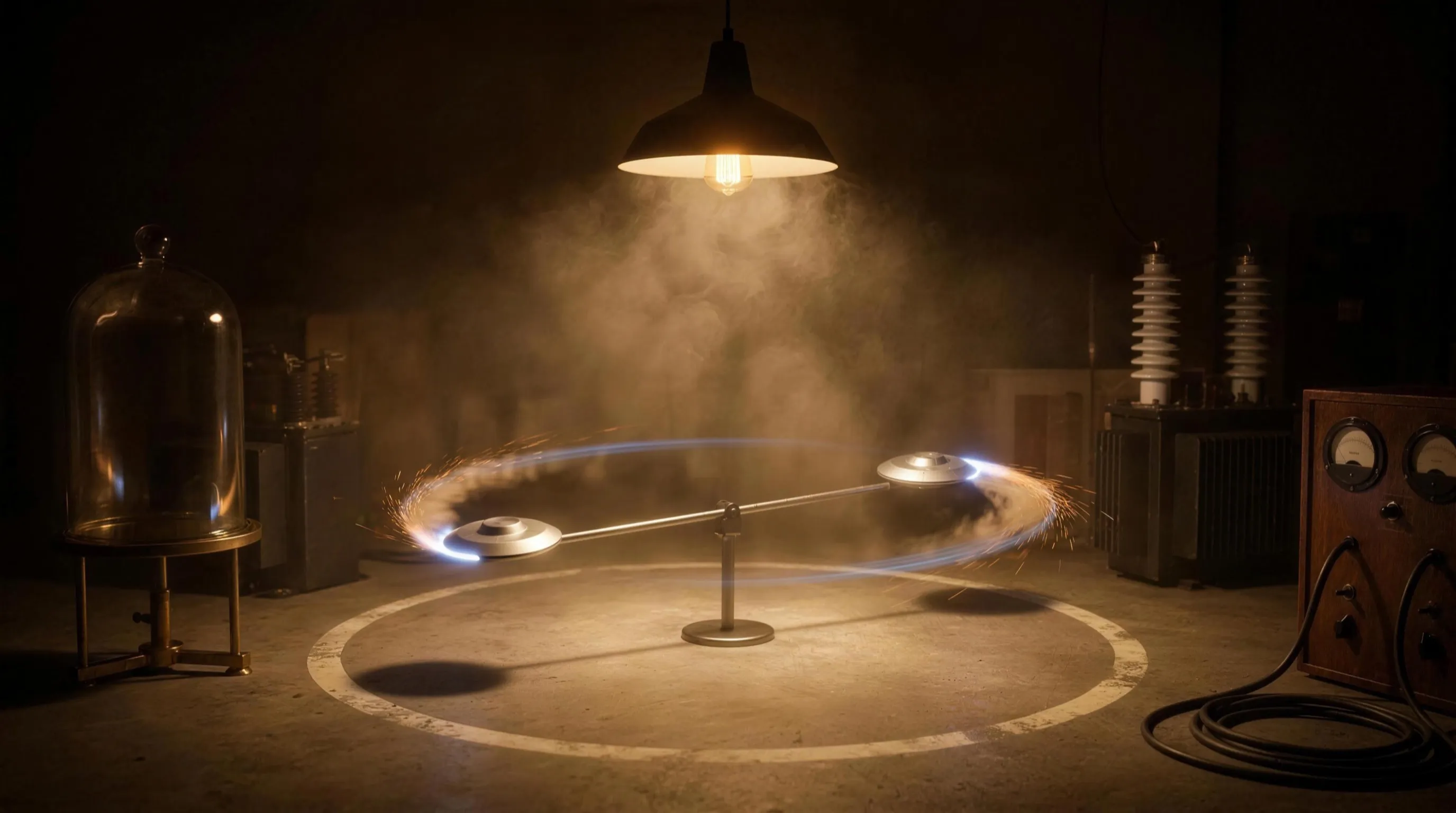 Electrogravitics BIEFELD-BROWN · INST-32 Charge an asymmetric capacitor to tens of kilovolts and it moves toward its positive side. Nobody disputes that; the dispute is why. The sceptic says ion wind: charged air thrown backward, useless in space. Thomas Townsend Brown, and the 2008 book built on him, say charge couples to gravity. This instrument computes both readings from the same dials and hands you the decisive one: pump the chamber from one atmosphere down past a billionth of one, where ions cannot exist. The Bench flies Brown's 1950 tethered discs; the Jar rebuilds the Paris vacuum chamber and the discharge that spun the rotor until they feared it would shatter the bell jar; the Craft stages the seventy-foot aero-marine proposal of 1960 that was never built; the Curve lays out the Navy's 1952 data; the Ledger prices both readings row by row, with the author's own chapter 12 nulls as the counter-bill. Every constant in the electrogravitic branch is the book's own. One arithmetic error is corrected on screen. LIVE
 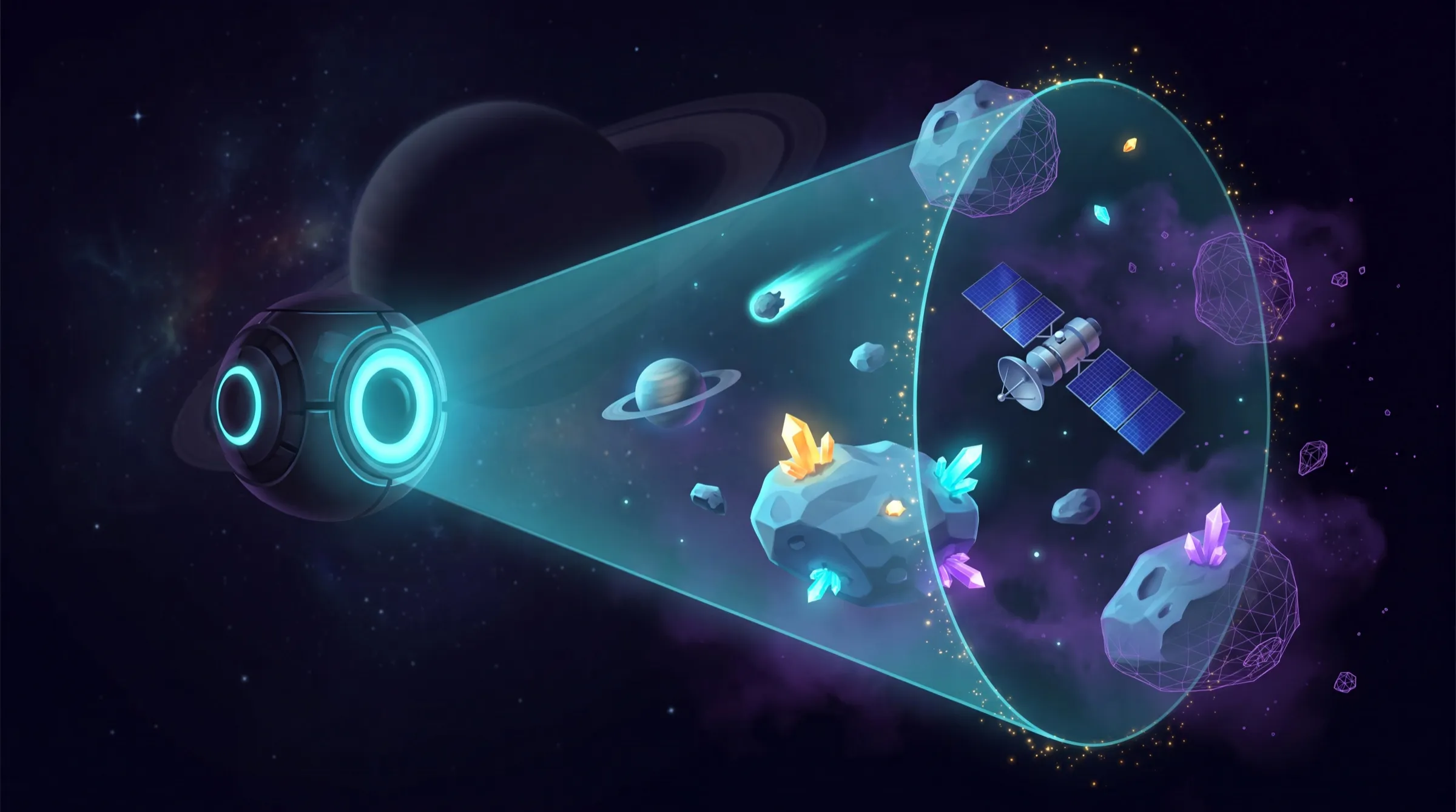 The Rendering Engine FRUSTUM · INST-17 A game engine's oldest trick, built honest: a drifting interstellar field of crystal asteroids, satellites, comets and deep-space probes that renders only inside the observer's view frustum and decays to probability fog beyond it. Whip the view and try to catch the world loading, break the engine to see the glitch nature never shows, and read the live table that tags every rung of Virk's game-to-quantum analogy as ENGINE, PHYSICS or READING. LIVE
 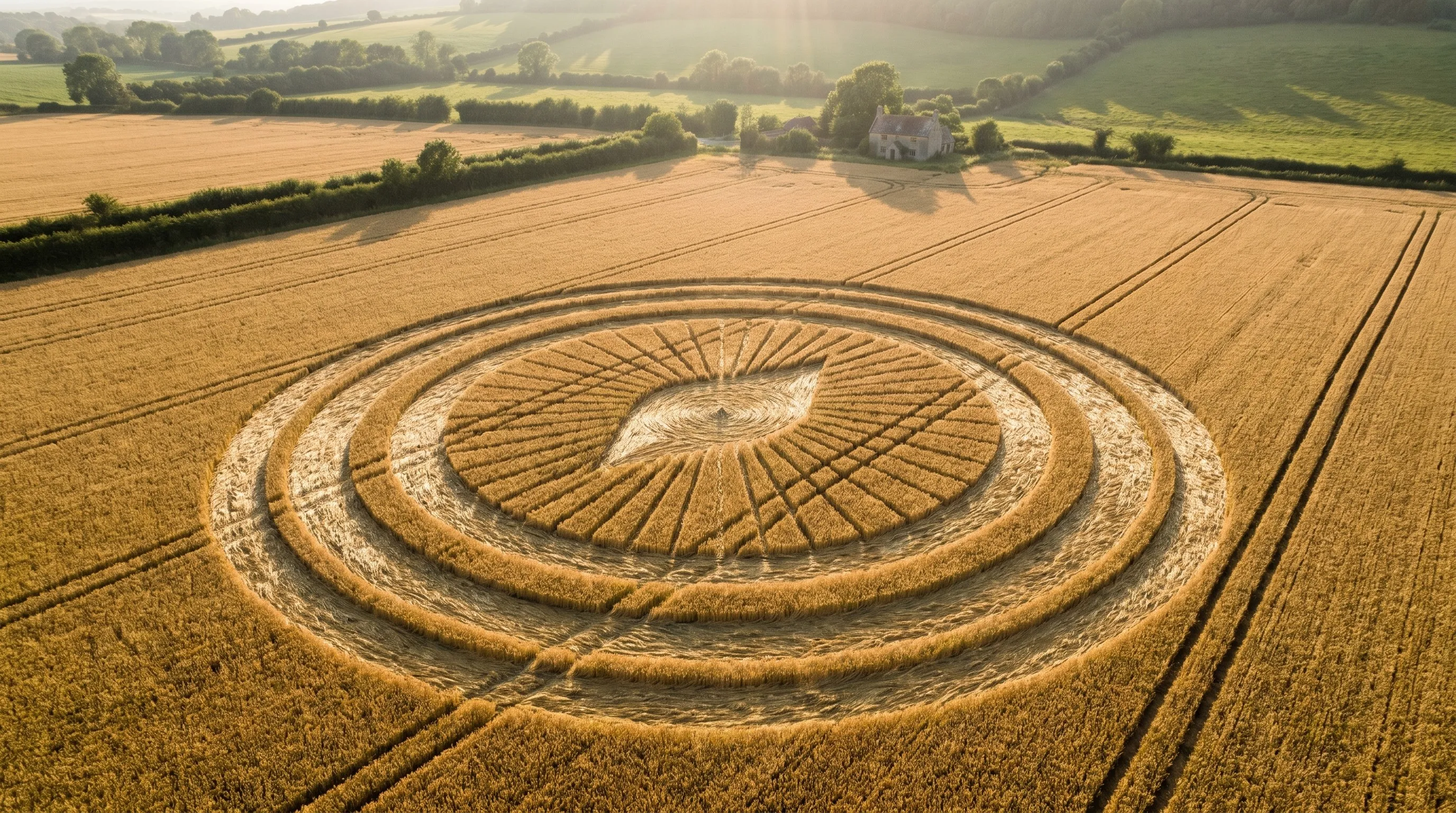 Crop Circles FIELD · INST-04 A wheat field you can stamp real formations into, the stalks laying over in physical swirls. The patterns are real; the cause is where the periphery begins.
The Nuclear Lure THE NUCLEAR CORRELATION · 1945-2026 · INST-60 'UAP prefer nuclear sites' is the oldest pattern claim in the subject, and in 2026 Farah pushed it to deliberate nuclear bait. This bench prices the checkable part. The Map lays the mid-60s nuclear complex over the lower 48 in six layers, missile fields at documented areas, with the 1960 census underneath: a fifth of the population within 50 miles, half within 100, so 'near a nuclear site' starts a fifth true by accident. The Clock pairs Blue Book's 12,618 yearly reports with the NV-209 test counts: reports fall through 1958's 77 tests, bottom out in 1962's 96, and rise through the zero-test moratorium; r = 0.19 at permutation p = 0.39, and the only one of fourteen dial settings to clear 5% is the acausal one where reports lead. The Mill computes 1,469 'near a nuke, during nuclear activity' double coincidences from chance alone. The File prices Echo Flight's ten missiles, the 1975 NORAD logs and the Farah claim card by card. Two verdicts at equal size: the correlation is cheap; the residue is not statistical. LIVE The Mothership Ledger DEDEDEDE · INST-59 Fiction's favourite picture, priced: a kilometre-scale ship parked quietly over a city, for years. The mass is the dial nobody measured, and three independent ledgers re-price it live: the Gravimeter runs the uniform-disk formula against published instrument floors; the Lift bill prices the hover three ways, 71 m/s and 700 GW to pay in air, buoyancy free but capped at about one aircraft carrier, the field clause handing the bill to bedrock; and the Shadow ledger prices the one thing no clause can waive, a nine-metre fringe and 785 MW of deleted noon sunlight. The Overhead view stages it all under a Preetham sky driven by the same spherical trig as the shadow. Two verdicts at equal size: nothing kilometre-sized hovers for free, and fiction pays no bills, which was always its licence. LIVE The Stealth Bench UFIMTSEV 1962 · INST-52 The B-2 exists because of three pieces of computable physics, and the same three pieces write its limits; this bench computes both sides. The Range view is 3D: a flying wing, a baseline fighter and a calibration sphere at true metre scale on a radar range, with the beam drawn at the selected band's true wavelength, so VHF arrives as two-metre swells and X band as a fine ripple; walk the radar around the ring and catch the four spikes that planform alignment allows. The Rose view draws the whole rotation at once: four narrow petals on a circle of silence, about 0.5% of azimuths above the 1 m² line at X band, against roughly 10% for the fighter under the same solver, with a median return 25 dB louder. The Bands view is two exact curves: the full Mie series for the conducting sphere, lifting to 3.65 times the optical value near ka = 1, which is the entire case for VHF counter-stealth radar, and a Salisbury screen tuned at 10 GHz that hands back 91% of the power one decade below. The Ladder view prices the radar equation's fourth-root law: the radar that sees 100 m² at 400 km sees 0.0001 m² only at 13 km, so ten thousand times quieter buys ten times closer. The File runs from a paper published openly in Moscow in 1962 to an F-117 in a Serbian field in 1999 with a VHF radar in the kill chain, by way of the black triangles, the Belgian wave, and the 1992 charged-edge report some read as antigravity. Two verdicts close at equal size: the geometry delivers, and the limits hold. LIVE Project Stargate STARGATE · 1972-95 · INST-37 The U.S. government's 1972-1995 remote-viewing program, rebuilt as a statistics bench. Twenty-three years, about $20 million, six code names, and the entire empirical residue is one sliver: a claimed hit rate near 32% where chance earns exactly 25. The Protocol view takes one trial apart as a machine: the sealed booth, the four-candidate pool, the randomizer, the blind judge, and the claim under test drawn as a dashed question mark. The Chance Machine drops series into a live histogram: watch pure luck build its bell, then lay the autoganzfeld's 32.2% and Utts' effect size 0.2 over it and watch z grow with the square root of N. The Leaky Lab runs a clean and a leaky zero-psi laboratory side by side, with five switches from the published critiques that can drift the coral pile onto the claimed line. The File sets out the 1995 AIR review, where Utts and Hyman read one dataset and signed opposite verdicts. The baseline is arithmetic, the claims are sourced, and the reading is yours. LIVE Electrogravitics BIEFELD-BROWN · INST-32 Charge an asymmetric capacitor to tens of kilovolts and it moves toward its positive side. Nobody disputes that; the dispute is why. The sceptic says ion wind: charged air thrown backward, useless in space. Thomas Townsend Brown, and the 2008 book built on him, say charge couples to gravity. This instrument computes both readings from the same dials and hands you the decisive one: pump the chamber from one atmosphere down past a billionth of one, where ions cannot exist. The Bench flies Brown's 1950 tethered discs; the Jar rebuilds the Paris vacuum chamber and the discharge that spun the rotor until they feared it would shatter the bell jar; the Craft stages the seventy-foot aero-marine proposal of 1960 that was never built; the Curve lays out the Navy's 1952 data; the Ledger prices both readings row by row, with the author's own chapter 12 nulls as the counter-bill. Every constant in the electrogravitic branch is the book's own. One arithmetic error is corrected on screen. LIVE The Rendering Engine FRUSTUM · INST-17 A game engine's oldest trick, built honest: a drifting interstellar field of crystal asteroids, satellites, comets and deep-space probes that renders only inside the observer's view frustum and decays to probability fog beyond it. Whip the view and try to catch the world loading, break the engine to see the glitch nature never shows, and read the live table that tags every rung of Virk's game-to-quantum analogy as ENGINE, PHYSICS or READING. LIVE Crop Circles FIELD · INST-04 A wheat field you can stamp real formations into, the stalks laying over in physical swirls. The patterns are real; the cause is where the periphery begins.