The Casework
The sightings file, case by case: the Navy tapes, the Cold War scrambles, and the prosaic machinery that can paint a sky.
LIVE 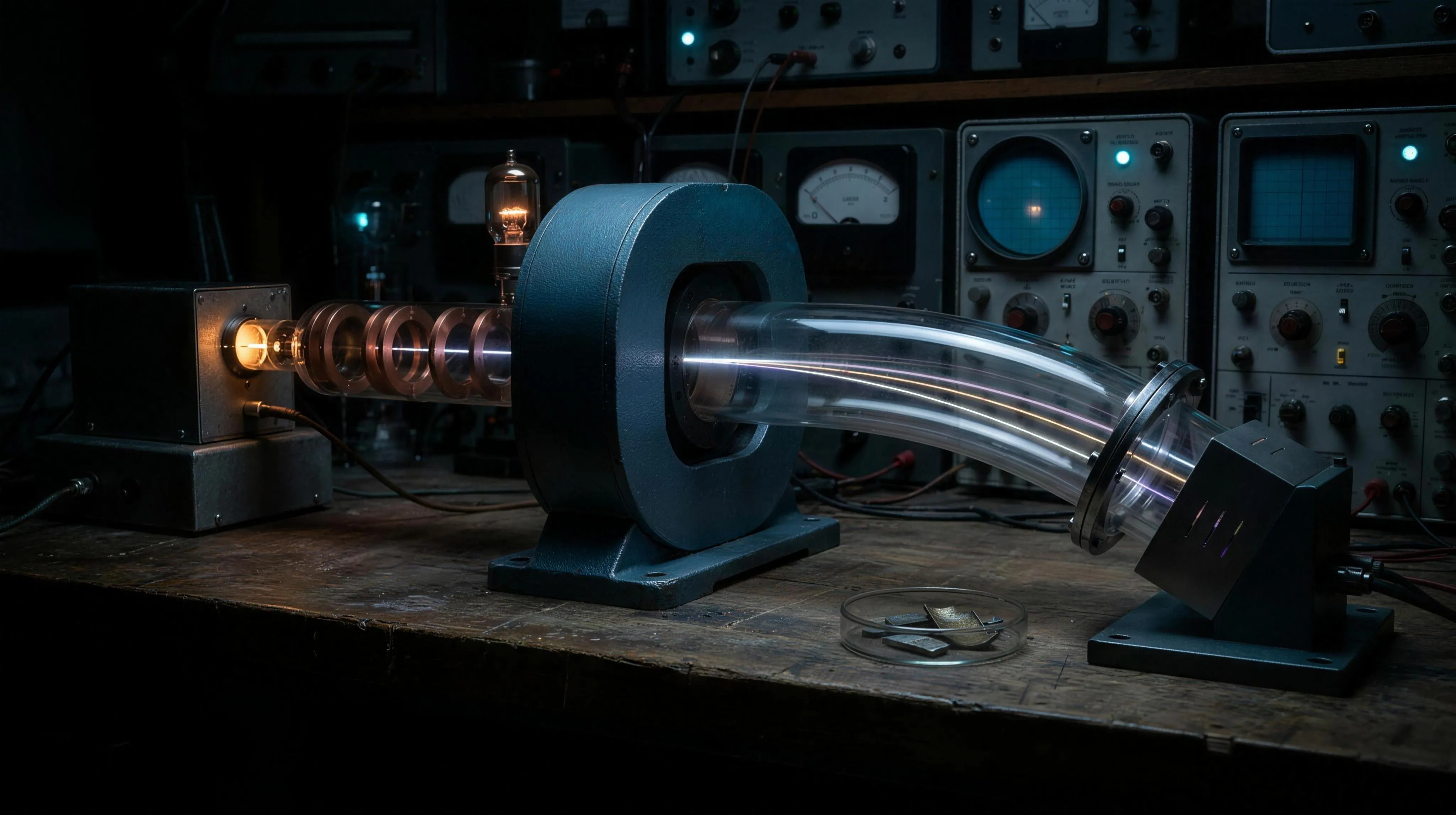 The Ubatuba Magnesium UBATUBA · SEP 1957 · INST-63 In September 1957 a letter with an illegible signature reached a Rio columnist, carrying three lumps of grey metal said to be fragments of a disc that exploded at noon over a Ubatuba beach. Over the next 61 years they became the only UFO artefact with a continuous laboratory record, and this bench retries that record in full. The Spectrometer view builds a magnetic-sector instrument at true scale, one unit per 10 cm: ten kilovolts, 0.2312 tesla, three magnesium beams separating per r = √(2mV/q)/B to arrive 6.3 mm apart per mass unit, while the permil residuals the case actually argues about move the beams by micrometres; load the '14.3% 26Mg' figure the Condon Report omitted, found in Craig's papers in 2008, and the violet beam jumps 30% over-bright, an anomaly no laboratory glimpsed again in five subsequent decades. The Ruler draws the terrestrial fractionation line whose slope comes from the exact masses alone: every error-barred measurement sits on it, real extraterrestrial magnesium, the 13-to-100-permil off-line 26Mg excess of Allende CAIs, is computed live on the Al/Mg dial, and the single off-line point of 2017 carried no error bars and was overturned by the same gram a year later. The Ledger prices the founding claim by detection limit: 'absence of any other metallic element' honestly converts to 'at least 99.9%', measured 99.88%, sixty-six times dirtier than the triply-sublimed metal on Dow's 1957 shelf; strontium at 500 ppm is the one genuinely odd row, and Dow had poured that batch in 1940. Ten cards and two verdicts at equal size: everything measured is terrestrial, and whether the right gram was measured is a question custody has made permanently unanswerable. LIVE
 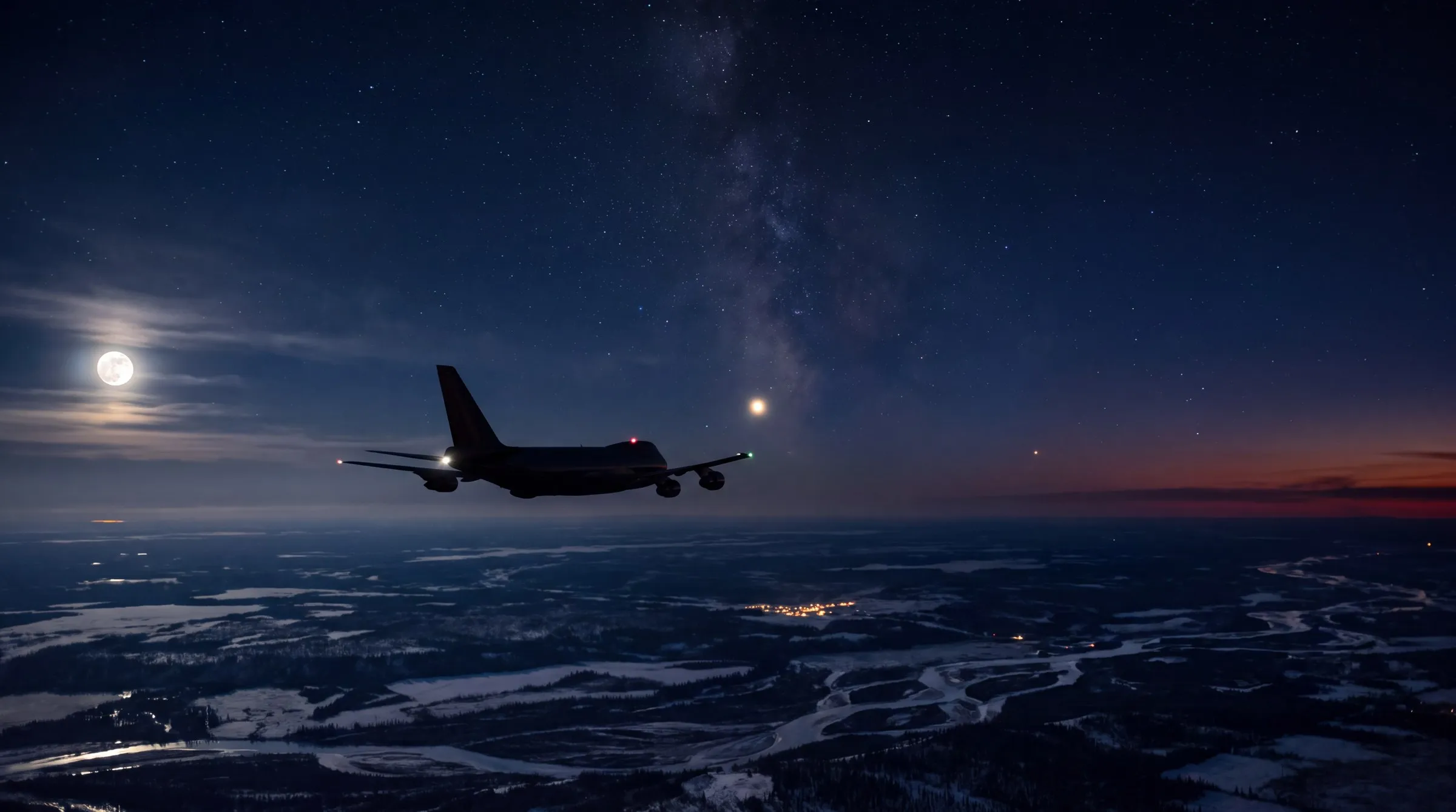 JAL 1628: The Star Bench ALASKA · 17 NOV 1986 · INST-62 On the evening of 17 November 1986 a JAL 747 freighter reported arrays of lights, a pale band, and a silhouette that grew into 'twice an aircraft carrier', across fifty-five minutes that are almost entirely on tape. This bench rebuilds the one thing every argument stands under: the sky itself, solved for that exact evening and audited against JPL Horizons. The Night view replays the tape's own clock in 3D, Jupiter at -2.5 low off the left nose, Mars beside it, a 98% moon dead astern, with the amber reported lights staged at the record's clock calls and labelled as testimony. The Bearings view plots the crew's calls against the planet curves: most of the reported drift is the aircraft's own nose swinging. The Radar view prices five lanes separately and lets the controller's summary stand: a few primary hits, never a good track. The File walks the size claim's tenfold growth by date and prices the 360-degree turn by R = v²/(g·tanφ), matching the tape to seconds. Two verdicts at equal size: what followed the aircraft behaved like the sky, and what stood at eleven o'clock was never identified. LIVE
 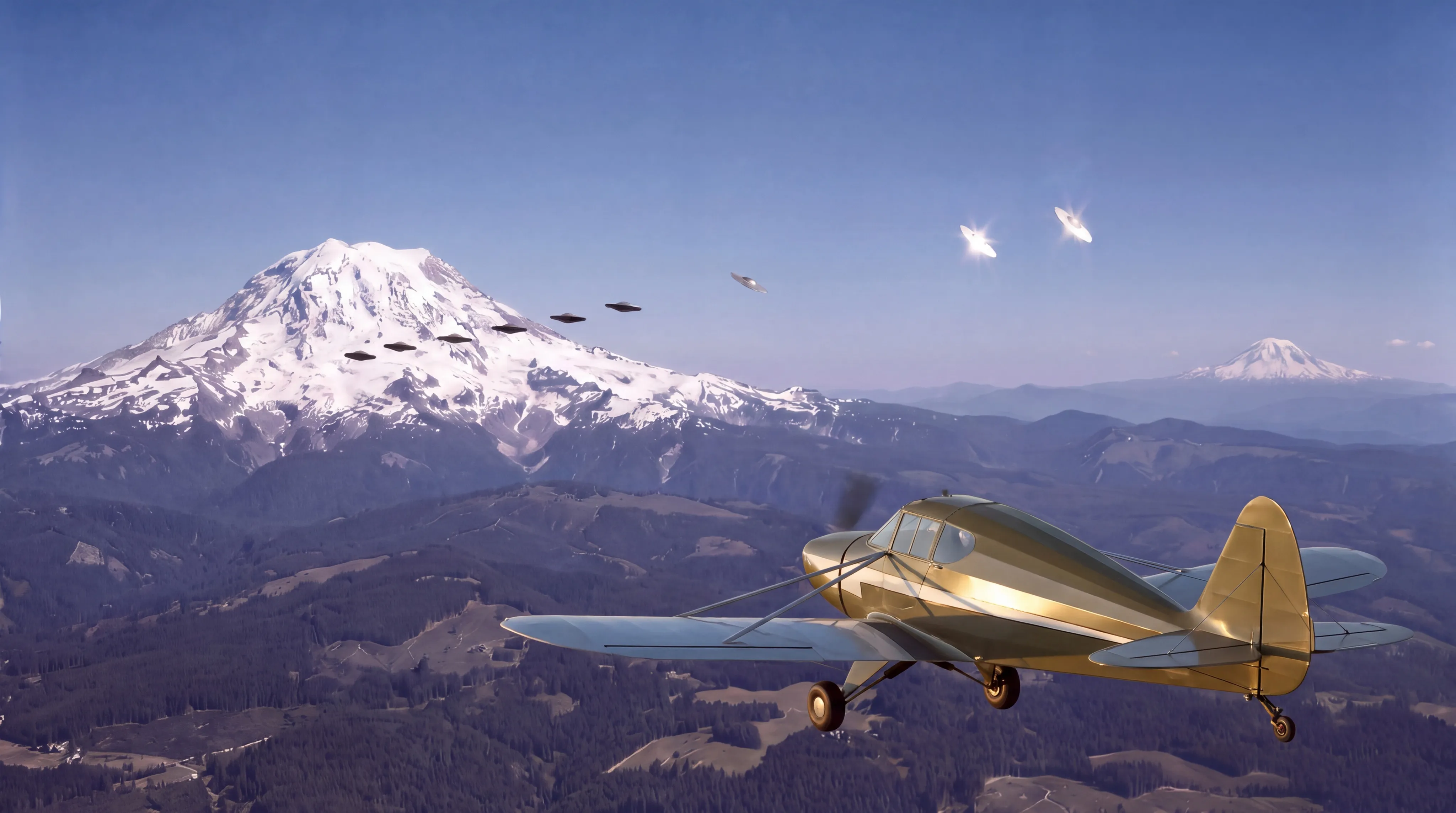 Kenneth Arnold 1947 MOUNT RAINIER · 24 JUN 1947 · INST-61 On the afternoon of 24 June 1947, 9,200 feet over the Washington Cascades, a pilot searching for a crashed Marine transport saw nine objects strung between Mount Rainier and Mount Adams and did the one thing almost nobody in this literature does: he timed them, on the eight-day clock on his instrument panel, at one minute forty-two seconds. The summits are 46.73 statute miles apart at 163.9 degrees true, against his reported course of about 170, and that division gives 1,649 mph, Mach 2.24 at his altitude, four months before the sound barrier was officially broken. And all of it rests on a quantity nobody measured. The Ridge view is 3D and first person: the two volcanoes on their published coordinates and 1947 heights, the nine objects on the real line, and the visible horizon drawn 1.57 degrees below true level, which is why 'level with the horizon' put them near 7,000 feet. The Ledger plots v = d / 102 s as a straight line through the origin, with the sound barrier and the five-day-old world record laid across it: every mile of assumed distance buys 77 mph, and the identical sighting runs from 230 to 1,800. The Eye separates the three acuity thresholds that were never kept apart and quotes Hynek's 1956 memo beside its own errors, with the DC-4 he resolved at fifteen miles as the control. The Word shows, in dated quotations, that saucer was a shape word from the first sentence ever printed. Two verdicts at equal size. LIVE
 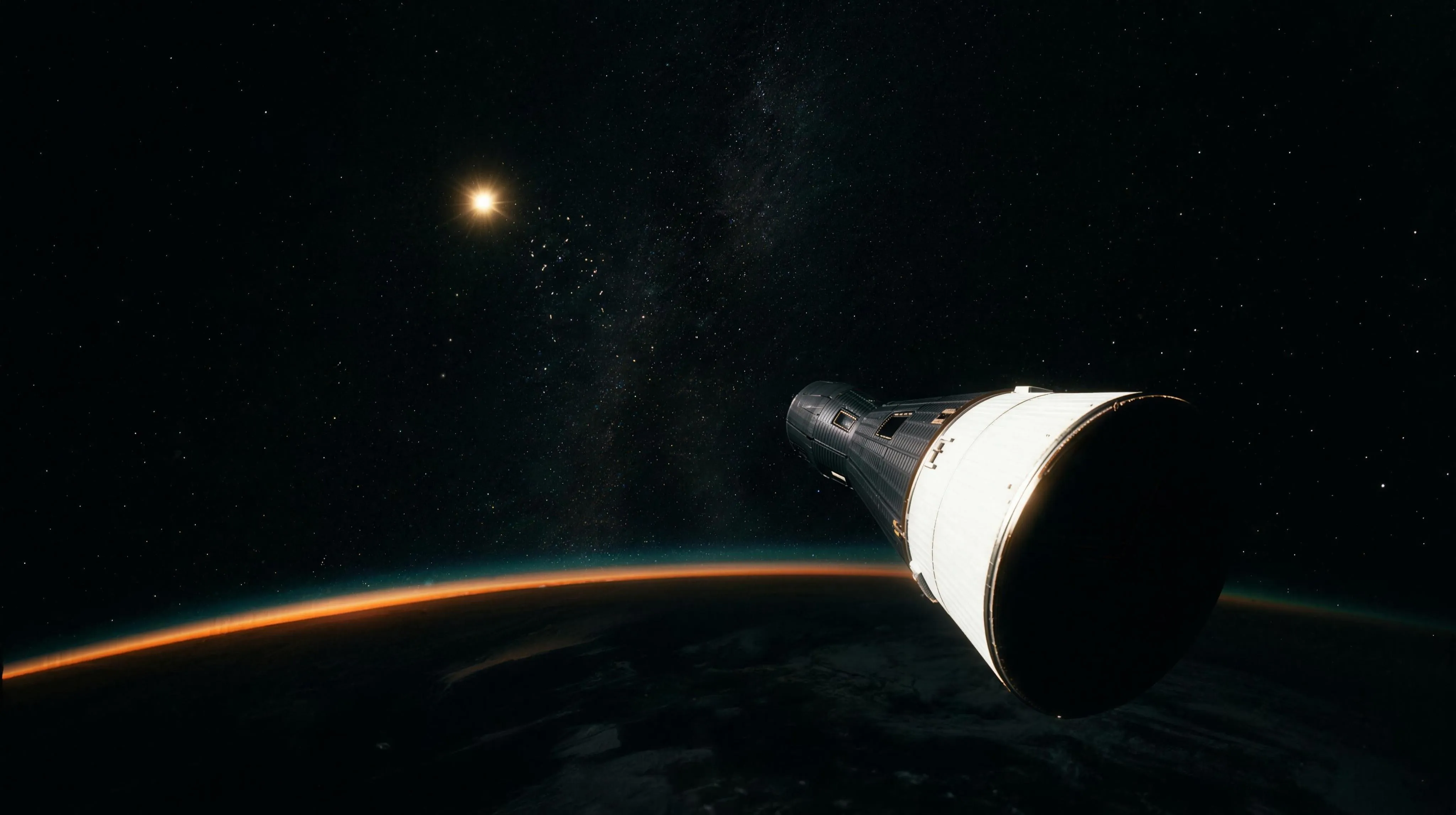 A Bogey at Ten O'Clock High LOW-EARTH ORBIT · 1965 · INST-56 NASA-UAP-D3, tape T-00763: the Gemini 7 "bogey" exchange of 4 December 1965, and a co-orbital relative-motion bench. The Formation view is 3D: Gemini 7 and its Titan II second stage to reported scale, from the recorded 18-46 m stationkeeping (the stage tumbling at 2 rpm, venting through a broken fuel line) out to the bogey call at GET 4:24, with the shed delta-v's size and direction on dials and the Clohessy-Wiltshire closed form doing all the flying. The Tape view restores the PAO release commentary as a playable timeline: thirteen verbatim lines, three tracks lighting as the crew sorts booster, particles and bogey. The Drift view runs the exact arithmetic: 16.1 km per orbit per m/s shed, closed radial loops, and Cauchy's theorem making the tumbling stage a 5.33 m sphere to sunlight, naked-eye visible out to 6,652 km, beyond the horizon. The Ledger walks the release, the mission, and the Gemini 6A 30 cm rendezvous counterpoint eleven days later. Two verdicts at equal size: formation flight is free, and the tape names three things, identifies two, and leaves the third open. LIVE
 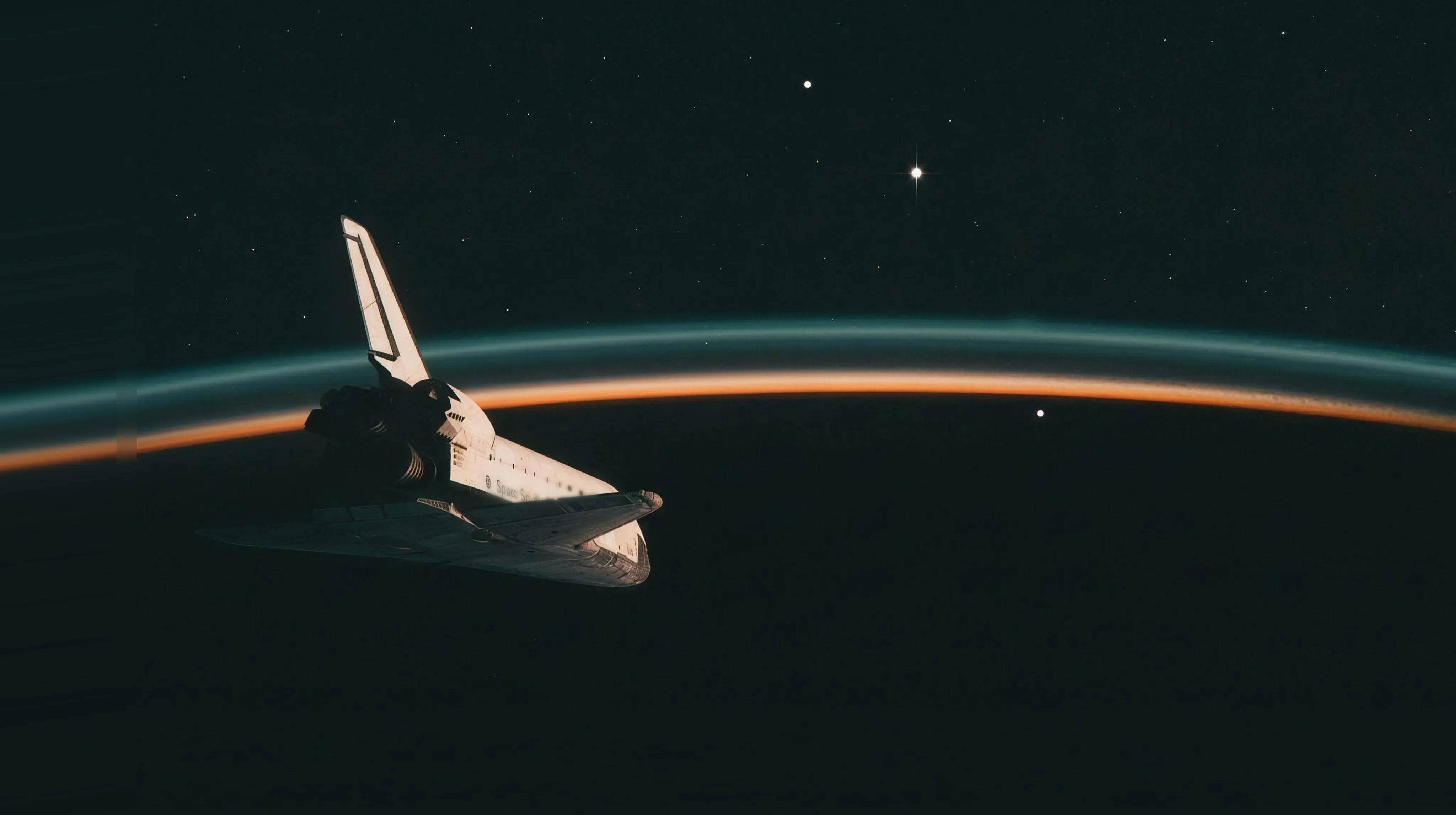 Three Frames from STS-80 LOW-EARTH ORBIT · 1996 · INST-55 NASA-UAP-D030 to D032: three film frames shot through Columbia's windows in late 1996, one unidentified object, released with no range, no size, no interval and no identification. The Orbit view is 3D: Columbia built to scale, the exact 350 km limb geometry (the limb 18.6° below level), and the bright point staged at BOTH ends of the degeneracy ray, a 17.5 mm ice flake 30 m out or a 233 m craft 400 km out, on the same angular track, with a film inset proving both readings take the same picture. The Frames view draws the captions as film schematics; stacked, the three captions sketch an arc. The Line view runs the exact arithmetic: theta = D/R is the one number a photograph fixes, sunlit brightness ~ (D/R)^2 rides the same ray (the whole ray shines at magnitude -8.5), and the plume test that would split it, 0.08 s of RCS giving a 2 mm flake 1.67 m/s and the 110-tonne orbiter 2.8 mm/s, needs a firing on video, which stills cannot run. The Ledger walks from the release to the mission to the boundary where NASA's ice-and-debris attribution for the famous video stops. Two verdicts at equal size: a photograph without a range holds an ice flake and a ship with equal ease, and the frames are a record, not an identification. LIVE
 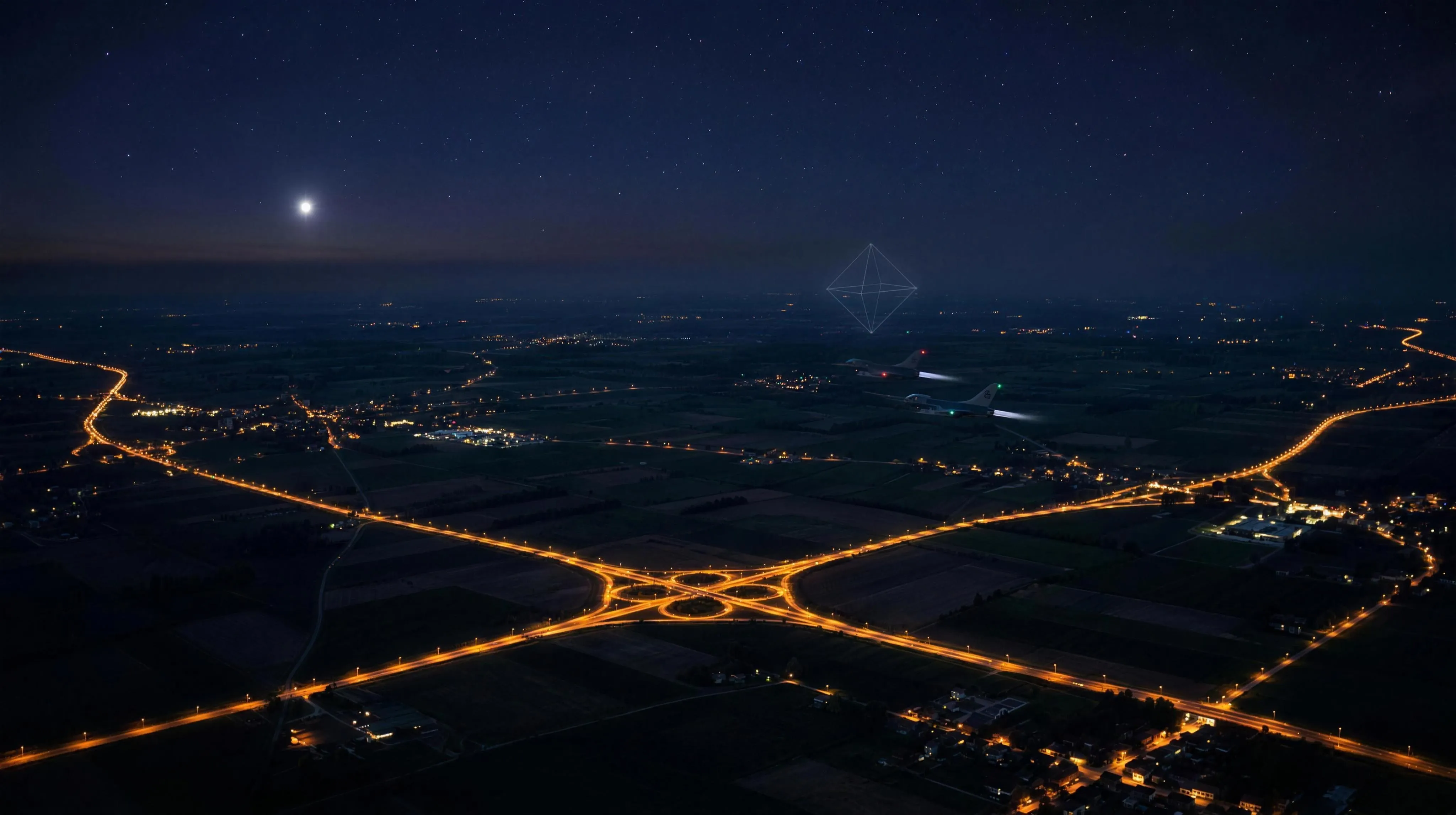 The Belgian Wave BELGIUM · 1989-90 · INST-54 The night of 30-31 March 1990: two F-16s, nine interception attempts, six radar lock-ons, and not one pair of eyes on anything, inside a wave of some 2,000 reports. The Night view replays the chase in 3D over the sodium-lit Belgian plain, under a star field computed for that exact night, with the 00:29 wingman lock replayed as the Air Force's own study concluded. The Tape view carries the recorded numbers as recorded: 150 to 970 knots, altitudes from 11,000 ft to below zero, a tenth-of-a-second lock. The Court prices them exactly: 970 kt at low level is supersonic at the ground and owes a kilometres-wide boom carpet nobody heard; the jump is 21.5 g read over 2 s and the cited 40 g at 1.1 s, with that dt an open dial; a 5-tonne craft draws about a gigawatt. The Sky rebuilds the stars over Ramillies hour by hour: Jupiter at magnitude -2.1 sinking west, Sirius flashing colours low, the reported quadrant at the reported pace. The Ledger runs from thirteen gendarmes at Eupen to the 2011 polystyrene confession. Two verdicts at equal size: a lock is not a sighting, and a hoax is not a wave. LIVE
 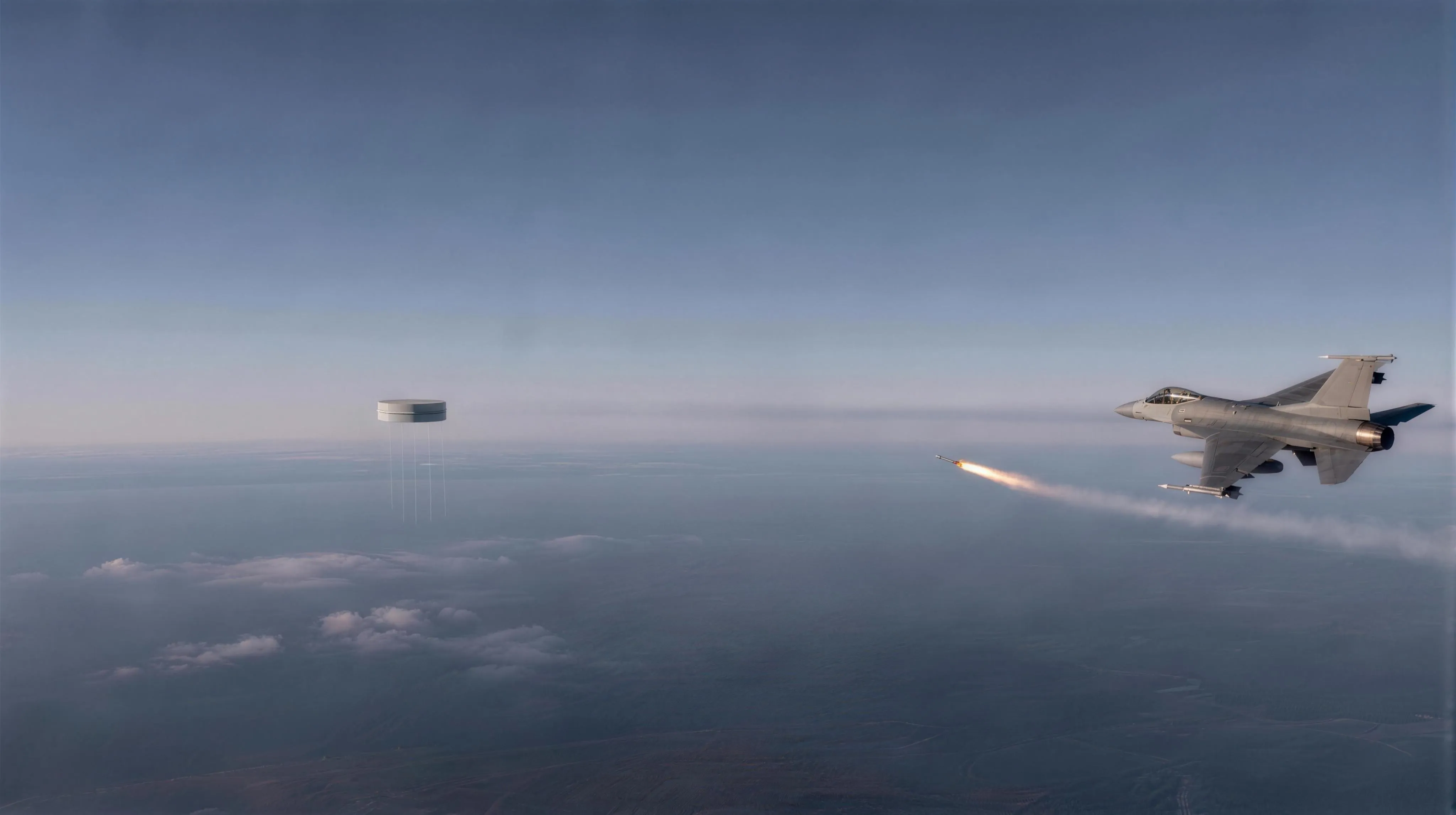 The Shootdown Bench LAKE HURON · 2023 · INST-53 12 February 2023, 20,000 ft over Lake Huron: an F-16 fires two AIM-9X Sidewinders at an octagonal object drifting on the wind; the first misses into the lake, the second connects. The Intercept view is 3D at true metre scale over the true 6,096 m drop, a 350-knot fighter lapping a 16-knot target, both shots replayed as reported. The Gate view draws NORAD's velocity gates as two draggable dashed lines: open them and the slow, small population the filter ate for years floods the screens overnight, the entire mechanism of that week, with the exact Doppler blind-heading formula alongside. The Seeker view integrates two Planck curves live: under the same sky a tailpipe locks at 55 km, the cold drifter near 6 km, a metallised pico balloon at barely over 1 km, and the contrast can go negative. The Clip view reconstructs PR071's 46 seconds at the computed contrast: focus at 11 seconds, the radial displacement at 20. The Ledger runs from the big balloon of 4 February to a 2026 file release, by way of the missing K9YO, the 1998 balloon that shrugged off a thousand cannon rounds, and a double-digit-dollar target against $400,000 missiles. Two verdicts at equal size: a confirmed shootdown is not a confirmed mystery, and what February exposed was the bookkeeping. LIVE
 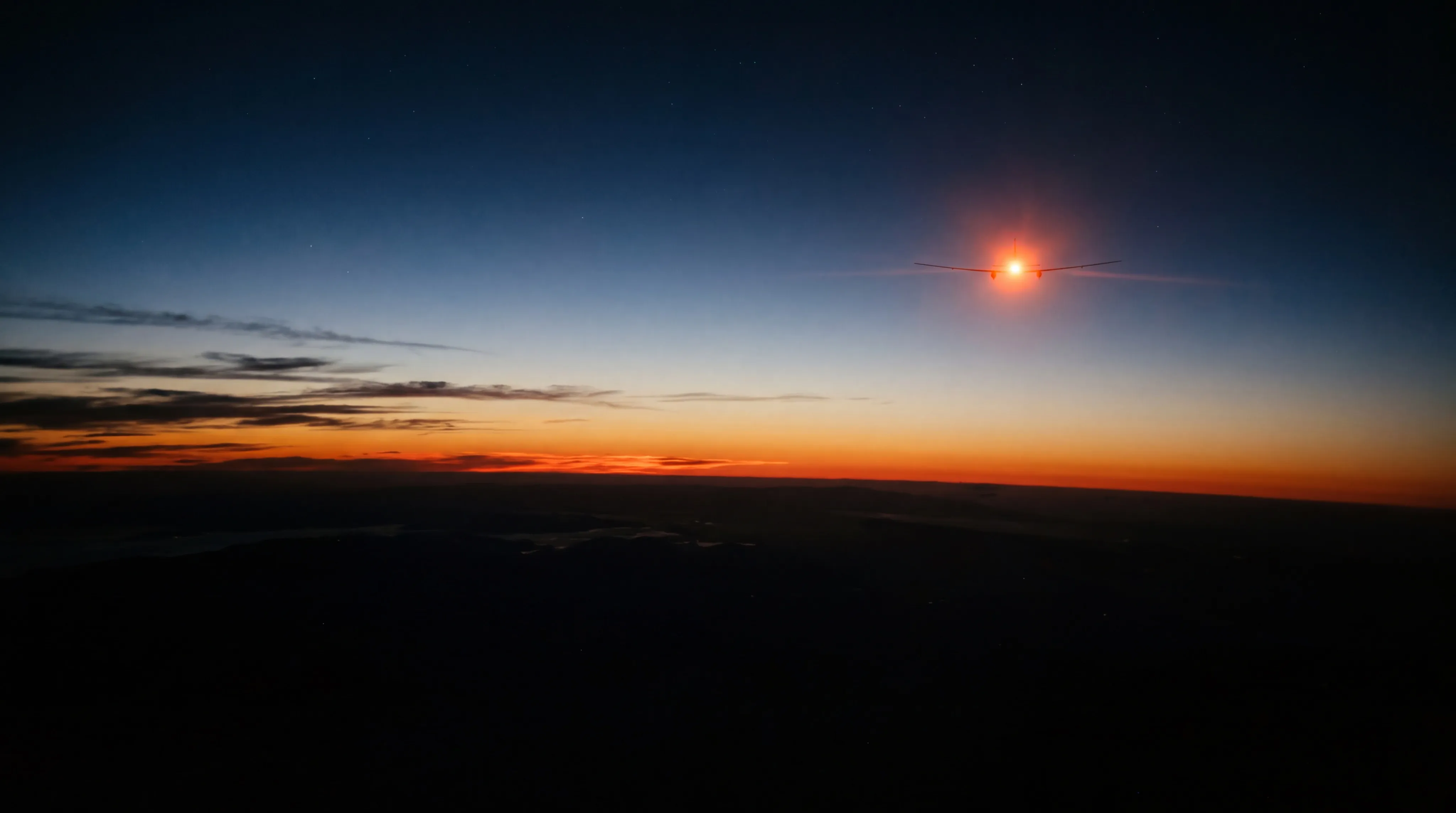 The Reflection Bench CIA-UAP-003 · INST-51 CIA-UAP-003 makes two claims in one paragraph. One is a mechanism: at dusk the sun had already set for an airliner while a U-2 far above it was still in sunlight, its silver wings catching the sun and reading as a fiery object. The other is a population: that these aircraft accounted for more than one-half of all UFO reports of the late 1950s and most of the 1960s. The first can be computed exactly and the second has to be counted, and this bench does both. The Sky view is the moment itself over a real 6,371 km Earth, built with three.js's sky shader: run the evening and watch the aircraft at 40,000 ft go dark while the one at 70,000 stays lit. The Geometry view gives the whole reason as one subtraction, a horizon dip of 4.68 degrees at 70,000 ft against 2.51 at 20,000, with the refraction allowance identical at both ends and therefore cancelling, so the width of the window does not depend on the atmosphere at all. The Glint view calibrates its model on a measured Iridium flare before it describes an aircraft, then finds a steady gleam near magnitude -1 and a specular flare near -10, and sweeps the one quantity nobody published, surface roughness, across forty times its range without the conclusion moving. The Count view draws Project Blue Book's whole year table, 1947 to 1969: 12,618 reports, 8,587 inside the claimed window, and 4,294 sightings demanded by more than one-half, against a record whose largest year predates the U-2's first flight by three, whose 1959 was a nine-year low at the programme's height, and only half of whose window falls in years when any of these aircraft was still bare metal. The File closes on two verdicts at equal size: the geometry holds, and the count does not. The numbers are sourced, the assumptions are printed on the instrument, and the reading is yours. LIVE
 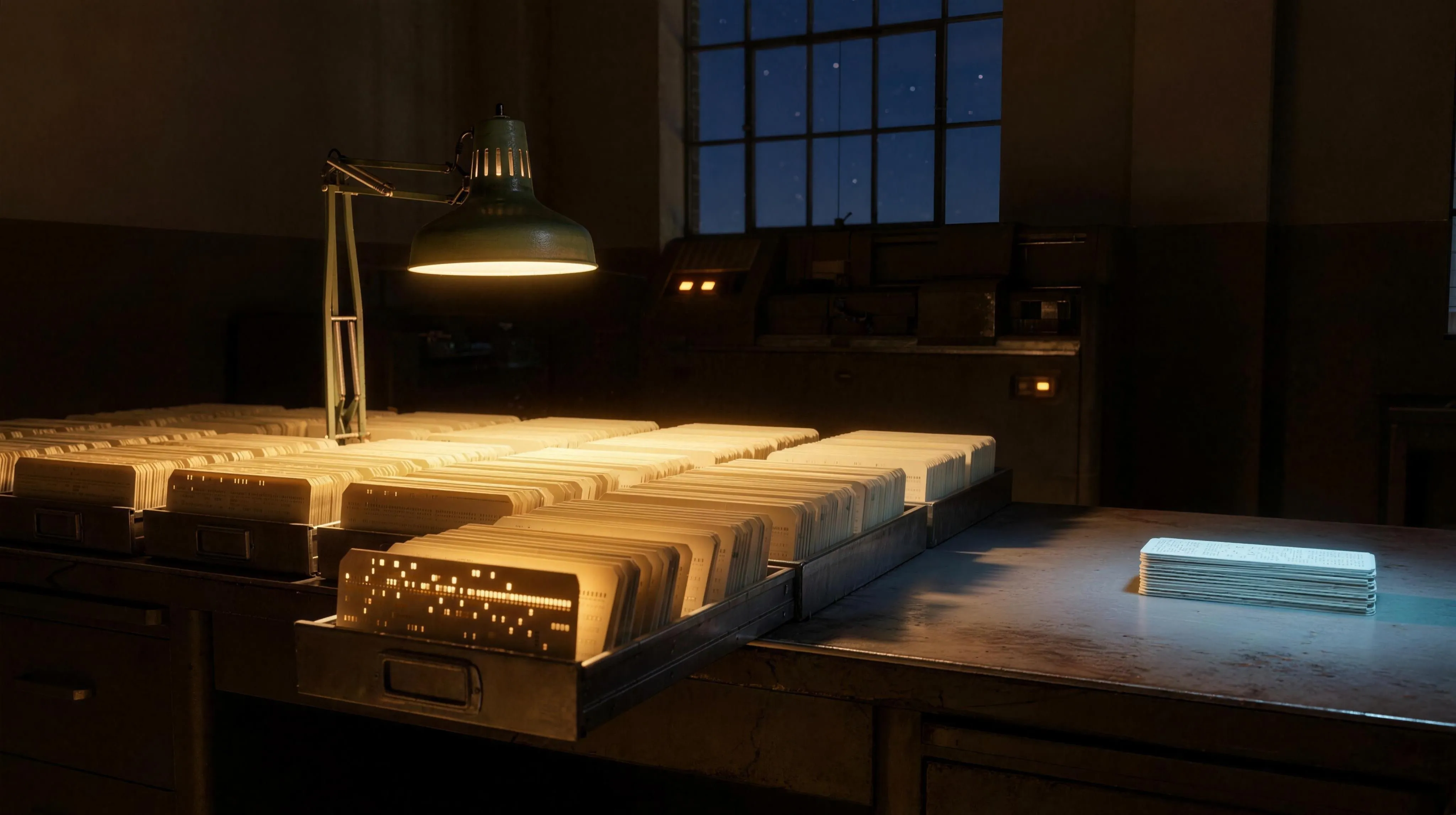 Special Report No. 14 SR-14 · 1955 · INST-50 Everyone quotes one percentage from this document, and almost nobody says which of its three counting bases that percentage belongs to. In 1955 the Air Force received a statistical study it had commissioned: about 4,000 reports of unidentified aerial objects from 1947 to 1952, reduced to IBM punched cards and charted as 3,201 sightings. The Sort view lays the six evaluation bins out on all three bases and hands you the denominator rule: under ten equally defensible rules the same file runs from 17.1% to 30.8%, and the famous 21.5% sits near the bottom of that range. There is a trap alongside it, because on the object-sightings basis the cell reading 474 = 21.5% belongs to Aircraft. The Chi Square view turns the report’s own twelve tables into a working machine: six characteristics, the knowns with and without astronomical cases, the report’s statistic against the textbook one, a switch for the ‘not stated’ bucket it never priced, and the exact p values 1955 could not compute. The finding is right there: the analysts honestly tested whether the unknowns were just knowns seen badly, five characteristics of six rejected that at better than 1%, and the report called the result inconclusive and drew its conclusion from somewhere else. The Quality view draws Figure 8 as a mosaic, where 33.3% of excellent reports ending unknown against 16.6% of poor ones is real, and doubtful coming in below poor means the staircase everyone quotes has a step going the wrong way. The File hangs two verdicts at equal size, and both of them are the report’s own. LIVE
 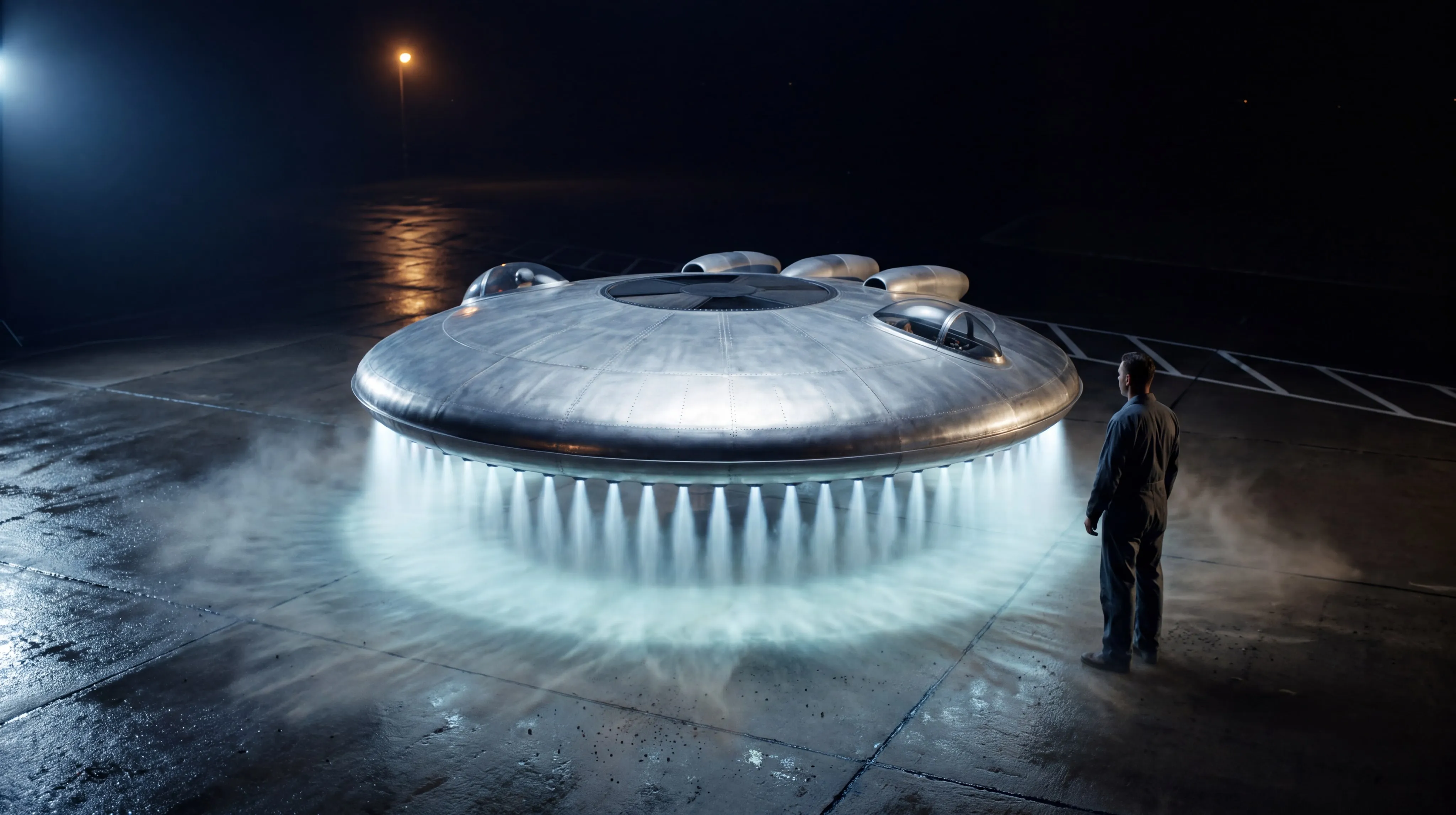 The Avrocar GROUND EFFECT · 1959-61 · INST-49 Every other saucer on this site is a claim about physics nobody has demonstrated. This one is an object you can go and stand next to. Between 1952 and 1961 Canada and the United States spent about ten million dollars on an eighteen-foot aluminium disc, built two, flew both, and parked the survivors in museums. The Rig view is the machine in 3D at true scale with a person beside it, because the question about this aircraft is a distance: the gap between the rim and the ground. Raise it and the cushion dims, the augmentation falls, and past about two feet the disc breaks into the pitch and roll the programme called hubcapping. The Ledger explains the aeroplane in one line. Thin-jet cushion theory makes lift a flat thrust term plus a term in 1/h; anchor it on the two published weights, 3,150 lb with no ground under it and 4,285 lb held at three feet, and the whole aircraft collapses to L(h) = 3,150 + 1,038/h pounds, with the ceiling for any weight at 1,038/(W − 3,150) metres. One constant is fitted and it is the finding: the machine realised 0.24 of the cushion the textbook owed it, next to a turborotor that returned 1.14× from a lift fan that should have doubled its thrust, and the record names the cause as duct losses that were never resolved. The punchline is arithmetic: 3,150 lb of lift against a 3,000 lb empty airframe leaves 150 lb for the pilot, the fuel and the payload together. The Mistake view then tests the file's own 1954 memorandum about circular aircraft being mistaken for UFOs, against angular size (moon-sized at 600 m, not a disc at all beyond 19 km) and against an altitude ladder built from this site's other instruments. The File runs from a 1952 research contract to a museum floor and closes on two verdicts at equal size: it was real and it flew, and it never left the cushion. The numbers are sourced, the assumptions are printed on the machine, and the reading is yours. LIVE
 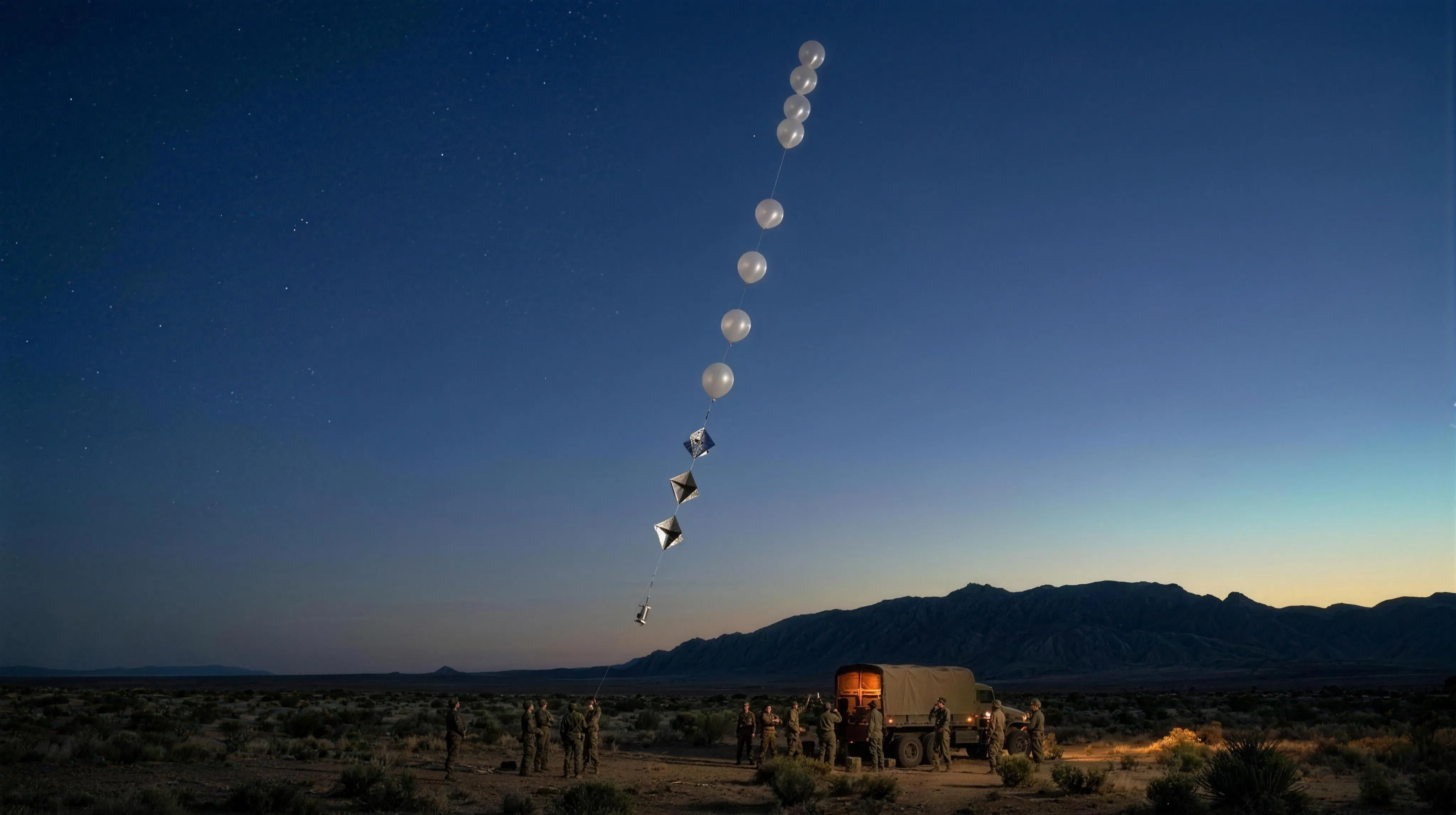 Project Mogul PROJECT MOGUL · 1947 · INST-43 Where-did-Flight-4-go, built as a drivable bench. The Map view integrates a 600-foot balloon train's drift through the June 1947 winds over New Mexico, layer by layer: solid where the SCR-584 tracked it, dashed past Arabela where Moore's contested reconstruction takes over, with Flight 5, the tracked-and-recovered control, and the single weather balloon Ramey actually showed the press one click away. The Train view lays the cluster open to scale, 23 neoprene balloons, three foil radar targets, a Navy sonobuoy, beside a live altitude-time profile where sunrise starts the ultraviolet attrition clock. The Debris view sets Brazel's 1947 newspaper inventory against the train's bill of materials line by line: seven lines match, the eighth ('no strings or wire') draws a full-size mismatch, and the post-1978 retellings (memory metal, hieroglyphs, bodies) sit in a separate strip no balloon explains. The File runs from two diary sentences in June 1947 to 1997 and closes on two verdict cards at equal size. The rates are recorded, the quotes are sourced, the winds are tuned and say so, and the reading is yours. LIVE
 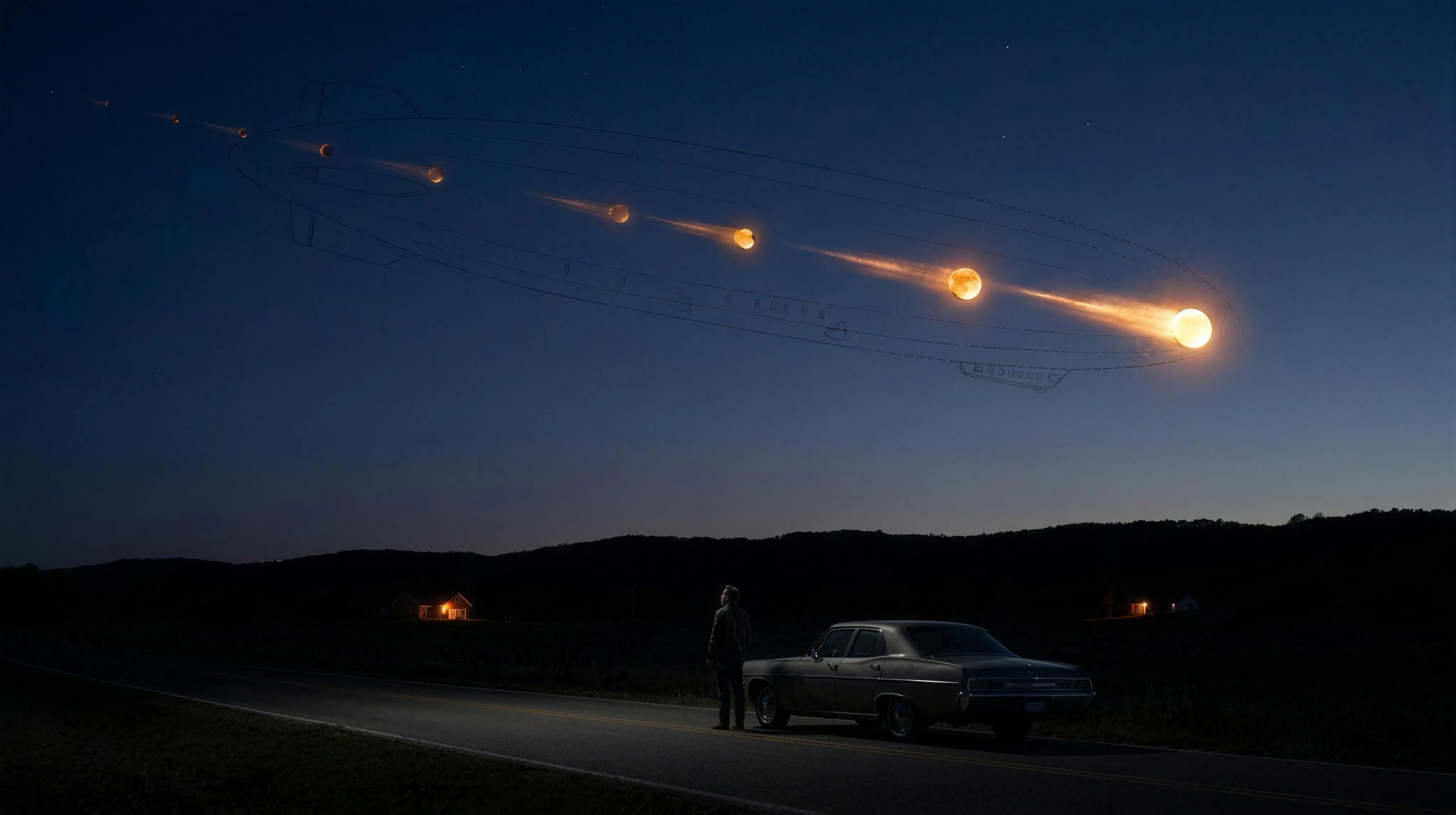 Bolide Reentry BOLIDE REENTRY · 1913-2021 · INST-42 Fireball-versus-craft, built as a drivable bench. The Sky view replays four events from the witness's side: the 1968 Zond IV slow train that letters described as a cigar with lighted windows, Chelyabinsk 2013 at nineteen kilometres per second, the 1972 Earth-grazer that crossed the sky and left, and the 1913 Great Meteor Procession, with an assumed-distance dial showing how one unmeasurable number turns the same track into an airliner or a bolide. The Bench integrates the single-body meteor equations live: altitude against downrange, speed against the two entry bands, the light curve, dynamic pressure against strength, with breakup altitude reading out the material, stone in the forties of kilometres against a rocket stage near 77. Two Worlds sets the ballistic integrator beside a thrust-equipped sketch and lights up six checkable discriminators as the sketch cheats: one-way deceleration, dead-straight tracks, mass-sorted trains, the speed bands, bounded duration, the sound delay. The File runs 1913 to 2021 and closes on two verdict cards at equal size: reentries reliably manufacture craft, and the physics is bounded. The equations are textbook, the cases are sourced, and the reading is yours. LIVE
 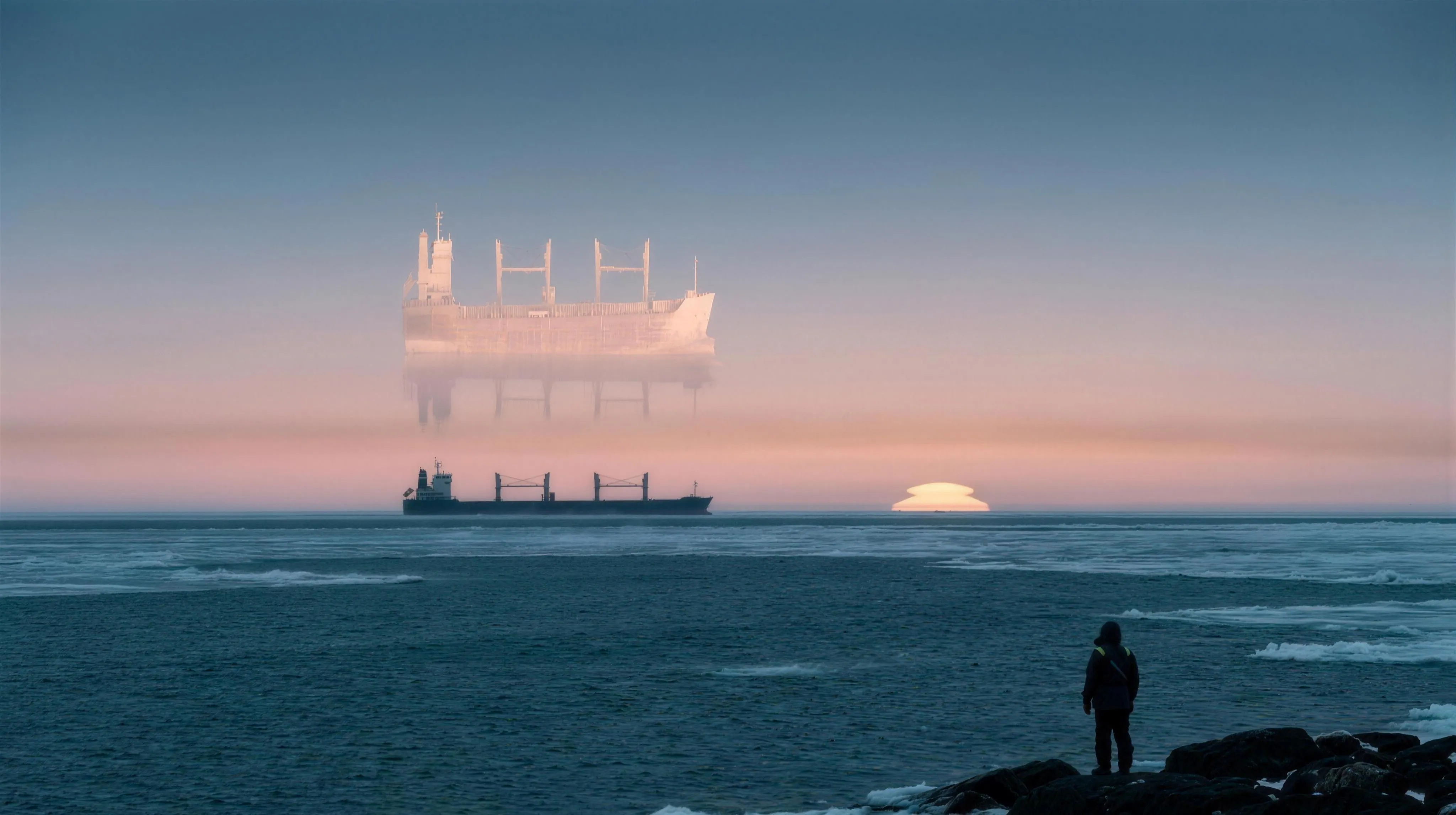 Fata Morgana FATA MORGANA · OPTICS · INST-41 The optical mirage, built as a drivable bench. The Strait view is a computed picture, one traced ray per screen row: standard air keeps a ship at 22 km hull-down, and six kelvin of warm air over cold water raise it back as stacked walls and towers, the Fata Morgana proper. The Ray Bench spreads out the T(z) and M(z) profiles, shades the duct where dM/dz goes negative, and prices the +0.11 K/m threshold live from your dials: the same machine as Washington 1952's radar duct, moved to the optical band. The Image Machine collapses the whole phenomenon into one transfer curve, where folds are stacked images and backward runs are inverted ones, with a draggable probe to count them. The File runs from the sun returning two weeks early over Novaya Zemlya in 1597, ray-traced closed in 2003, through the Min Min lights reproduced with parked headlights and the Marfa lights tracking US-67 traffic, to the Condon Report's bounds: within about a degree of the horizon, D = 500 H, a real source required. Two verdict cards at equal size: what the duct delivers, and where the explanation stops. The formulas are textbook, the cases are sourced, and the reading is yours. LIVE
 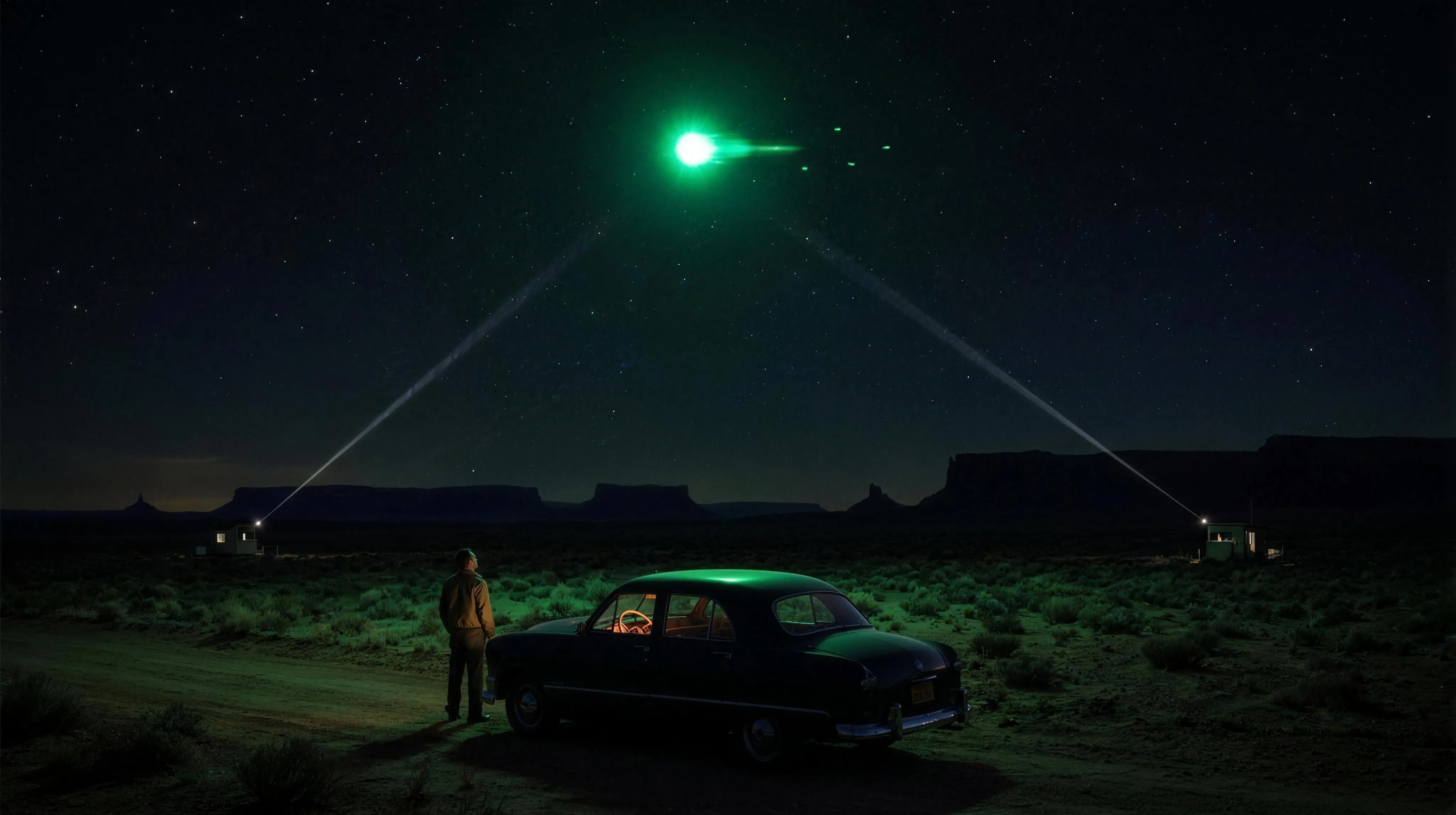 Green Fireballs GREEN FIREBALLS · 1948-51 · INST-38 The 1948-1951 New Mexico green fireball case, rebuilt as a triangulation bench. The Two Falls view replays a conventional meteor and the Starvation Peak fireball over the same desert night: steep, decelerating and loud 45 seconds later, against instant-on, level at 8 to 10 miles at constant speed, two seconds, silent. The Triangulation view is the heart of the case: five AESS posts report azimuth and elevation with error you dial, a least-squares intersection solves the true path, one station gives direction only, two decide a line, and the slope readout settles meteor world or fireball world in a single number. The Colour view sets copper's 510-522 nm against magnesium's 517-518 nm on a real spectrum strip, under LaPaz's naked-eye 5,200 Å and the eye's resolution band: the eye cannot split copper from magnesium, which is exactly why Sandia went looking for powder on the ground. The File view lays out the 1949 Los Alamos conference, where LaPaz and Bradbury left opposite readings in the same minutes. The geometry is arithmetic, the claims are sourced, and the reading is yours. LIVE
 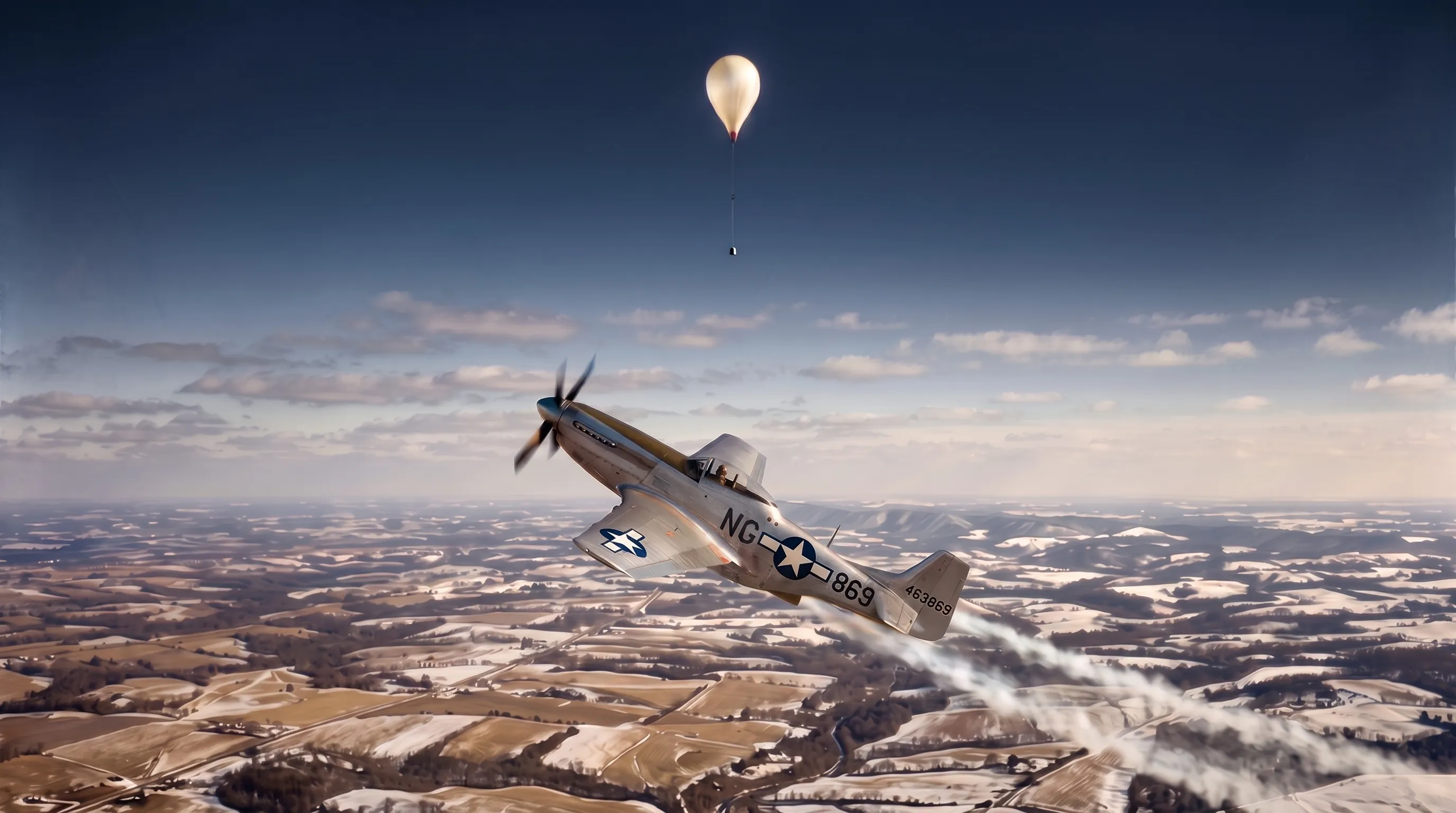 Mantell 1948 MANTELL · GODMAN 1948 · INST-36 The first death in the official UFO record, rebuilt as a physics bench. On the afternoon of 7 January 1948 the Godman tower watched a white object hang to the south-west for over an hour and asked four ferrying F-51s to look; the leader had no oxygen aboard. The Chase view replays the afternoon on the reported timeline: the 15,000-foot transmission, the wingmen breaking off near 22,500, and a consciousness reserve integrated from the published physiology table that runs dry before 25,000 feet, where the accident report put the blackout; the watch stops at 3:18. The Sight view is the angular-size machine the whole case runs on: the tower measured a quarter of the moon, so pick a diameter and read the distance it implies, from the patrol's 300-foot disc to a 70-foot secret Skyhook. The Climb view adds a draggable turn-back altitude for the afternoon he did not fly, and the Record view lays out the statements, the accident report, Venus argued down by its own file, the Skyhook identification with its missing launch record, and the legends. The physiology is measured, the timeline is relayed, and the reading is yours. LIVE
 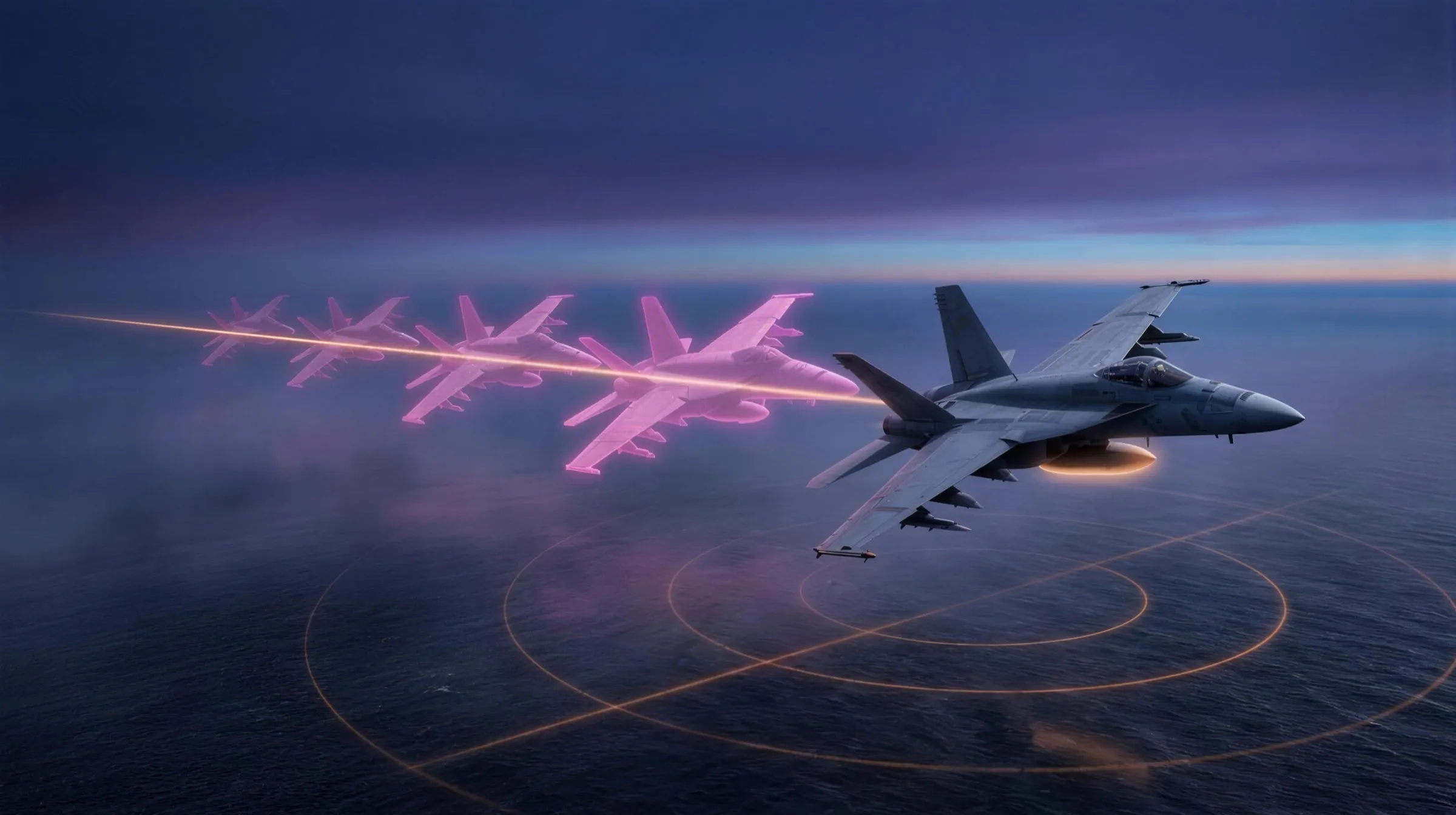 ECM Phantom Targets ECM · RANGE FOULER · INST-34 For a radar to see a target it pays a round trip, so the echo falls as 1/R⁴. A jammer riding that target pays one leg and falls as 1/R², and that single difference of exponent is the whole of electronic attack. The Engagement view holds one real aircraft and strings the radar's belief beside it as phantom copies; the Scope view is a B-scope with real phosphor persistence, where you watch a tracking gate get captured, walked off the aircraft and dumped empty, then click two blips for the speed a vehicle would have needed when nothing accelerated at all; the Duel view draws the echo, the jammer and the noise floor on one chart, with burn-through where the radar wins the argument back; the Debrief maps the released Range Fouler record against what this bench can and cannot make, including the noise jamming logged in D58 and the negative ES recorded in D56. The techniques are documented engineering, and the boundary is stated just as loudly: electronic attack writes to a receiver, not to an infrared sensor or a human eye. LIVE
 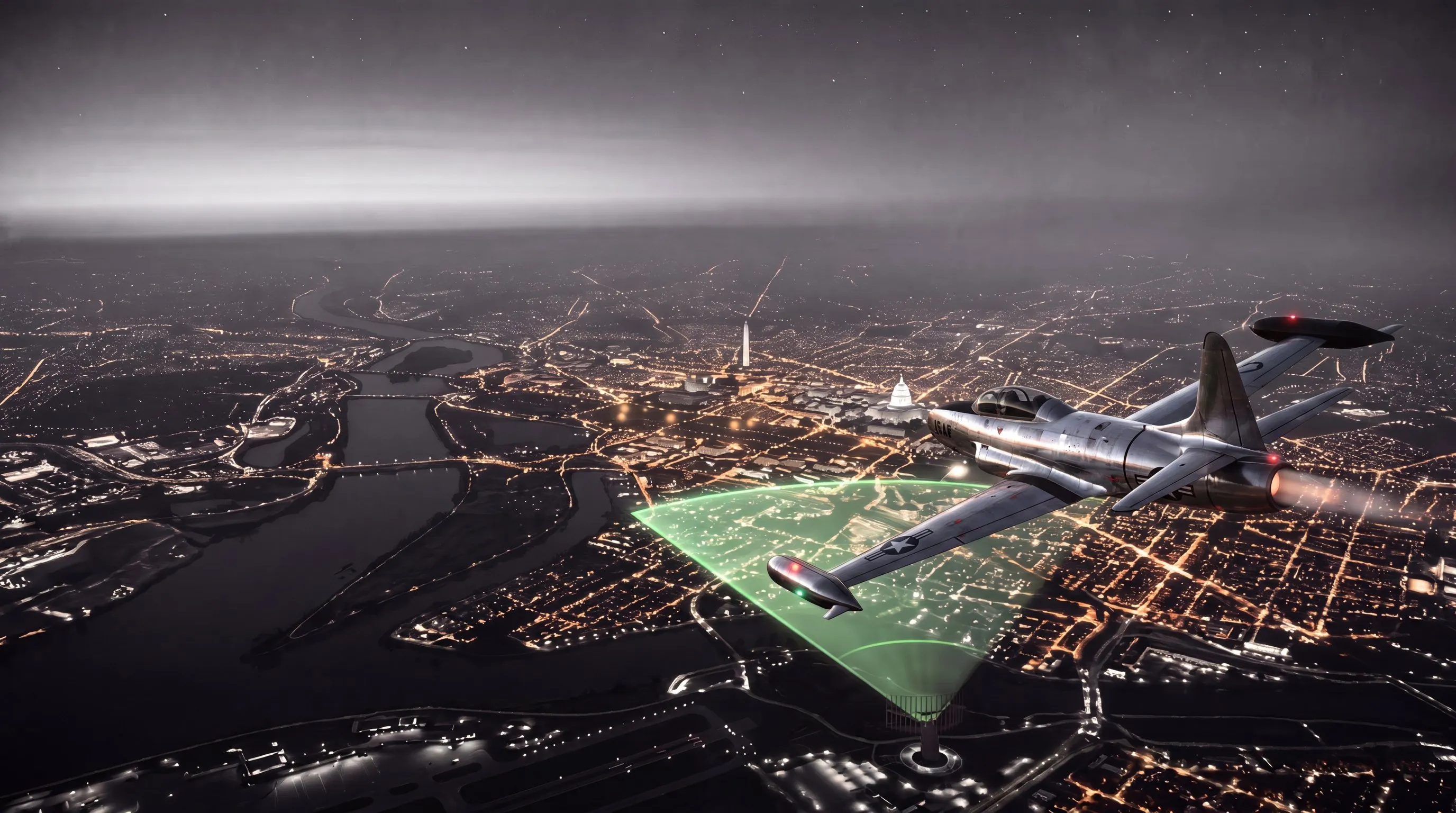 Washington 1952 CAPITAL FLAP 1952 · INST-30 Two July nights in 1952, slow unknown blips crawled the prohibited airspace over the White House and the Capitol; jets scrambled twice and the story owned every front page in America. The Pentagon's answer was the air itself: temperature inversion folding ground targets back onto the scopes. This instrument builds that answer as a drivable machine: the Night view hangs over 1952 Washington with its turning search beam; the Scope view rebuilds the phosphor PPI, every ghost computed live from the atmosphere you dial and none of it scripted, with the sweep-to-sweep '7,000 mph' arithmetic reproducible in two clicks; the Duct view spreads out the inversion dials, the N and M profiles and the -157 N/km threshold, trapped rays striking the city; the Ledger prices the mirage reading row by row and keeps the awkward counter-bill on screen: the balloons those nights measured only a degree or two. The scope repaints every ten seconds; the file stays open. LIVE
 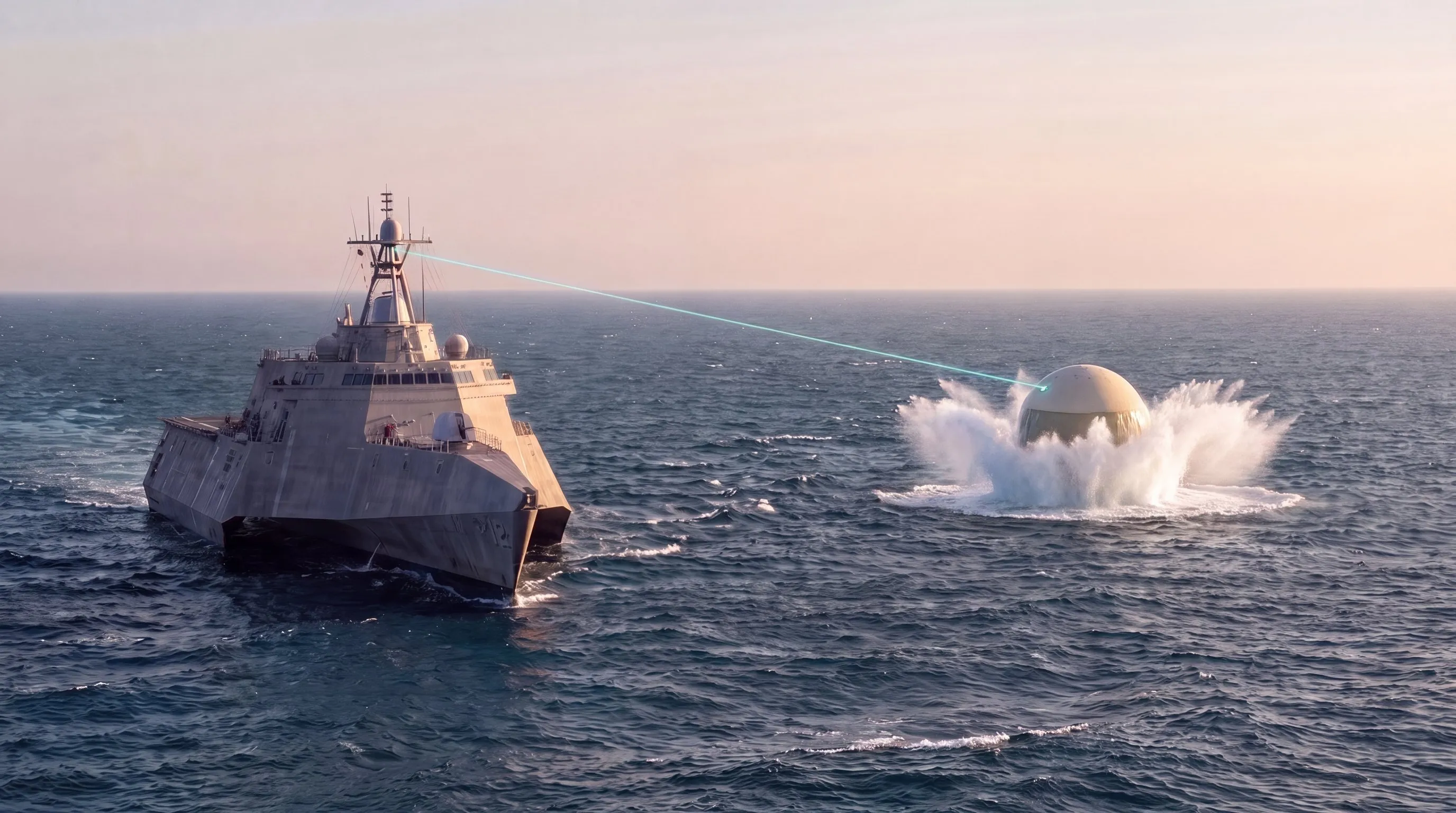 Trans-Medium AIR-SEA FILE 2004-2019 · INST-29 The UAP record keeps ending at the same address: the surface of the sea. The whitewater under the 2004 Tic Tac, Aguadilla's warm dot slipping in and out four times in 2013, the Omaha sphere's "it splashed" in 2019: Congress even coined 'transmedium' in statute. This instrument builds the missing character: a live JONSWAP-spectrum ocean, two FFT cascades, choppy crests, Jacobian whitecaps, sun glitter, then drops each account into it. The Ocean view replays the entry: slam, foam ring, boil; the Entry view is the cross-section, g-loads, cavitation number, cavity envelope and stopping depth annotated live, with the reported behaviour drawn as a dashed ghost that never decelerates; the Ledger prices every world with one integrator, gannet to 200-knot supercavitating torpedo to depth-charge equivalent. Sea water is 837 times denser than air; the accounts say something crossed it; the reading is yours. LIVE
 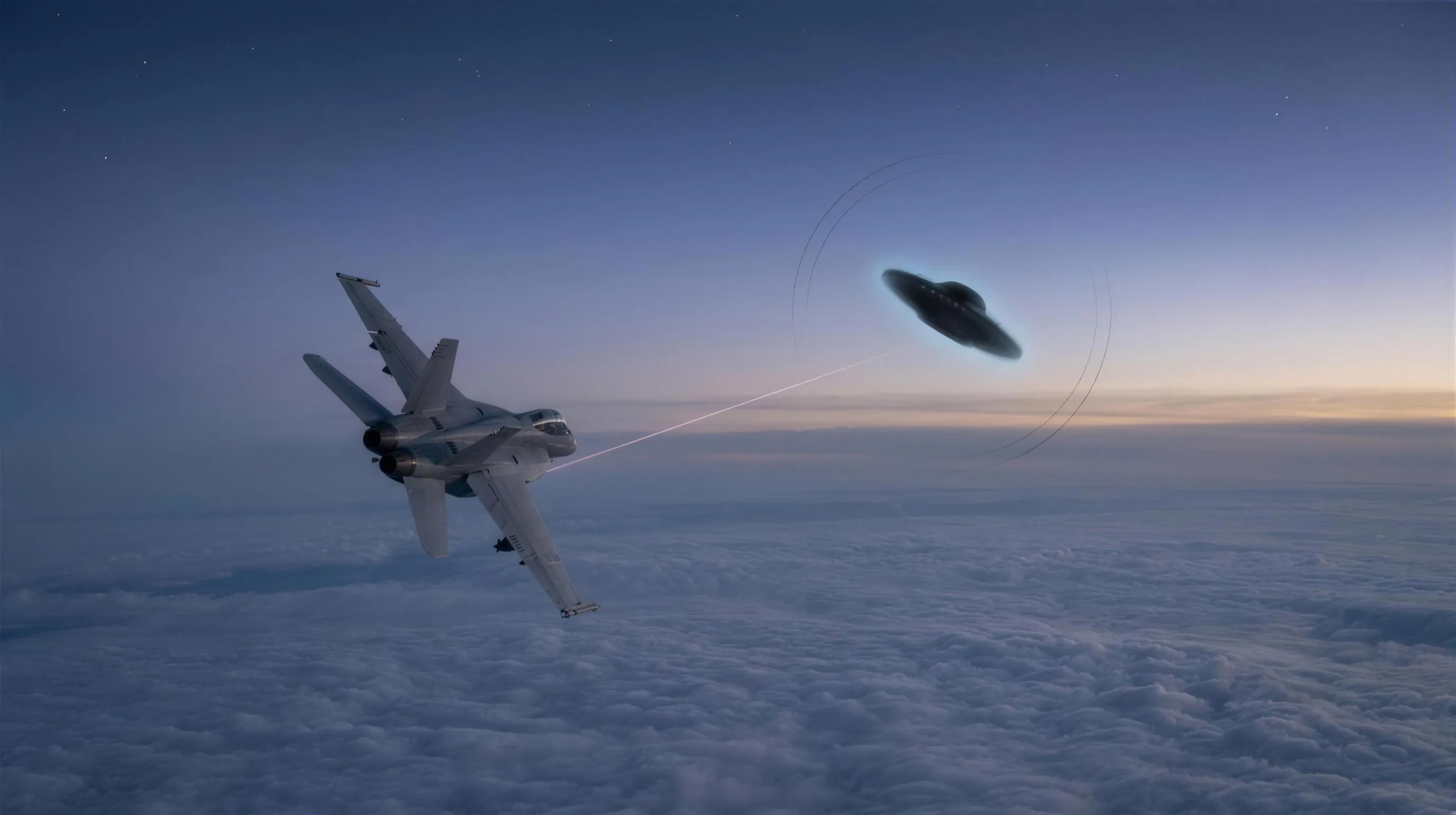 Gimbal ROOSEVELT 2015 · INST-28 The last of the three official Navy videos, turned into an instrument about rotation. The cockpit shouts "it's rotating!" while the clouds stay level, so only one question remains: what rotates, the object or the camera keeping the picture level. The Pod view draws what gimbal geometry costs: the pole off the aircraft's nose and the leveling roll any pass must pay to cross it; the Screen view rebuilds the black-hot display, the dark shape stepping through its turn on the tracking bumps; the Tracks view fans the assumed-range family open, West's 2021 distant-jet glare at one end and the SA page's close object stopping and reversing at the other. No range ever appears on screen: that is the dial the video cannot supply. The clouds stayed level; something rotated; the reading is yours. LIVE
 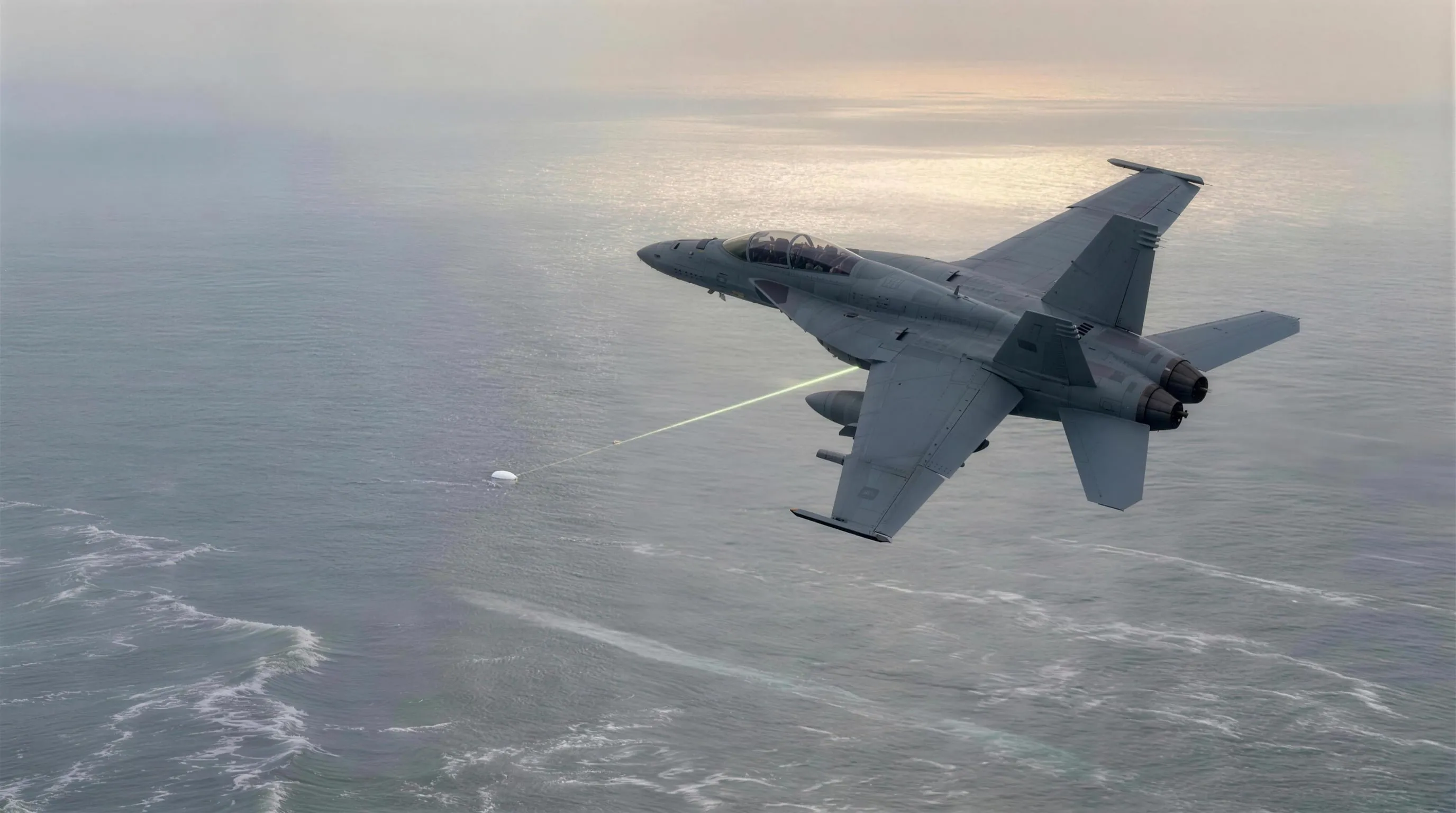 GoFast ROOSEVELT 2015 · INST-27 The most-watched "fast" UAP clip, turned into an exact parallax sandbox. The Scene view rebuilds the geometry the symbology reports: an F/A-18 carving a 15° bank at 25,010 ft while the recorded line of sight sweeps the 22 analyzed seconds, every possible world strung along one ray. The assumed-altitude slider is the dial the video cannot supply: at the waves a white ghost sprints at ~10× the speed; at the triangle's 13,300 ft it drifts at ~40 mph, the answer West published in 2018 and NASA re-derived in 2023. The Screen view rebuilds the ATFLIR display with its ocean streaming at the true apparent rate; the Solutions view draws altitude → speed as one curve. The pixels are real; the speed was parallax; the reading is yours. LIVE
  Tic Tac Kinematics NIMITZ 2004 · INST-24 The 2004 Nimitz claim, 28,000 ft to the sea in 0.78 seconds, turned into a neutral physics sandbox. Altitude, time and mass sliders are yours; the instrument computes implied peak g, Mach and the energy bill exactly, replays the drop, hover and lateral departure over the midday Pacific, then places the result on the measured ladder of 9 g pilots, 46.2 g Stapp and 15,500 g artillery shells. A Scope view restages the radar display's sampling problem: a screen cannot tell 0.78 s from anything faster than one refresh. Every fact tagged REPORTED, MEASURED, MODELLED or READING. The inputs are reported, the arithmetic is exact, the conclusion is yours.
The Ubatuba Magnesium UBATUBA · SEP 1957 · INST-63 In September 1957 a letter with an illegible signature reached a Rio columnist, carrying three lumps of grey metal said to be fragments of a disc that exploded at noon over a Ubatuba beach. Over the next 61 years they became the only UFO artefact with a continuous laboratory record, and this bench retries that record in full. The Spectrometer view builds a magnetic-sector instrument at true scale, one unit per 10 cm: ten kilovolts, 0.2312 tesla, three magnesium beams separating per r = √(2mV/q)/B to arrive 6.3 mm apart per mass unit, while the permil residuals the case actually argues about move the beams by micrometres; load the '14.3% 26Mg' figure the Condon Report omitted, found in Craig's papers in 2008, and the violet beam jumps 30% over-bright, an anomaly no laboratory glimpsed again in five subsequent decades. The Ruler draws the terrestrial fractionation line whose slope comes from the exact masses alone: every error-barred measurement sits on it, real extraterrestrial magnesium, the 13-to-100-permil off-line 26Mg excess of Allende CAIs, is computed live on the Al/Mg dial, and the single off-line point of 2017 carried no error bars and was overturned by the same gram a year later. The Ledger prices the founding claim by detection limit: 'absence of any other metallic element' honestly converts to 'at least 99.9%', measured 99.88%, sixty-six times dirtier than the triply-sublimed metal on Dow's 1957 shelf; strontium at 500 ppm is the one genuinely odd row, and Dow had poured that batch in 1940. Ten cards and two verdicts at equal size: everything measured is terrestrial, and whether the right gram was measured is a question custody has made permanently unanswerable. LIVE JAL 1628: The Star Bench ALASKA · 17 NOV 1986 · INST-62 On the evening of 17 November 1986 a JAL 747 freighter reported arrays of lights, a pale band, and a silhouette that grew into 'twice an aircraft carrier', across fifty-five minutes that are almost entirely on tape. This bench rebuilds the one thing every argument stands under: the sky itself, solved for that exact evening and audited against JPL Horizons. The Night view replays the tape's own clock in 3D, Jupiter at -2.5 low off the left nose, Mars beside it, a 98% moon dead astern, with the amber reported lights staged at the record's clock calls and labelled as testimony. The Bearings view plots the crew's calls against the planet curves: most of the reported drift is the aircraft's own nose swinging. The Radar view prices five lanes separately and lets the controller's summary stand: a few primary hits, never a good track. The File walks the size claim's tenfold growth by date and prices the 360-degree turn by R = v²/(g·tanφ), matching the tape to seconds. Two verdicts at equal size: what followed the aircraft behaved like the sky, and what stood at eleven o'clock was never identified. LIVE Kenneth Arnold 1947 MOUNT RAINIER · 24 JUN 1947 · INST-61 On the afternoon of 24 June 1947, 9,200 feet over the Washington Cascades, a pilot searching for a crashed Marine transport saw nine objects strung between Mount Rainier and Mount Adams and did the one thing almost nobody in this literature does: he timed them, on the eight-day clock on his instrument panel, at one minute forty-two seconds. The summits are 46.73 statute miles apart at 163.9 degrees true, against his reported course of about 170, and that division gives 1,649 mph, Mach 2.24 at his altitude, four months before the sound barrier was officially broken. And all of it rests on a quantity nobody measured. The Ridge view is 3D and first person: the two volcanoes on their published coordinates and 1947 heights, the nine objects on the real line, and the visible horizon drawn 1.57 degrees below true level, which is why 'level with the horizon' put them near 7,000 feet. The Ledger plots v = d / 102 s as a straight line through the origin, with the sound barrier and the five-day-old world record laid across it: every mile of assumed distance buys 77 mph, and the identical sighting runs from 230 to 1,800. The Eye separates the three acuity thresholds that were never kept apart and quotes Hynek's 1956 memo beside its own errors, with the DC-4 he resolved at fifteen miles as the control. The Word shows, in dated quotations, that saucer was a shape word from the first sentence ever printed. Two verdicts at equal size. LIVE A Bogey at Ten O'Clock High LOW-EARTH ORBIT · 1965 · INST-56 NASA-UAP-D3, tape T-00763: the Gemini 7 "bogey" exchange of 4 December 1965, and a co-orbital relative-motion bench. The Formation view is 3D: Gemini 7 and its Titan II second stage to reported scale, from the recorded 18-46 m stationkeeping (the stage tumbling at 2 rpm, venting through a broken fuel line) out to the bogey call at GET 4:24, with the shed delta-v's size and direction on dials and the Clohessy-Wiltshire closed form doing all the flying. The Tape view restores the PAO release commentary as a playable timeline: thirteen verbatim lines, three tracks lighting as the crew sorts booster, particles and bogey. The Drift view runs the exact arithmetic: 16.1 km per orbit per m/s shed, closed radial loops, and Cauchy's theorem making the tumbling stage a 5.33 m sphere to sunlight, naked-eye visible out to 6,652 km, beyond the horizon. The Ledger walks the release, the mission, and the Gemini 6A 30 cm rendezvous counterpoint eleven days later. Two verdicts at equal size: formation flight is free, and the tape names three things, identifies two, and leaves the third open. LIVE Three Frames from STS-80 LOW-EARTH ORBIT · 1996 · INST-55 NASA-UAP-D030 to D032: three film frames shot through Columbia's windows in late 1996, one unidentified object, released with no range, no size, no interval and no identification. The Orbit view is 3D: Columbia built to scale, the exact 350 km limb geometry (the limb 18.6° below level), and the bright point staged at BOTH ends of the degeneracy ray, a 17.5 mm ice flake 30 m out or a 233 m craft 400 km out, on the same angular track, with a film inset proving both readings take the same picture. The Frames view draws the captions as film schematics; stacked, the three captions sketch an arc. The Line view runs the exact arithmetic: theta = D/R is the one number a photograph fixes, sunlit brightness ~ (D/R)^2 rides the same ray (the whole ray shines at magnitude -8.5), and the plume test that would split it, 0.08 s of RCS giving a 2 mm flake 1.67 m/s and the 110-tonne orbiter 2.8 mm/s, needs a firing on video, which stills cannot run. The Ledger walks from the release to the mission to the boundary where NASA's ice-and-debris attribution for the famous video stops. Two verdicts at equal size: a photograph without a range holds an ice flake and a ship with equal ease, and the frames are a record, not an identification. LIVE The Belgian Wave BELGIUM · 1989-90 · INST-54 The night of 30-31 March 1990: two F-16s, nine interception attempts, six radar lock-ons, and not one pair of eyes on anything, inside a wave of some 2,000 reports. The Night view replays the chase in 3D over the sodium-lit Belgian plain, under a star field computed for that exact night, with the 00:29 wingman lock replayed as the Air Force's own study concluded. The Tape view carries the recorded numbers as recorded: 150 to 970 knots, altitudes from 11,000 ft to below zero, a tenth-of-a-second lock. The Court prices them exactly: 970 kt at low level is supersonic at the ground and owes a kilometres-wide boom carpet nobody heard; the jump is 21.5 g read over 2 s and the cited 40 g at 1.1 s, with that dt an open dial; a 5-tonne craft draws about a gigawatt. The Sky rebuilds the stars over Ramillies hour by hour: Jupiter at magnitude -2.1 sinking west, Sirius flashing colours low, the reported quadrant at the reported pace. The Ledger runs from thirteen gendarmes at Eupen to the 2011 polystyrene confession. Two verdicts at equal size: a lock is not a sighting, and a hoax is not a wave. LIVE The Shootdown Bench LAKE HURON · 2023 · INST-53 12 February 2023, 20,000 ft over Lake Huron: an F-16 fires two AIM-9X Sidewinders at an octagonal object drifting on the wind; the first misses into the lake, the second connects. The Intercept view is 3D at true metre scale over the true 6,096 m drop, a 350-knot fighter lapping a 16-knot target, both shots replayed as reported. The Gate view draws NORAD's velocity gates as two draggable dashed lines: open them and the slow, small population the filter ate for years floods the screens overnight, the entire mechanism of that week, with the exact Doppler blind-heading formula alongside. The Seeker view integrates two Planck curves live: under the same sky a tailpipe locks at 55 km, the cold drifter near 6 km, a metallised pico balloon at barely over 1 km, and the contrast can go negative. The Clip view reconstructs PR071's 46 seconds at the computed contrast: focus at 11 seconds, the radial displacement at 20. The Ledger runs from the big balloon of 4 February to a 2026 file release, by way of the missing K9YO, the 1998 balloon that shrugged off a thousand cannon rounds, and a double-digit-dollar target against $400,000 missiles. Two verdicts at equal size: a confirmed shootdown is not a confirmed mystery, and what February exposed was the bookkeeping. LIVE The Reflection Bench CIA-UAP-003 · INST-51 CIA-UAP-003 makes two claims in one paragraph. One is a mechanism: at dusk the sun had already set for an airliner while a U-2 far above it was still in sunlight, its silver wings catching the sun and reading as a fiery object. The other is a population: that these aircraft accounted for more than one-half of all UFO reports of the late 1950s and most of the 1960s. The first can be computed exactly and the second has to be counted, and this bench does both. The Sky view is the moment itself over a real 6,371 km Earth, built with three.js's sky shader: run the evening and watch the aircraft at 40,000 ft go dark while the one at 70,000 stays lit. The Geometry view gives the whole reason as one subtraction, a horizon dip of 4.68 degrees at 70,000 ft against 2.51 at 20,000, with the refraction allowance identical at both ends and therefore cancelling, so the width of the window does not depend on the atmosphere at all. The Glint view calibrates its model on a measured Iridium flare before it describes an aircraft, then finds a steady gleam near magnitude -1 and a specular flare near -10, and sweeps the one quantity nobody published, surface roughness, across forty times its range without the conclusion moving. The Count view draws Project Blue Book's whole year table, 1947 to 1969: 12,618 reports, 8,587 inside the claimed window, and 4,294 sightings demanded by more than one-half, against a record whose largest year predates the U-2's first flight by three, whose 1959 was a nine-year low at the programme's height, and only half of whose window falls in years when any of these aircraft was still bare metal. The File closes on two verdicts at equal size: the geometry holds, and the count does not. The numbers are sourced, the assumptions are printed on the instrument, and the reading is yours. LIVE Special Report No. 14 SR-14 · 1955 · INST-50 Everyone quotes one percentage from this document, and almost nobody says which of its three counting bases that percentage belongs to. In 1955 the Air Force received a statistical study it had commissioned: about 4,000 reports of unidentified aerial objects from 1947 to 1952, reduced to IBM punched cards and charted as 3,201 sightings. The Sort view lays the six evaluation bins out on all three bases and hands you the denominator rule: under ten equally defensible rules the same file runs from 17.1% to 30.8%, and the famous 21.5% sits near the bottom of that range. There is a trap alongside it, because on the object-sightings basis the cell reading 474 = 21.5% belongs to Aircraft. The Chi Square view turns the report’s own twelve tables into a working machine: six characteristics, the knowns with and without astronomical cases, the report’s statistic against the textbook one, a switch for the ‘not stated’ bucket it never priced, and the exact p values 1955 could not compute. The finding is right there: the analysts honestly tested whether the unknowns were just knowns seen badly, five characteristics of six rejected that at better than 1%, and the report called the result inconclusive and drew its conclusion from somewhere else. The Quality view draws Figure 8 as a mosaic, where 33.3% of excellent reports ending unknown against 16.6% of poor ones is real, and doubtful coming in below poor means the staircase everyone quotes has a step going the wrong way. The File hangs two verdicts at equal size, and both of them are the report’s own. LIVE The Avrocar GROUND EFFECT · 1959-61 · INST-49 Every other saucer on this site is a claim about physics nobody has demonstrated. This one is an object you can go and stand next to. Between 1952 and 1961 Canada and the United States spent about ten million dollars on an eighteen-foot aluminium disc, built two, flew both, and parked the survivors in museums. The Rig view is the machine in 3D at true scale with a person beside it, because the question about this aircraft is a distance: the gap between the rim and the ground. Raise it and the cushion dims, the augmentation falls, and past about two feet the disc breaks into the pitch and roll the programme called hubcapping. The Ledger explains the aeroplane in one line. Thin-jet cushion theory makes lift a flat thrust term plus a term in 1/h; anchor it on the two published weights, 3,150 lb with no ground under it and 4,285 lb held at three feet, and the whole aircraft collapses to L(h) = 3,150 + 1,038/h pounds, with the ceiling for any weight at 1,038/(W − 3,150) metres. One constant is fitted and it is the finding: the machine realised 0.24 of the cushion the textbook owed it, next to a turborotor that returned 1.14× from a lift fan that should have doubled its thrust, and the record names the cause as duct losses that were never resolved. The punchline is arithmetic: 3,150 lb of lift against a 3,000 lb empty airframe leaves 150 lb for the pilot, the fuel and the payload together. The Mistake view then tests the file's own 1954 memorandum about circular aircraft being mistaken for UFOs, against angular size (moon-sized at 600 m, not a disc at all beyond 19 km) and against an altitude ladder built from this site's other instruments. The File runs from a 1952 research contract to a museum floor and closes on two verdicts at equal size: it was real and it flew, and it never left the cushion. The numbers are sourced, the assumptions are printed on the machine, and the reading is yours. LIVE Project Mogul PROJECT MOGUL · 1947 · INST-43 Where-did-Flight-4-go, built as a drivable bench. The Map view integrates a 600-foot balloon train's drift through the June 1947 winds over New Mexico, layer by layer: solid where the SCR-584 tracked it, dashed past Arabela where Moore's contested reconstruction takes over, with Flight 5, the tracked-and-recovered control, and the single weather balloon Ramey actually showed the press one click away. The Train view lays the cluster open to scale, 23 neoprene balloons, three foil radar targets, a Navy sonobuoy, beside a live altitude-time profile where sunrise starts the ultraviolet attrition clock. The Debris view sets Brazel's 1947 newspaper inventory against the train's bill of materials line by line: seven lines match, the eighth ('no strings or wire') draws a full-size mismatch, and the post-1978 retellings (memory metal, hieroglyphs, bodies) sit in a separate strip no balloon explains. The File runs from two diary sentences in June 1947 to 1997 and closes on two verdict cards at equal size. The rates are recorded, the quotes are sourced, the winds are tuned and say so, and the reading is yours. LIVE Bolide Reentry BOLIDE REENTRY · 1913-2021 · INST-42 Fireball-versus-craft, built as a drivable bench. The Sky view replays four events from the witness's side: the 1968 Zond IV slow train that letters described as a cigar with lighted windows, Chelyabinsk 2013 at nineteen kilometres per second, the 1972 Earth-grazer that crossed the sky and left, and the 1913 Great Meteor Procession, with an assumed-distance dial showing how one unmeasurable number turns the same track into an airliner or a bolide. The Bench integrates the single-body meteor equations live: altitude against downrange, speed against the two entry bands, the light curve, dynamic pressure against strength, with breakup altitude reading out the material, stone in the forties of kilometres against a rocket stage near 77. Two Worlds sets the ballistic integrator beside a thrust-equipped sketch and lights up six checkable discriminators as the sketch cheats: one-way deceleration, dead-straight tracks, mass-sorted trains, the speed bands, bounded duration, the sound delay. The File runs 1913 to 2021 and closes on two verdict cards at equal size: reentries reliably manufacture craft, and the physics is bounded. The equations are textbook, the cases are sourced, and the reading is yours. LIVE Fata Morgana FATA MORGANA · OPTICS · INST-41 The optical mirage, built as a drivable bench. The Strait view is a computed picture, one traced ray per screen row: standard air keeps a ship at 22 km hull-down, and six kelvin of warm air over cold water raise it back as stacked walls and towers, the Fata Morgana proper. The Ray Bench spreads out the T(z) and M(z) profiles, shades the duct where dM/dz goes negative, and prices the +0.11 K/m threshold live from your dials: the same machine as Washington 1952's radar duct, moved to the optical band. The Image Machine collapses the whole phenomenon into one transfer curve, where folds are stacked images and backward runs are inverted ones, with a draggable probe to count them. The File runs from the sun returning two weeks early over Novaya Zemlya in 1597, ray-traced closed in 2003, through the Min Min lights reproduced with parked headlights and the Marfa lights tracking US-67 traffic, to the Condon Report's bounds: within about a degree of the horizon, D = 500 H, a real source required. Two verdict cards at equal size: what the duct delivers, and where the explanation stops. The formulas are textbook, the cases are sourced, and the reading is yours. LIVE Green Fireballs GREEN FIREBALLS · 1948-51 · INST-38 The 1948-1951 New Mexico green fireball case, rebuilt as a triangulation bench. The Two Falls view replays a conventional meteor and the Starvation Peak fireball over the same desert night: steep, decelerating and loud 45 seconds later, against instant-on, level at 8 to 10 miles at constant speed, two seconds, silent. The Triangulation view is the heart of the case: five AESS posts report azimuth and elevation with error you dial, a least-squares intersection solves the true path, one station gives direction only, two decide a line, and the slope readout settles meteor world or fireball world in a single number. The Colour view sets copper's 510-522 nm against magnesium's 517-518 nm on a real spectrum strip, under LaPaz's naked-eye 5,200 Å and the eye's resolution band: the eye cannot split copper from magnesium, which is exactly why Sandia went looking for powder on the ground. The File view lays out the 1949 Los Alamos conference, where LaPaz and Bradbury left opposite readings in the same minutes. The geometry is arithmetic, the claims are sourced, and the reading is yours. LIVE Mantell 1948 MANTELL · GODMAN 1948 · INST-36 The first death in the official UFO record, rebuilt as a physics bench. On the afternoon of 7 January 1948 the Godman tower watched a white object hang to the south-west for over an hour and asked four ferrying F-51s to look; the leader had no oxygen aboard. The Chase view replays the afternoon on the reported timeline: the 15,000-foot transmission, the wingmen breaking off near 22,500, and a consciousness reserve integrated from the published physiology table that runs dry before 25,000 feet, where the accident report put the blackout; the watch stops at 3:18. The Sight view is the angular-size machine the whole case runs on: the tower measured a quarter of the moon, so pick a diameter and read the distance it implies, from the patrol's 300-foot disc to a 70-foot secret Skyhook. The Climb view adds a draggable turn-back altitude for the afternoon he did not fly, and the Record view lays out the statements, the accident report, Venus argued down by its own file, the Skyhook identification with its missing launch record, and the legends. The physiology is measured, the timeline is relayed, and the reading is yours. LIVE ECM Phantom Targets ECM · RANGE FOULER · INST-34 For a radar to see a target it pays a round trip, so the echo falls as 1/R⁴. A jammer riding that target pays one leg and falls as 1/R², and that single difference of exponent is the whole of electronic attack. The Engagement view holds one real aircraft and strings the radar's belief beside it as phantom copies; the Scope view is a B-scope with real phosphor persistence, where you watch a tracking gate get captured, walked off the aircraft and dumped empty, then click two blips for the speed a vehicle would have needed when nothing accelerated at all; the Duel view draws the echo, the jammer and the noise floor on one chart, with burn-through where the radar wins the argument back; the Debrief maps the released Range Fouler record against what this bench can and cannot make, including the noise jamming logged in D58 and the negative ES recorded in D56. The techniques are documented engineering, and the boundary is stated just as loudly: electronic attack writes to a receiver, not to an infrared sensor or a human eye. LIVE Washington 1952 CAPITAL FLAP 1952 · INST-30 Two July nights in 1952, slow unknown blips crawled the prohibited airspace over the White House and the Capitol; jets scrambled twice and the story owned every front page in America. The Pentagon's answer was the air itself: temperature inversion folding ground targets back onto the scopes. This instrument builds that answer as a drivable machine: the Night view hangs over 1952 Washington with its turning search beam; the Scope view rebuilds the phosphor PPI, every ghost computed live from the atmosphere you dial and none of it scripted, with the sweep-to-sweep '7,000 mph' arithmetic reproducible in two clicks; the Duct view spreads out the inversion dials, the N and M profiles and the -157 N/km threshold, trapped rays striking the city; the Ledger prices the mirage reading row by row and keeps the awkward counter-bill on screen: the balloons those nights measured only a degree or two. The scope repaints every ten seconds; the file stays open. LIVE Trans-Medium AIR-SEA FILE 2004-2019 · INST-29 The UAP record keeps ending at the same address: the surface of the sea. The whitewater under the 2004 Tic Tac, Aguadilla's warm dot slipping in and out four times in 2013, the Omaha sphere's "it splashed" in 2019: Congress even coined 'transmedium' in statute. This instrument builds the missing character: a live JONSWAP-spectrum ocean, two FFT cascades, choppy crests, Jacobian whitecaps, sun glitter, then drops each account into it. The Ocean view replays the entry: slam, foam ring, boil; the Entry view is the cross-section, g-loads, cavitation number, cavity envelope and stopping depth annotated live, with the reported behaviour drawn as a dashed ghost that never decelerates; the Ledger prices every world with one integrator, gannet to 200-knot supercavitating torpedo to depth-charge equivalent. Sea water is 837 times denser than air; the accounts say something crossed it; the reading is yours. LIVE Gimbal ROOSEVELT 2015 · INST-28 The last of the three official Navy videos, turned into an instrument about rotation. The cockpit shouts "it's rotating!" while the clouds stay level, so only one question remains: what rotates, the object or the camera keeping the picture level. The Pod view draws what gimbal geometry costs: the pole off the aircraft's nose and the leveling roll any pass must pay to cross it; the Screen view rebuilds the black-hot display, the dark shape stepping through its turn on the tracking bumps; the Tracks view fans the assumed-range family open, West's 2021 distant-jet glare at one end and the SA page's close object stopping and reversing at the other. No range ever appears on screen: that is the dial the video cannot supply. The clouds stayed level; something rotated; the reading is yours. LIVE GoFast ROOSEVELT 2015 · INST-27 The most-watched "fast" UAP clip, turned into an exact parallax sandbox. The Scene view rebuilds the geometry the symbology reports: an F/A-18 carving a 15° bank at 25,010 ft while the recorded line of sight sweeps the 22 analyzed seconds, every possible world strung along one ray. The assumed-altitude slider is the dial the video cannot supply: at the waves a white ghost sprints at ~10× the speed; at the triangle's 13,300 ft it drifts at ~40 mph, the answer West published in 2018 and NASA re-derived in 2023. The Screen view rebuilds the ATFLIR display with its ocean streaming at the true apparent rate; the Solutions view draws altitude → speed as one curve. The pixels are real; the speed was parallax; the reading is yours. LIVE Tic Tac Kinematics NIMITZ 2004 · INST-24 The 2004 Nimitz claim, 28,000 ft to the sea in 0.78 seconds, turned into a neutral physics sandbox. Altitude, time and mass sliders are yours; the instrument computes implied peak g, Mach and the energy bill exactly, replays the drop, hover and lateral departure over the midday Pacific, then places the result on the measured ladder of 9 g pilots, 46.2 g Stapp and 15,500 g artillery shells. A Scope view restages the radar display's sampling problem: a screen cannot tell 0.78 s from anything faster than one refresh. Every fact tagged REPORTED, MEASURED, MODELLED or READING. The inputs are reported, the arithmetic is exact, the conclusion is yours.