The Search
Listening for engineering among the stars: from Drake's seven numbers to the one photograph of an inhabited planet.
LIVE 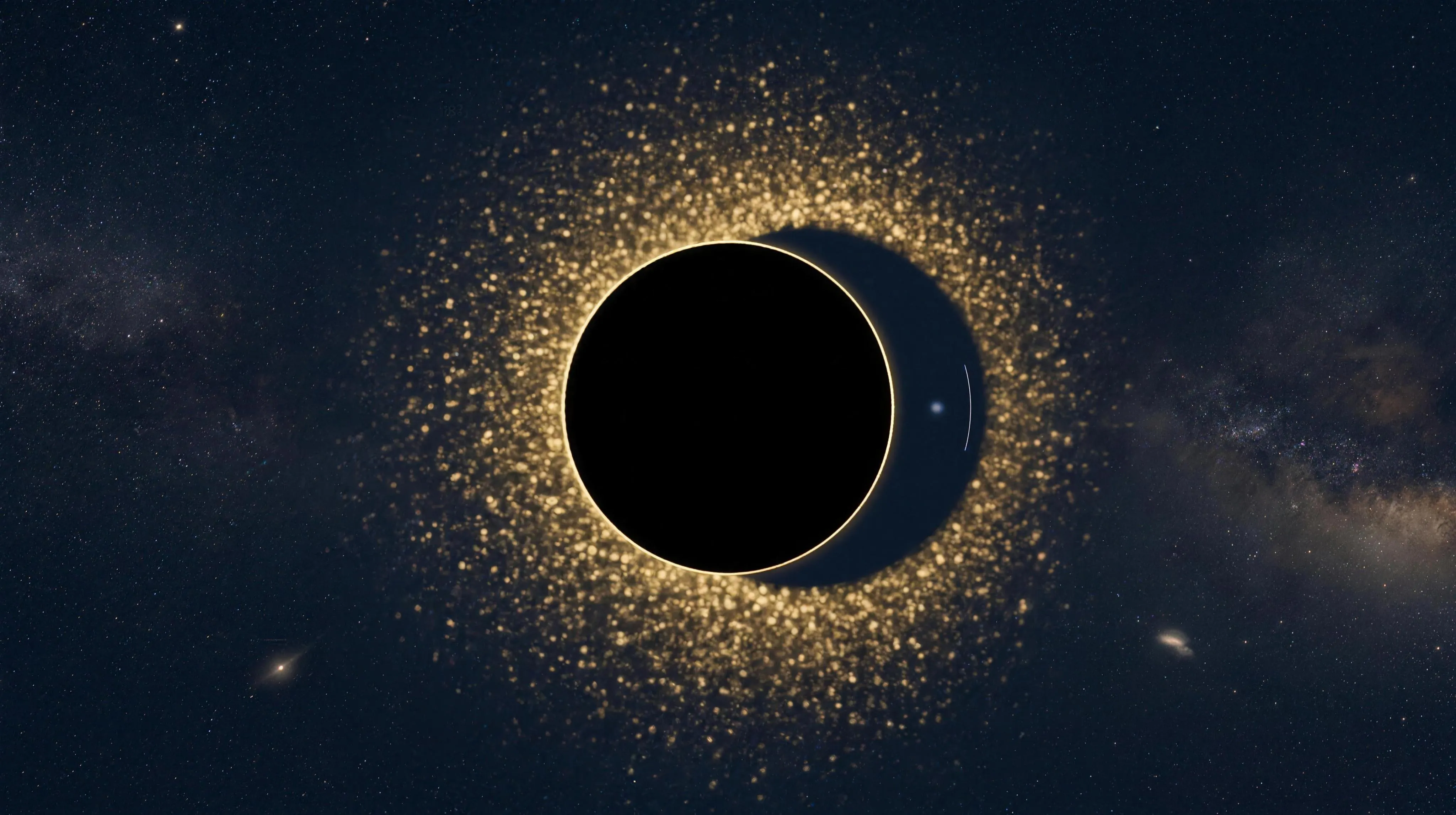 Exoplanet Direct Imaging PALE BLUE DOT · 1990 · INST-47 Humanity owns one photograph of an inhabited planet: the 0.12 pixel Voyager 1 caught in a sunbeam in 1990, taken from inside the system. Retaking it from the next star over is a problem with two numbers nailed to it: an Earth twin at 10 parsecs sits 0.1 arcseconds from its star at one ten-billionth of its brightness. This instrument builds the whole route. The System view is the geometry in 3D: a tilted orbit against the coronagraph's ring of blindness on the sky plane, with the projection point diving inside the mask exactly at full phase, where the planet is brightest. The Coronagraph view is the bench: the exact Airy pattern of a flawless 6 m telescope (the first ring alone carries 1.75% of peak), Lyot's 1930 mask, a speckle floor that rides the stability slider at (πh/λ)², where a 2-picometer ripple fakes an Earth, and the dark hole a vacuum testbed has already held at 4e-10; on the far side waits the photon famine, one photon every eight seconds. The Ledger sets everything imaged, 98 self-luminous young giants in the infrared, against everything wanted in reflected light, four orders of magnitude below, with a 164-star neighbourhood ladder deciding which habitable zones even open outside the mask. The File runs from the 0.12 pixel through Roman's August 2026 launch to HWO's ~25 modelled Earths in the 2040s, and keeps Fomalhaut b, the dust cloud that spent twelve years as a planet, on purpose. The numbers are sourced, the assumptions are printed on the instrument, and the reading is yours. LIVE
 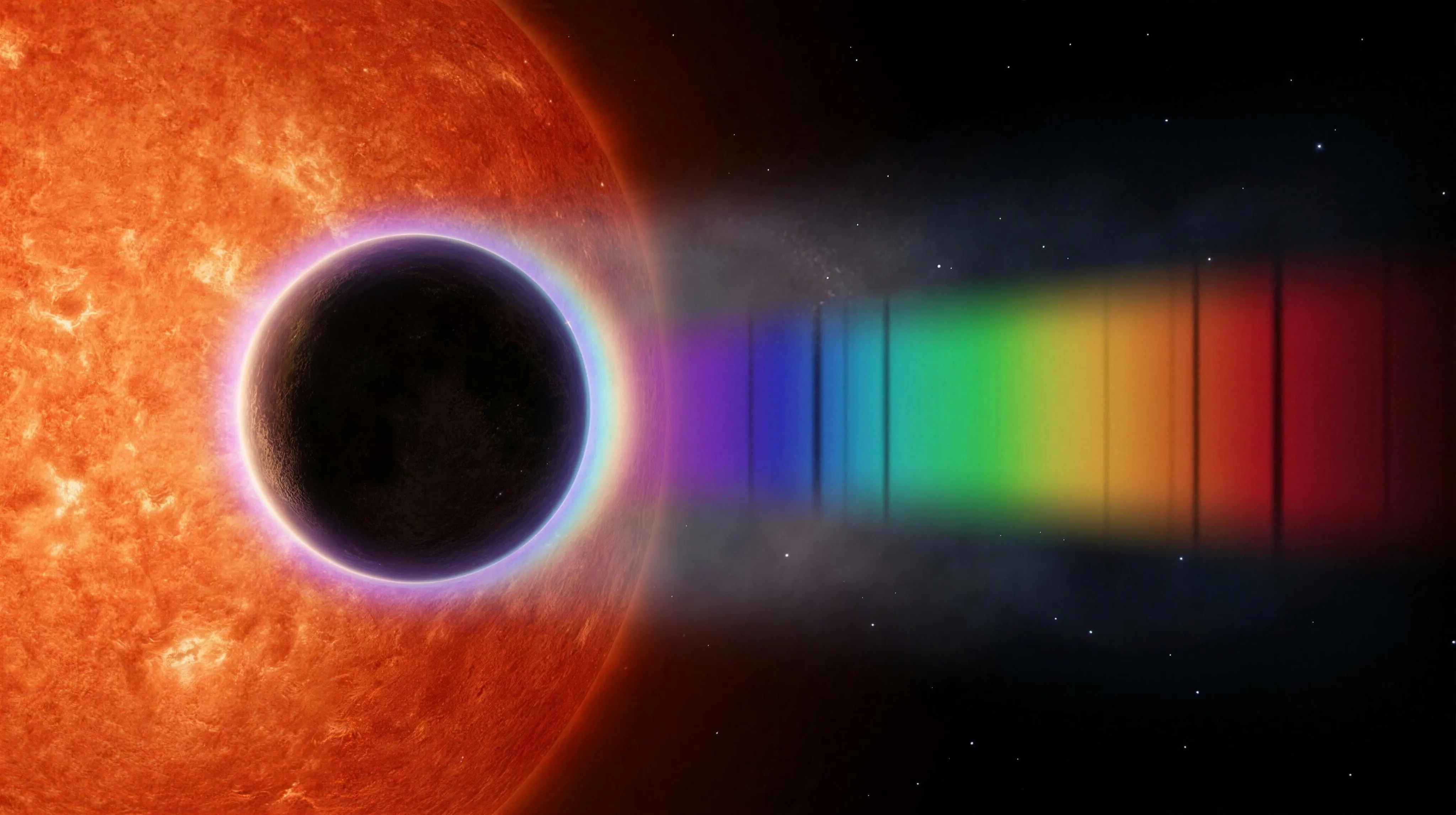 Technosignature Spectroscopy EXOPLANET AIR · INST-45 When a planet crosses its star, a sliver of starlight grazes its atmosphere on the way to us, and the molecules there absorb at their own wavelengths. Measure the transit depth against wavelength and you have read the air of another world. The Transit view lays out the geometry the whole science lives in: a star, a planet, and a hair-thin ring of atmosphere that nearly vanishes when you switch the exaggeration off. The Spectrum view is the bench itself, with four worlds, six atmospheres, seventeen molecules and four real JWST modes. Its cross-section ladder is not asserted but solved, by inverting the model against the known effective altitudes of these same bands in Earth's own limb, which puts the halocarbons near 1e-18 square centimetres against oxygen's 7e-26, eight orders of magnitude apart. The entire model is pinned to a single measurement, WASP-39b's 4.3 micron carbon dioxide feature, and the other checks agree on their own. The Verdict view lays out the five rungs between a bump in a spectrum and a claim about life and computes where each one breaks, including the term that decides it: the star's own spots, measured at 134 to 376 ppm across four real TRAPPIST-1e visits against a planetary signal near 15, and they do not average down with more transits. The File runs from Lovelock in 1965 through Sagan's 1990 control experiment, where the chemistry said life and only the radio said technology, to the eighteen months in which K2-18b's biosignature failed to survive being checked. The assumptions are printed on the instrument, and the reading is yours. LIVE
 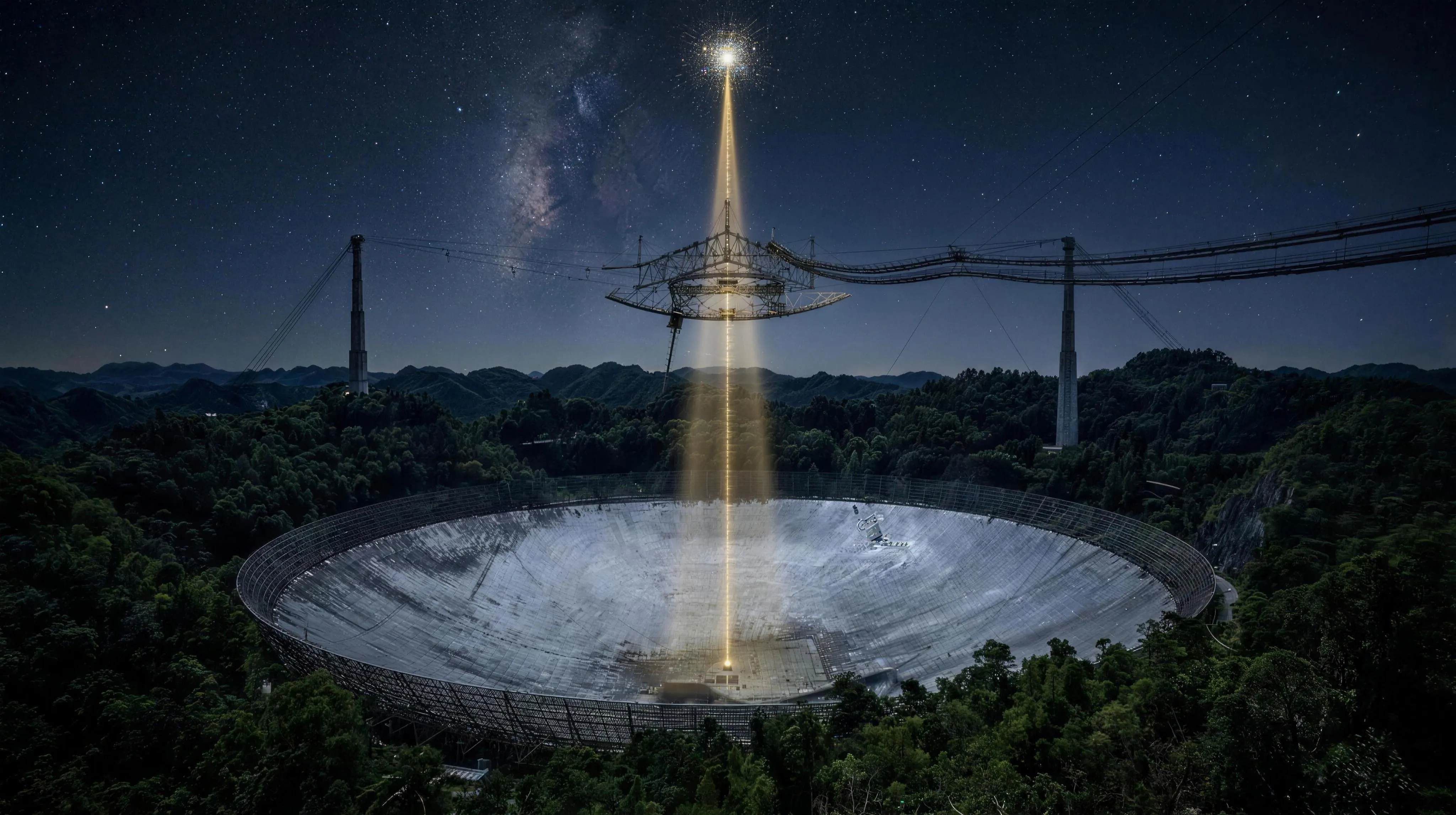 The Arecibo Message ARECIBO MESSAGE · 1974 · INST-44 The 1974 transmission, built as a drivable bench. The Send view replays all 167.9 seconds live: 450 kilowatts at 2380 MHz, ten bits a second, a beam 1.7 arcminutes wide that is a needle rather than a floodlight, the most recent bits riding it in two frequency lanes, a corner waterfall drawing the two narrow columns a receiver would have seen, and a logarithmic journey strip holding the wavefront where it actually is today, about 52 light years out. The Decode view hands you the fold: 1679 factors only as 23 x 73, and that fact is the decoding manual, riding inside the length of the message; set the width to 41 and perfectly intact data shreds into diagonal noise, snap back to 23 and seven sections drop into place with a colour sweep. The Compose view gives you the same 23 x 73 envelope and the same transmitter, lets you paint, and prices the result against distance: readable to about 93 light years, detectable to about 3,100, against an M13 at 25,000. The File runs from a 1961 cryptogram one person on Earth solved to Ryle's objection filed within days, the 2001 Chilbolton formation and the 2020 collapse. The bits are the original, the link budget's four assumptions are printed on the face of the instrument, and the reading is yours. LIVE
 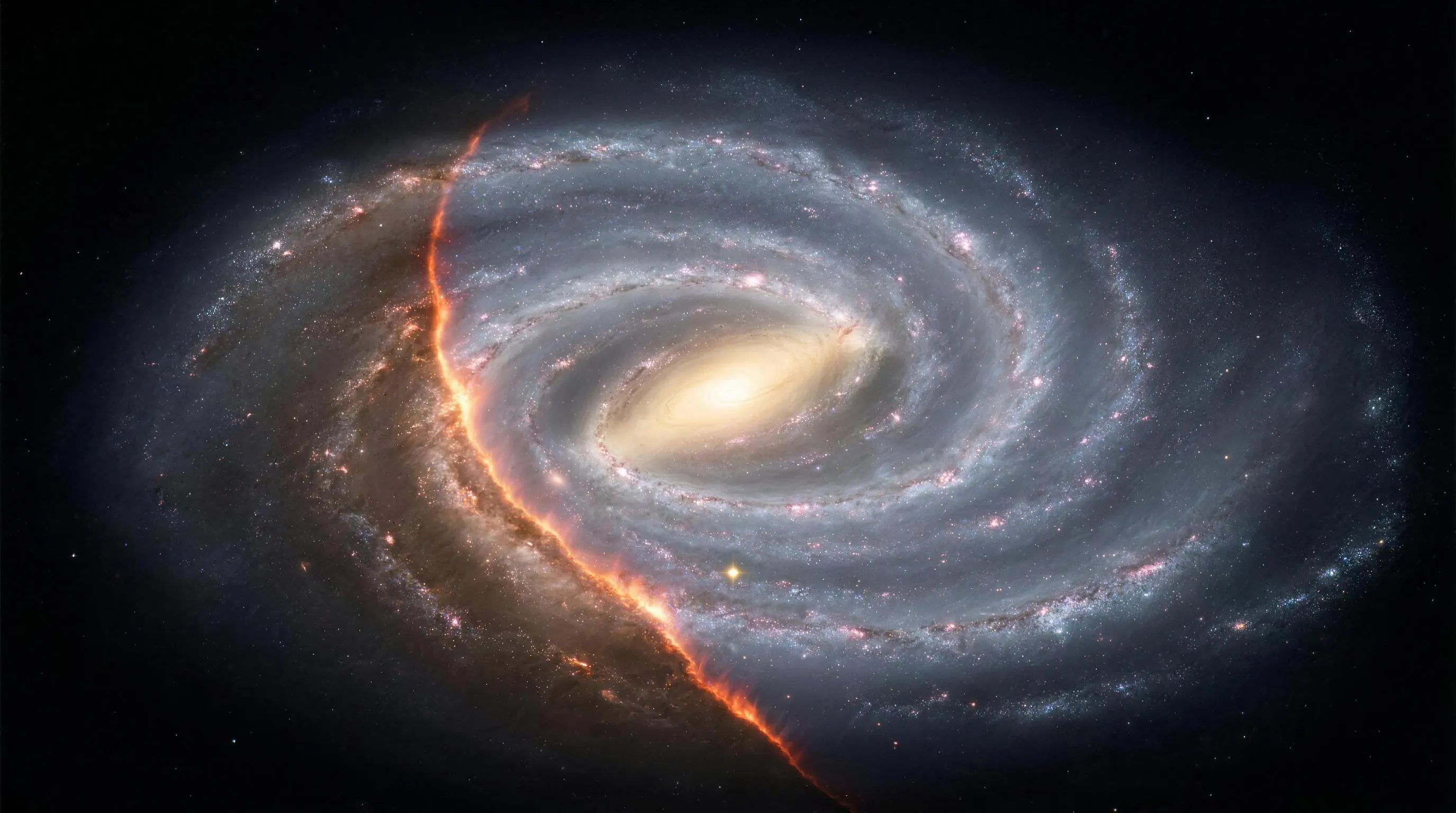 The Fermi Paradox FERMI 1950 · INST-26 The most famous lunch remark in science, turned into an exact sandbox. The Wave view burns a colonization front across a procedural Milky Way of two hundred billion stars at exactly v = d/(d/v+τ): the frontier flares, the settled interior cools to bronze, the Sun waits 26,700 ly out to be swept, and the whole disk falls in ~20 million years, 0.15% of the galaxy's age. The Clock view draws that fill time to scale on the 13.6-billion-year bar, thin enough to need the built-in magnifier; the Filter view prices every step of the Great Filter at a click and reads out the contradiction. The galaxy is measured, the wave is modelled, and the silence is yours to read. LIVE
 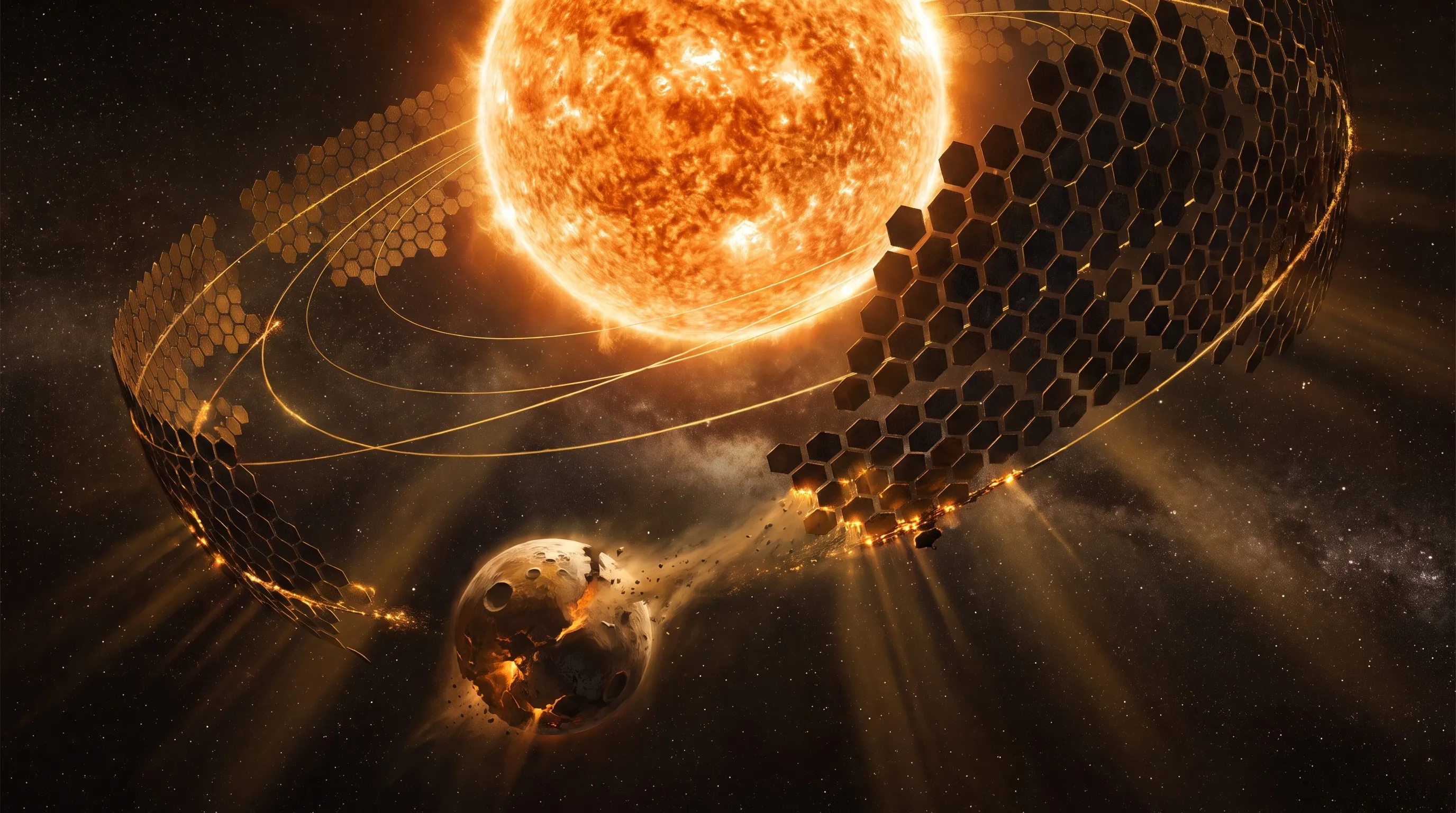 The Dyson Swarm DYSON 1960 · INST-25 Freeman Dyson's three 1960 pages turned into an exact energy sandbox. Watch a cloud of collector rings grow out of Mercury on the 31-year exponential plan, pricing the Sun's 3.83×10²⁶ W against humanity's 18.5 TW; flip the infrared view and see the unhideable 331 K waste heat the way WISE would; the Fingerprint view draws the two-humped spectrum astronomers actually hunt, with the four real searches: IRAS, Ĝ, Hephaistos, and Tabby's Star, which failed the heat test. The engineering is permitted, the silence is measured, the conclusion is yours. LIVE
 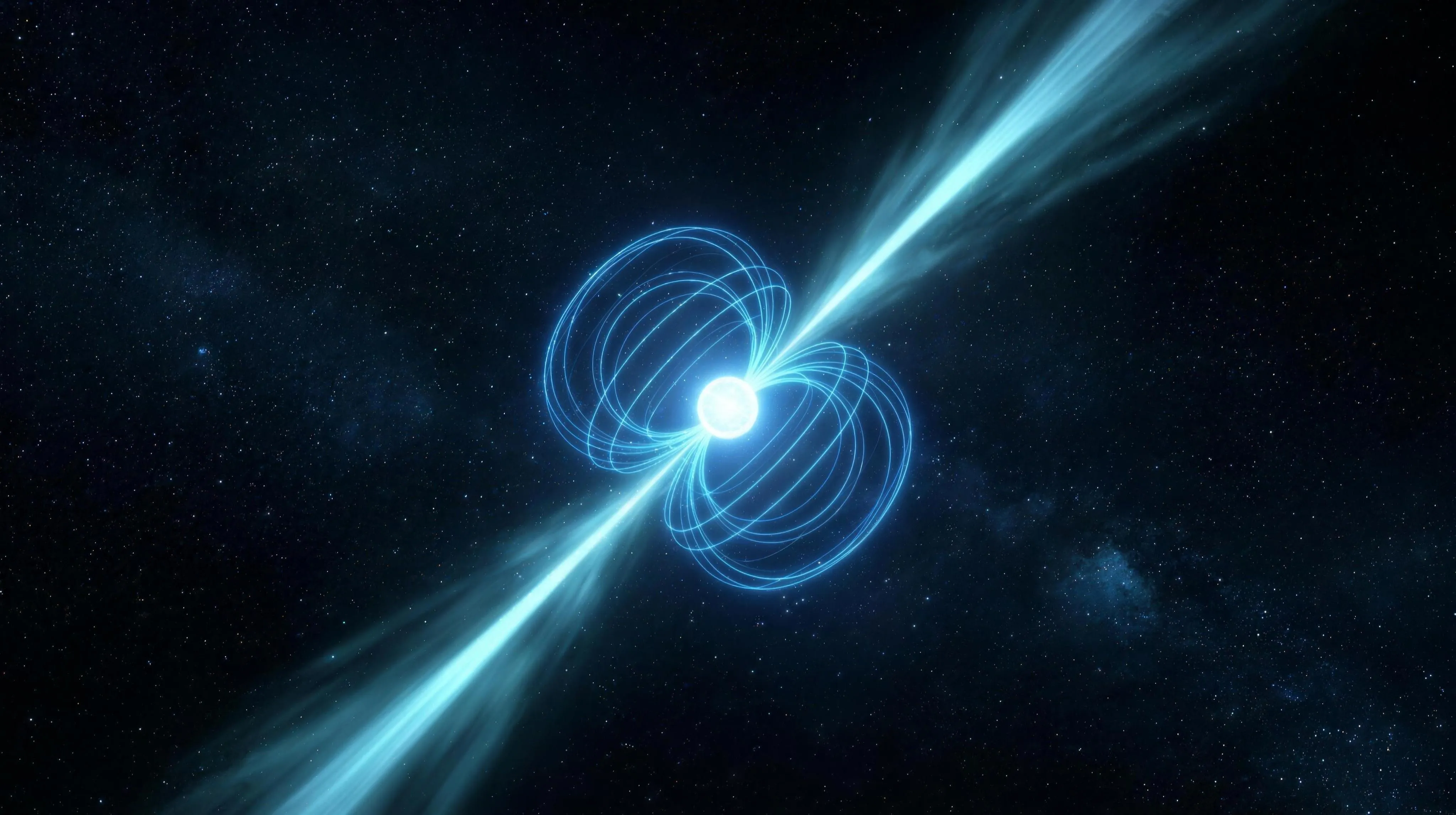 Pulsar LGM-1 PSR B1919+21 · INST-23 In 1967 Jocelyn Bell found, in 96 feet of daily chart paper, an anomaly that ticked every 1.3373 seconds and kept sidereal time; for a few weeks the file read LGM: Little Green Men. The Lighthouse view turns a neutron star at its true period in real time, magnetic axis tilted, twin beams firing a pulse each sweep across your line of sight; two angle sliders teach why most pulsars are invisible to us. The timing test restages the cut that killed LGM: live on a planet and you must Doppler-wobble; B1919 ran flat. A Chart view rebuilds the Cambridge record: the aligned scruff, the 28 November fast recording, the second sources that ended the alien reading. The one alien hypothesis in history closed cleanly by data. LIVE
 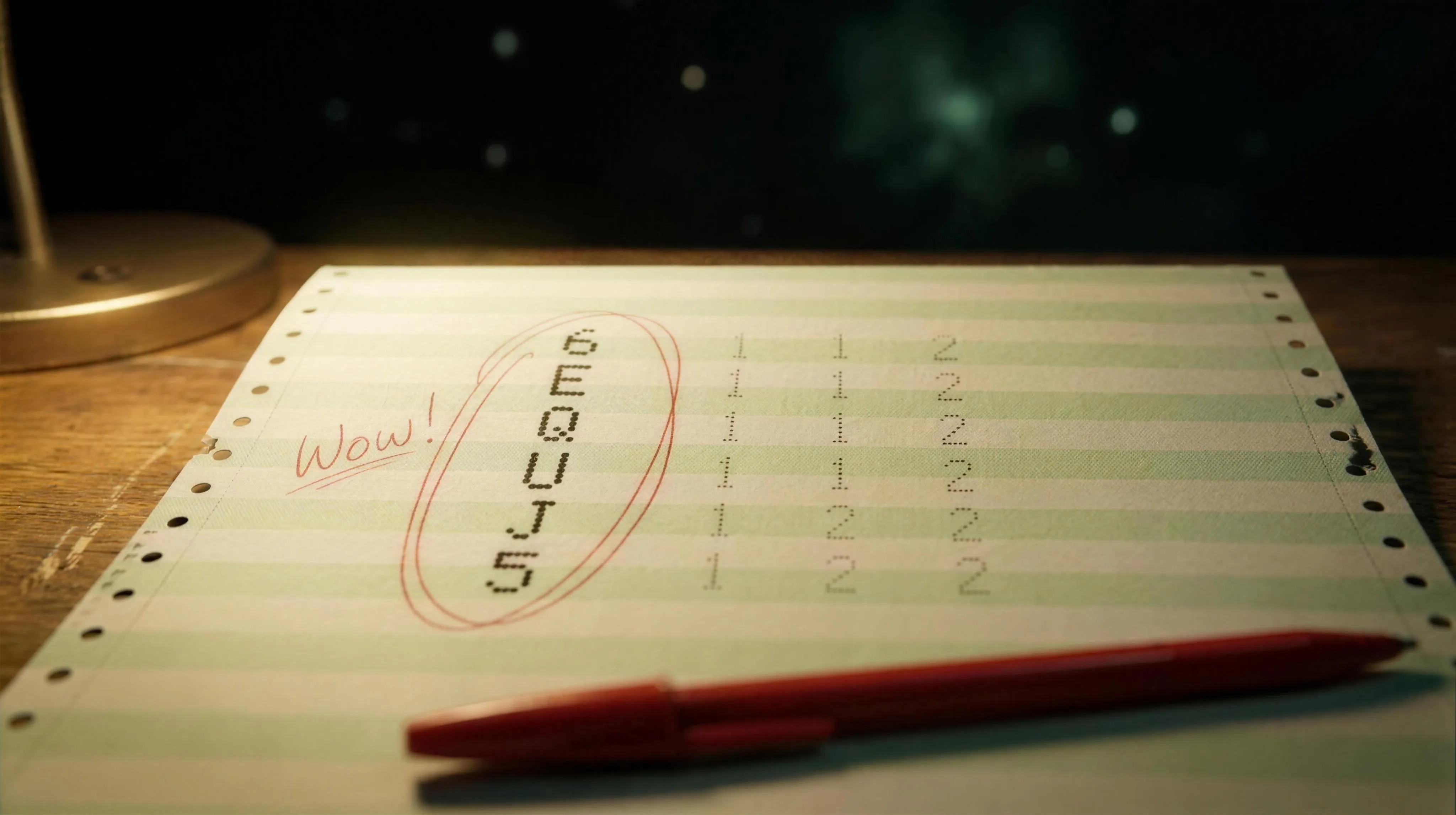 The Wow! Signal 6EQUJ5 · INST-22 On 15 August 1977 the Big Ear recorded 72 seconds of narrowband signal thirty times the noise, beside the hydrogen line, in one feed horn of two, never seen again. The Drift view replays that night on an honest clock: Earth's rotation sweeps Sagittarius through the twin horn beams while the receiver prints one intensity character every 12 seconds; swap in ground RFI, a satellite or the rejected comet cloud and watch the profile give them away. A Printout view rebuilds the record character by character until channel 2 reads 6EQUJ5 and the red pen circles it. An Evidence table tags every fact MEASURED, MODELLED or READING. LIVE
 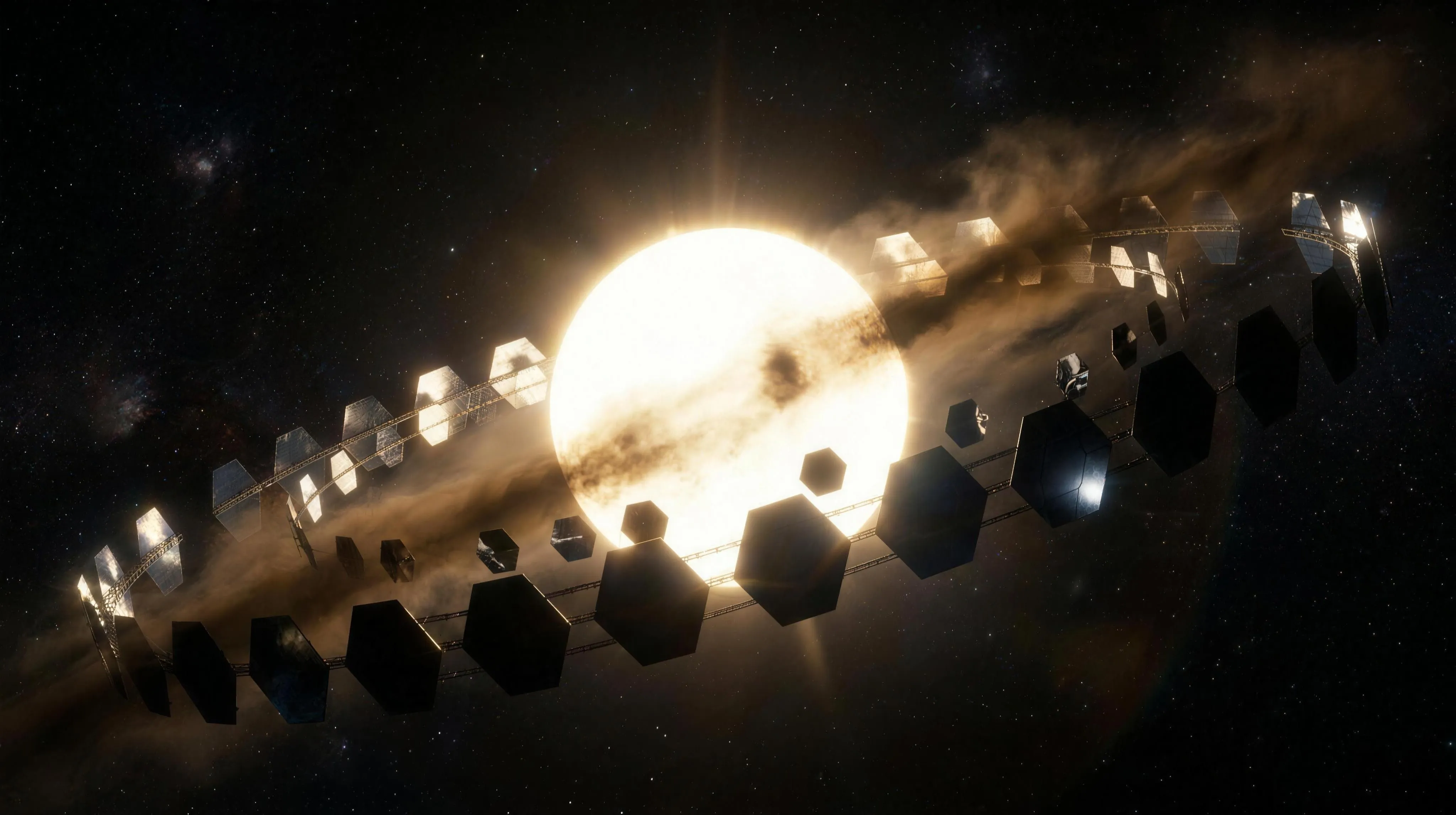 Tabby's Star KIC 8462852 · INST-21 The strangest light curve in the Kepler field: an F3V star drawn with limb darkening, four things taking turns crossing its disk, an opaque planet good for only ~1%, a clumpy comet swarm, a translucent dust cloud, and a Dyson swarm of hexagonal collectors. A live light curve computed by real occlusion scrolls at the bottom, and a Blue 0.44 µm / Red 0.80 µm toggle is the decisive test: dust dips deeper in blue, solid bodies do not. A Curve view reproduces the full 1580-day Kepler record, D792, the 22% D1519 complex, the triple-dip. An Evidence table tags every fact MEASURED, MODELLED or READING. LIVE
 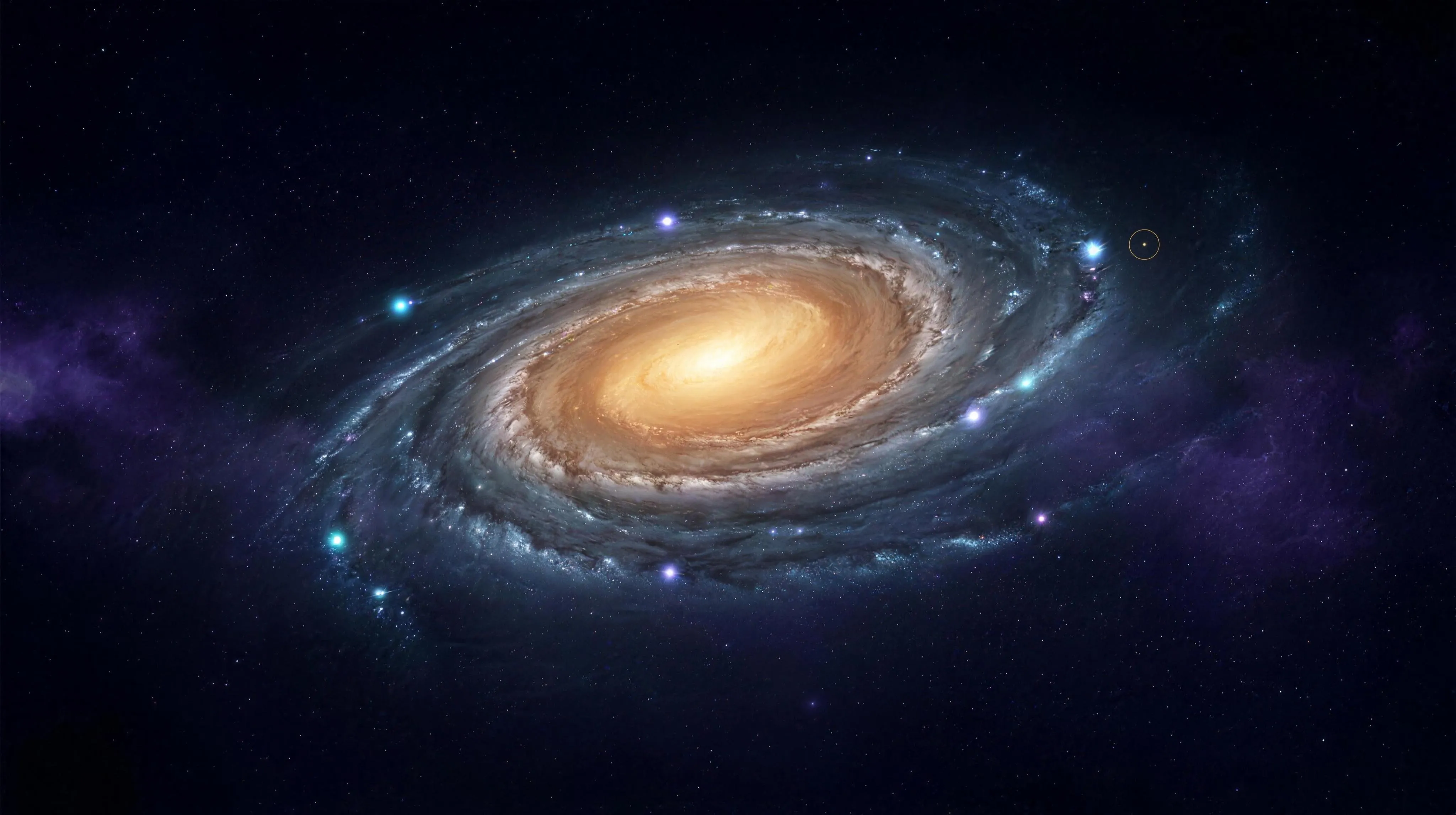 The Drake Equation SETI · INST-19 In 1961 Frank Drake split "is anyone out there" into seven numbers multiplied together. Take the seven sliders yourself: every expected civilization lights up as a violet beacon in the galactic disk, our 110-light-year radio bubble is drawn at true sub-pixel scale, a Ledger view rebuilds the equation as a log waterfall crossing the N = 1 line, and a Fermi front sweeps the disk at 2% of c. The first three factors are measured now; the last four are still readings, and the 65-year silence is itself a measurement. LIVE
 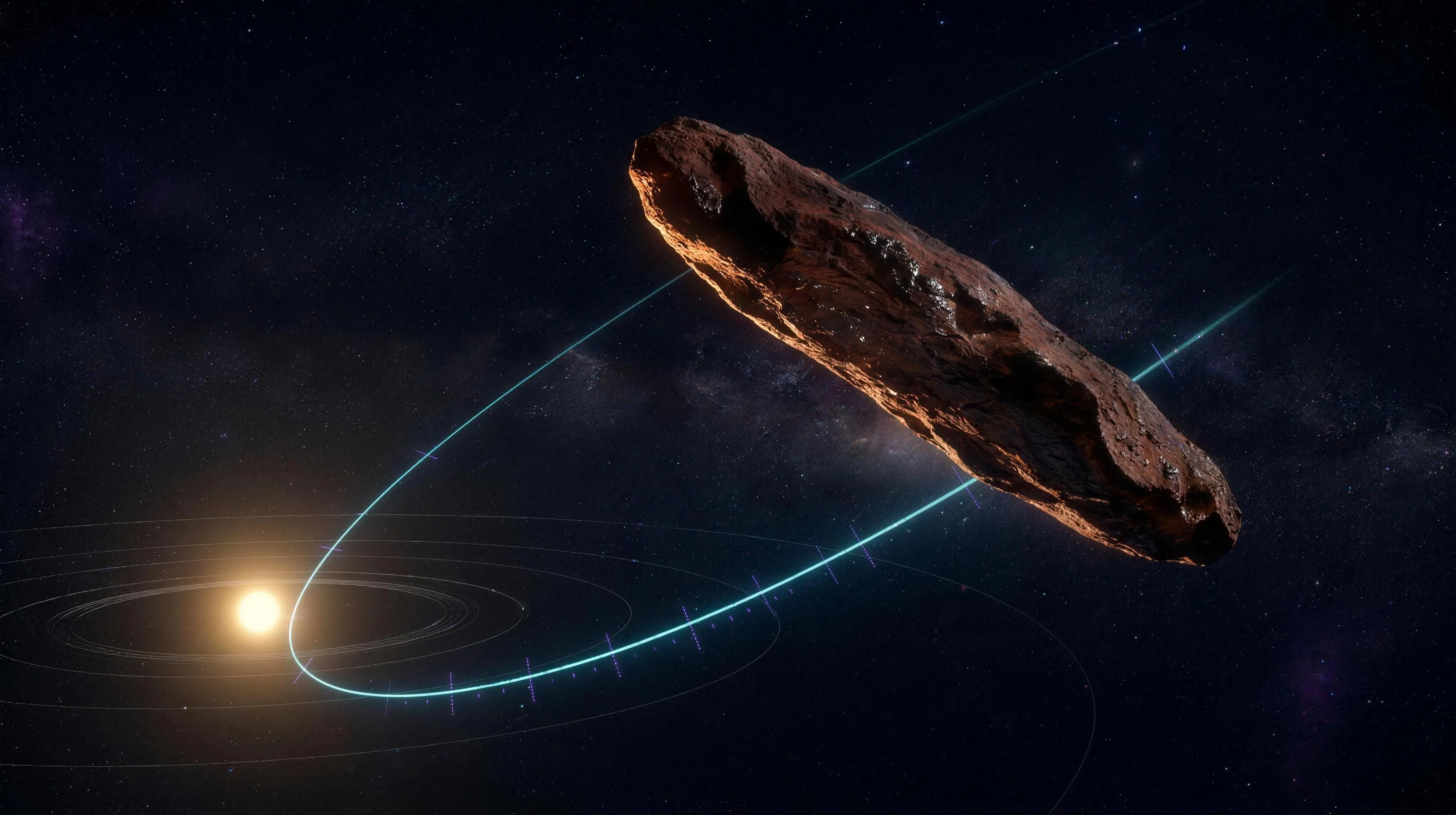 ’Oumuamua 1I/2017 U1 · INST-18 The first confirmed visitor from another star: an orbit that never closes, brightness swinging tenfold every 7.3 hours, and a push gravity cannot explain. Fly alongside the real hyperbolic trajectory, switch on the gravity-only ghost and watch the flown path pull ahead, swap cigar for pancake as the light curve redraws, and stage hydrogen ice, nitrogen ice and Loeb's lightsail in turn. Every fact tagged MEASURED, MODELLED or READING.
Exoplanet Direct Imaging PALE BLUE DOT · 1990 · INST-47 Humanity owns one photograph of an inhabited planet: the 0.12 pixel Voyager 1 caught in a sunbeam in 1990, taken from inside the system. Retaking it from the next star over is a problem with two numbers nailed to it: an Earth twin at 10 parsecs sits 0.1 arcseconds from its star at one ten-billionth of its brightness. This instrument builds the whole route. The System view is the geometry in 3D: a tilted orbit against the coronagraph's ring of blindness on the sky plane, with the projection point diving inside the mask exactly at full phase, where the planet is brightest. The Coronagraph view is the bench: the exact Airy pattern of a flawless 6 m telescope (the first ring alone carries 1.75% of peak), Lyot's 1930 mask, a speckle floor that rides the stability slider at (πh/λ)², where a 2-picometer ripple fakes an Earth, and the dark hole a vacuum testbed has already held at 4e-10; on the far side waits the photon famine, one photon every eight seconds. The Ledger sets everything imaged, 98 self-luminous young giants in the infrared, against everything wanted in reflected light, four orders of magnitude below, with a 164-star neighbourhood ladder deciding which habitable zones even open outside the mask. The File runs from the 0.12 pixel through Roman's August 2026 launch to HWO's ~25 modelled Earths in the 2040s, and keeps Fomalhaut b, the dust cloud that spent twelve years as a planet, on purpose. The numbers are sourced, the assumptions are printed on the instrument, and the reading is yours. LIVE Technosignature Spectroscopy EXOPLANET AIR · INST-45 When a planet crosses its star, a sliver of starlight grazes its atmosphere on the way to us, and the molecules there absorb at their own wavelengths. Measure the transit depth against wavelength and you have read the air of another world. The Transit view lays out the geometry the whole science lives in: a star, a planet, and a hair-thin ring of atmosphere that nearly vanishes when you switch the exaggeration off. The Spectrum view is the bench itself, with four worlds, six atmospheres, seventeen molecules and four real JWST modes. Its cross-section ladder is not asserted but solved, by inverting the model against the known effective altitudes of these same bands in Earth's own limb, which puts the halocarbons near 1e-18 square centimetres against oxygen's 7e-26, eight orders of magnitude apart. The entire model is pinned to a single measurement, WASP-39b's 4.3 micron carbon dioxide feature, and the other checks agree on their own. The Verdict view lays out the five rungs between a bump in a spectrum and a claim about life and computes where each one breaks, including the term that decides it: the star's own spots, measured at 134 to 376 ppm across four real TRAPPIST-1e visits against a planetary signal near 15, and they do not average down with more transits. The File runs from Lovelock in 1965 through Sagan's 1990 control experiment, where the chemistry said life and only the radio said technology, to the eighteen months in which K2-18b's biosignature failed to survive being checked. The assumptions are printed on the instrument, and the reading is yours. LIVE The Arecibo Message ARECIBO MESSAGE · 1974 · INST-44 The 1974 transmission, built as a drivable bench. The Send view replays all 167.9 seconds live: 450 kilowatts at 2380 MHz, ten bits a second, a beam 1.7 arcminutes wide that is a needle rather than a floodlight, the most recent bits riding it in two frequency lanes, a corner waterfall drawing the two narrow columns a receiver would have seen, and a logarithmic journey strip holding the wavefront where it actually is today, about 52 light years out. The Decode view hands you the fold: 1679 factors only as 23 x 73, and that fact is the decoding manual, riding inside the length of the message; set the width to 41 and perfectly intact data shreds into diagonal noise, snap back to 23 and seven sections drop into place with a colour sweep. The Compose view gives you the same 23 x 73 envelope and the same transmitter, lets you paint, and prices the result against distance: readable to about 93 light years, detectable to about 3,100, against an M13 at 25,000. The File runs from a 1961 cryptogram one person on Earth solved to Ryle's objection filed within days, the 2001 Chilbolton formation and the 2020 collapse. The bits are the original, the link budget's four assumptions are printed on the face of the instrument, and the reading is yours. LIVE The Fermi Paradox FERMI 1950 · INST-26 The most famous lunch remark in science, turned into an exact sandbox. The Wave view burns a colonization front across a procedural Milky Way of two hundred billion stars at exactly v = d/(d/v+τ): the frontier flares, the settled interior cools to bronze, the Sun waits 26,700 ly out to be swept, and the whole disk falls in ~20 million years, 0.15% of the galaxy's age. The Clock view draws that fill time to scale on the 13.6-billion-year bar, thin enough to need the built-in magnifier; the Filter view prices every step of the Great Filter at a click and reads out the contradiction. The galaxy is measured, the wave is modelled, and the silence is yours to read. LIVE The Dyson Swarm DYSON 1960 · INST-25 Freeman Dyson's three 1960 pages turned into an exact energy sandbox. Watch a cloud of collector rings grow out of Mercury on the 31-year exponential plan, pricing the Sun's 3.83×10²⁶ W against humanity's 18.5 TW; flip the infrared view and see the unhideable 331 K waste heat the way WISE would; the Fingerprint view draws the two-humped spectrum astronomers actually hunt, with the four real searches: IRAS, Ĝ, Hephaistos, and Tabby's Star, which failed the heat test. The engineering is permitted, the silence is measured, the conclusion is yours. LIVE Pulsar LGM-1 PSR B1919+21 · INST-23 In 1967 Jocelyn Bell found, in 96 feet of daily chart paper, an anomaly that ticked every 1.3373 seconds and kept sidereal time; for a few weeks the file read LGM: Little Green Men. The Lighthouse view turns a neutron star at its true period in real time, magnetic axis tilted, twin beams firing a pulse each sweep across your line of sight; two angle sliders teach why most pulsars are invisible to us. The timing test restages the cut that killed LGM: live on a planet and you must Doppler-wobble; B1919 ran flat. A Chart view rebuilds the Cambridge record: the aligned scruff, the 28 November fast recording, the second sources that ended the alien reading. The one alien hypothesis in history closed cleanly by data. LIVE The Wow! Signal 6EQUJ5 · INST-22 On 15 August 1977 the Big Ear recorded 72 seconds of narrowband signal thirty times the noise, beside the hydrogen line, in one feed horn of two, never seen again. The Drift view replays that night on an honest clock: Earth's rotation sweeps Sagittarius through the twin horn beams while the receiver prints one intensity character every 12 seconds; swap in ground RFI, a satellite or the rejected comet cloud and watch the profile give them away. A Printout view rebuilds the record character by character until channel 2 reads 6EQUJ5 and the red pen circles it. An Evidence table tags every fact MEASURED, MODELLED or READING. LIVE Tabby's Star KIC 8462852 · INST-21 The strangest light curve in the Kepler field: an F3V star drawn with limb darkening, four things taking turns crossing its disk, an opaque planet good for only ~1%, a clumpy comet swarm, a translucent dust cloud, and a Dyson swarm of hexagonal collectors. A live light curve computed by real occlusion scrolls at the bottom, and a Blue 0.44 µm / Red 0.80 µm toggle is the decisive test: dust dips deeper in blue, solid bodies do not. A Curve view reproduces the full 1580-day Kepler record, D792, the 22% D1519 complex, the triple-dip. An Evidence table tags every fact MEASURED, MODELLED or READING. LIVE The Drake Equation SETI · INST-19 In 1961 Frank Drake split "is anyone out there" into seven numbers multiplied together. Take the seven sliders yourself: every expected civilization lights up as a violet beacon in the galactic disk, our 110-light-year radio bubble is drawn at true sub-pixel scale, a Ledger view rebuilds the equation as a log waterfall crossing the N = 1 line, and a Fermi front sweeps the disk at 2% of c. The first three factors are measured now; the last four are still readings, and the 65-year silence is itself a measurement. LIVE ’Oumuamua 1I/2017 U1 · INST-18 The first confirmed visitor from another star: an orbit that never closes, brightness swinging tenfold every 7.3 hours, and a push gravity cannot explain. Fly alongside the real hyperbolic trajectory, switch on the gravity-only ghost and watch the flown path pull ahead, swap cigar for pancake as the light curve redraws, and stage hydrogen ice, nitrogen ice and Loeb's lightsail in turn. Every fact tagged MEASURED, MODELLED or READING.